
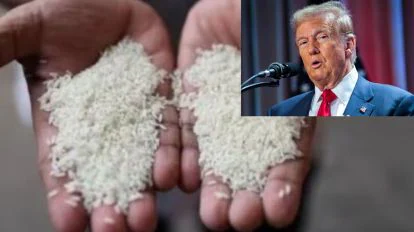
2 July, 2025-Former U.S. President Donald Trump has strongly criticised Japan’s rice import policy, accusing the country of refusing to purchase American rice and threatening to impose a 35% tariff on Japanese imports if trade terms do not improve.
Speaking at a campaign rally in Ohio, Trump described Japan as “spoiled,” alleging that while the U.S. buys Japanese cars and electronics in large volumes, Japan shows no interest in reciprocating trade when it comes to American agricultural products. “They want us to buy everything from them, but they don’t buy our rice. It’s not fair,” Trump said during his address.
The remarks have sparked concern among international trade experts, who fear the potential escalation of a tariff war between two of the world’s largest economies. Trump, currently a leading Republican contender in the 2024 U.S. presidential race, made trade policy a central pillar of his earlier presidency and appears to be returning to similar rhetoric in his bid for re-election.
Japan is one of the world’s top rice importers but maintains a tightly controlled market to protect domestic farmers. The U.S. has long sought greater access to the Japanese rice market, which is largely restricted through quotas, high tariffs, and stringent quality standards. American rice producers, especially in states like Arkansas and California, have repeatedly called for more equitable access.
Although the 2019 U.S.-Japan Trade Agreement under Trump’s administration did open doors for several American agricultural products, rice remained excluded from significant tariff relief. The current criticism appears to reflect ongoing frustration within the U.S. agricultural sector.
Trade analysts warn that if Trump’s tariff proposal were implemented, Japan could respond with retaliatory measures, potentially impacting U.S. exports of agricultural goods, machinery, and technology. “Imposing a 35% tariff would severely strain U.S.-Japan relations and could trigger a broader trade dispute,” said a senior fellow at the International Trade Policy Center.
The Japanese government has not officially responded to Trump’s comments. However, sources within Japan’s Ministry of Agriculture have previously defended the nation’s rice import policies, citing food security and the preservation of traditional farming as core priorities.
Trump’s remarks also arrive at a politically sensitive time, with U.S. farmers watching trade developments closely. Many in the agricultural community remain hopeful for expanded foreign market access, particularly as domestic demand plateaus.
With global trade dynamics already under pressure from inflation, geopolitical tensions, and shifting alliances, Trump’s aggressive stance signals a potential shift in U.S. foreign economic policy should he return to power.
As the 2024 campaign continues to intensify, Trump’s comments are likely to remain under scrutiny by both domestic stakeholders and international partners.

