
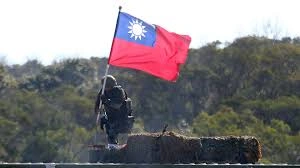
China has issued a sharp warning that it will “crush” any foreign interference regarding Taiwan, following Japan’s announcement of plans to deploy missiles on Yonaguni Island, situated approximately 110 km east of Taiwan. The move has intensified regional tensions, raising concerns about a potential escalation in East Asia.
Japan’s Strategic Move
On November 23, Japan’s Defence Ministry confirmed plans to station medium-range surface-to-air missiles on Yonaguni Island as part of a broader southern-island defense strategy. Tokyo stated the deployment aims to bolster Japan’s defensive capabilities and reduce the risk of potential attacks, emphasizing that it is not intended to provoke China.
However, Beijing strongly disputes this justification, viewing the deployment as a provocative action that threatens regional stability. Japan’s decision comes amid growing concerns in Tokyo over China’s expanding military presence and assertive maneuvers near Taiwan and crucial maritime corridors.
China’s Firm Response
The Taiwan Affairs Office of China condemned Japan’s missile deployment as a deliberate attempt to create tension and provoke military confrontation. Officials described the plan as “extremely dangerous” and warned that it could trigger a severe response if implemented.
China reaffirmed its longstanding position that Taiwan is an integral part of its territory and reiterated its vow never to tolerate foreign interference or a resurgence of Japanese militarism. In retaliation, Beijing has reportedly suspended several forms of bilateral cooperation, including cultural and economic exchanges, and has advised Chinese citizens to reconsider travel to Japan.
Implications for Regional Security
| Dynamic | Significance |
|---|---|
| Military escalation | Yonaguni’s missile deployment creates a potential containment zone around Taiwan, increasing the risk of rapid escalation if conflict occurs. |
| Diplomatic strain | Relations between Tokyo and Beijing have deteriorated, complicating dialogue on trade, maritime disputes, and security cooperation. |
| Regional alliances | The standoff heightens alert levels among Taiwan, the United States, and other Asia-Pacific nations, potentially reshaping regional deterrence strategies. |
| Risk of miscalculation | The proximity of military assets to contested areas increases the likelihood of unintended engagements or misinterpretations. |
Broader Context
This escalation is seen as a critical phase in the ongoing 2025 China–Japan diplomatic crisis. Earlier remarks by Japanese officials suggesting that a Chinese attack on Taiwan could threaten Japan’s security had already stirred tensions in Beijing. Analysts warn that the missile deployment on Yonaguni Island further complicates the security landscape and could draw in other regional powers, raising the stakes in the Taiwan Strait.
As both nations maintain firm positions, experts caution that careful diplomacy is required to prevent military confrontation. The situation underscores the fragile balance in East Asia, where strategic moves by regional powers are closely watched by global stakeholders.

