
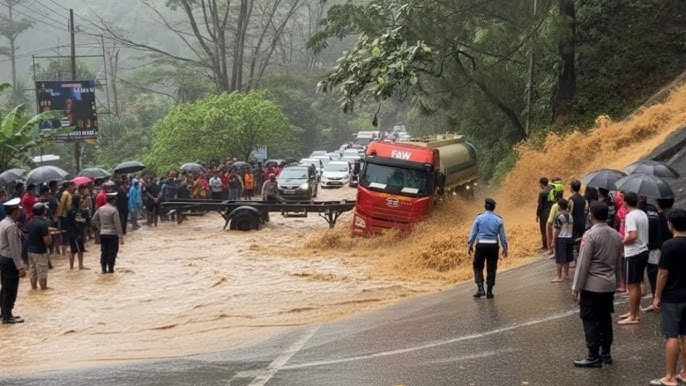
Southern Thailand is reeling from what officials describe as a “once-in-300-years” rainfall event, as record downpours unleashed floods that have claimed at least 33 lives and displaced millions. The deluge has swept across key provinces, paralysed infrastructure, and forced a massive emergency response, while neighbouring Malaysia reports fatalities and widespread disruption.
Historic Downpour and Widespread Devastation
The southern city of Hat Yai — a major regional commercial hub — recorded a staggering 335 millimetres of rain in a single day, the highest in three centuries. Over several days, rainfall totals reportedly exceeded 630 mm in some districts, overwhelming drainage systems and rivers beyond capacity.
As floodwaters surged, low-lying neighbourhoods, roads, and entire residential blocks were submerged. In many areas, water reached depths of 0.5 to 2.5 metres, rendering streets impassable and cutting off communities.
Authorities report that over 2.7 million people and nearly 980,000 homes have been affected across southern Thailand, highlighting the scale of the disaster.
Death Toll, Causes, and Regional Spread
The official death toll in Thailand has risen to 33, with fatalities attributed to flash floods, drowning, and electrocution. The disaster has also crossed borders, affecting eight states in neighbouring Malaysia, where at least one death has been confirmed.
Experts warn that the scale and speed of flooding may make this one of the worst monsoon-related disasters in decades, particularly as weather forecasts predict continued heavy rain across the region.
Emergency Response: Evacuations, Airlifts, and Military Aid
In response to the crisis, the Thai government declared a state of emergency in Songkhla Province, home to Hat Yai. Rescue operations have mobilised military helicopters, navy vessels — including the country’s only aircraft carrier — boats, generators, and medical teams. The aircraft carrier is being used as a floating hospital and relief centre.
In Hat Yai alone, around 600 patients, including 50 in intensive care, were stranded when the ground floor of the main hospital flooded. Helicopters are being used to airlift critically ill patients to safety.
Thousands of residents have been evacuated from submerged areas, with temporary shelters set up to house those displaced. Relief efforts continue, with authorities emphasising the urgent need for medical supplies, clean water, and food to prevent a humanitarian crisis from worsening.
Broader Implications and Outlook
The southern Thailand floods serve as a stark reminder of the growing impact of extreme weather events in Southeast Asia. Climate experts highlight that such unprecedented rainfall patterns are becoming increasingly frequent, raising concerns over infrastructure resilience and disaster preparedness in the region.
As authorities continue rescue and relief operations, monitoring of rivers and dams remains critical to prevent further devastation. The international community is watching closely, with aid and support expected to bolster Thailand and Malaysia in managing the ongoing crisis.

