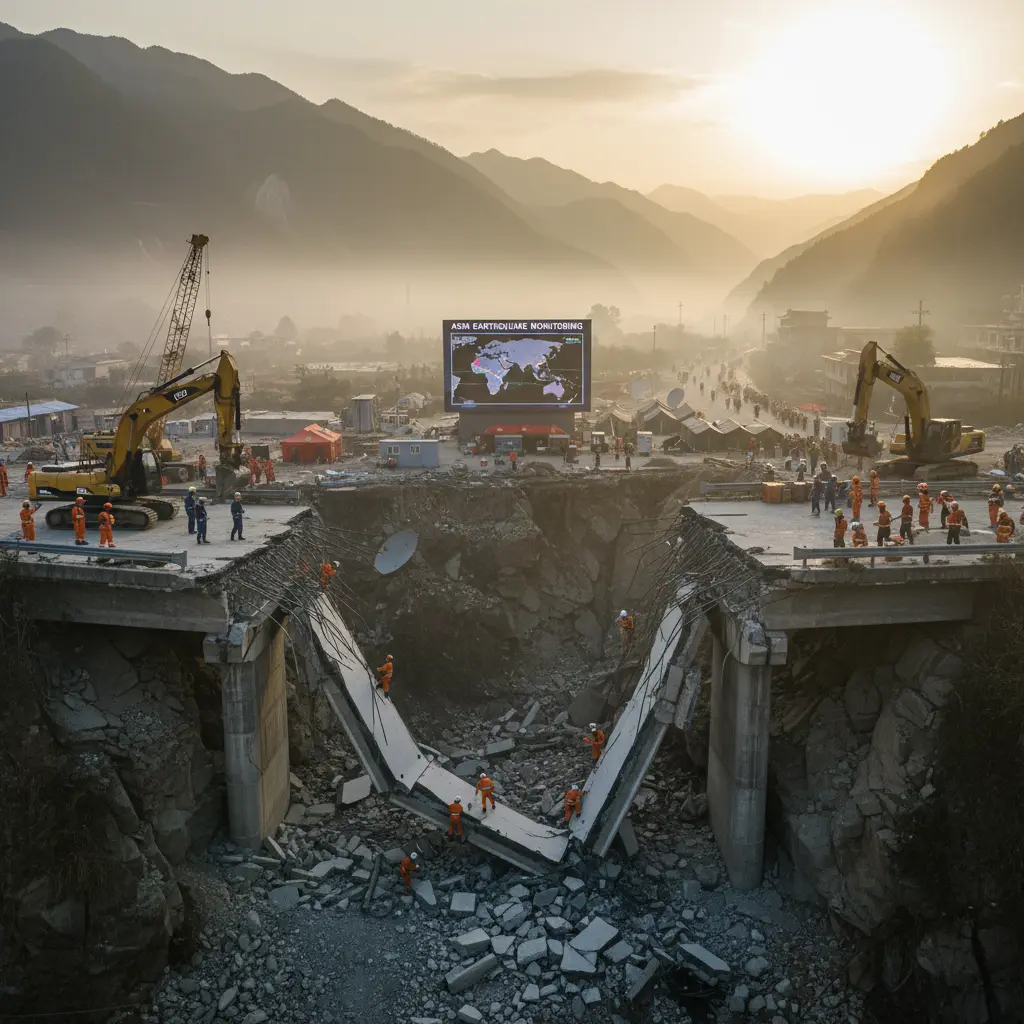
A strong 6.3 magnitude quake hit northwest China this week, jolting a remote area of Qinghai province and putting emergency teams across the region on high alert. The quake struck Haixi Prefecture, a sparsely populated, high-altitude area known more for its mining activity than for crowds, but that didn’t stop it from leaving a mark. At least one person was killed and several others were injured, according to state media reports, and the aftermath has reignited a familiar conversation about how prepared Asia really is for the next big one.
What Happened
The earthquake hit in the early evening, local time, at a depth of roughly 10 kilometers. That shallow depth matters more than people realize. Quakes that originate closer to the surface tend to shake harder and cause more damage than deeper ones of the same magnitude, because the energy has less distance to travel before it reaches buildings, roads, and people. Within about 40 minutes of the main shock, the region recorded a string of aftershocks, including one that approached magnitude 5 on its own. For residents, that meant the ground didn’t really settle right away. Every fresh rumble was a reminder that the danger hadn’t fully passed.
Local authorities moved quickly. Workers at a nearby coal mine were evacuated as a precaution, and rescue teams were dispatched to comb through the affected area, check for trapped individuals, and begin assessing structural damage. This is fairly standard protocol after a quake of this size in China, where seismic monitoring agencies have become increasingly efficient at mobilizing resources within minutes of detecting a major tremor.
Why Qinghai, and Why Now
If you’ve followed earthquake today headlines out of China over the years, Qinghai and its neighboring provinces probably ring a bell. The region sits along an active and complicated set of tectonic boundaries where the Indian and Eurasian plates continue to grind against each other, a process that’s been building the Himalayas for millions of years and, in the process, makes much of western and southwestern China prone to seismic activity. It’s the same general tectonic neighborhood that has produced devastating quakes in Sichuan and Tibet in past decades, so this latest event, while serious, isn’t exactly a surprise to seismologists who track the area closely.
What does feel different each time, though, is the response. China’s earthquake response agency activated its emergency plan almost immediately after the main shock, a system built and refined after years of dealing with quakes in this part of the world. Search and rescue crews, infrastructure inspectors, and medical teams were sent in to evaluate everything from collapsed structures to potential secondary hazards like landslides, which are a real concern in mountainous terrain once the ground has been destabilized.
The Ripple Effect Across the Region
Even though the quake itself was centered in a remote part of Qinghai, the broader implications stretch well beyond the immediate disaster zone. Neighboring provinces and even countries elsewhere in Asia have been watching aftershock patterns closely, partly out of genuine concern and partly because earthquakes in one part of a fault system can sometimes signal stress shifting elsewhere. This kind of regional monitoring isn’t paranoia; it’s standard practice in a part of the world where seismic activity doesn’t respect borders.
This event also lands at a moment when disaster preparedness is already a hot topic across Asia. Countries from Japan to Indonesia to the Philippines have spent the last several years investing heavily in early warning systems, stricter building codes, and public education campaigns aimed at reducing casualties when, not if, the next major quake strikes. China’s own building standards have tightened considerably since the catastrophic 2008 Sichuan earthquake, which killed tens of thousands of people and exposed serious gaps in construction quality, particularly in schools and other public buildings. Each subsequent quake, including this latest one in Qinghai, becomes something of a stress test for how far those reforms have actually come.
What Comes Next
In the immediate term, the focus stays on relief and recovery. Inspectors of infrastructure will continue to check roads, bridges and buildings for any hidden damage that could surface at any time. The aftershocks could go on for days or even weeks, which is why officials are warning people in the affected areas to be alert and stay away from any structures that are cracked or unstable.
In the longer term, this earthquake will likely be part of the ongoing policy discussion on seismic safety standards, especially in remote and resource extraction-heavy areas like Haixi, where mining adds another element of risk in a major shake.
The immediate emergency appears to be contained now, with rescue efforts nearly finished and damage surveys underway. But as is so often the case with seismic activity in this part of the world, the real story isn’t just this one earthquake. It’s what the region does with the lessons it keeps learning, quake after quake, to make sure the next one causes a little less harm than the last.
China Quake Prompts Regional Watch Across Asia.