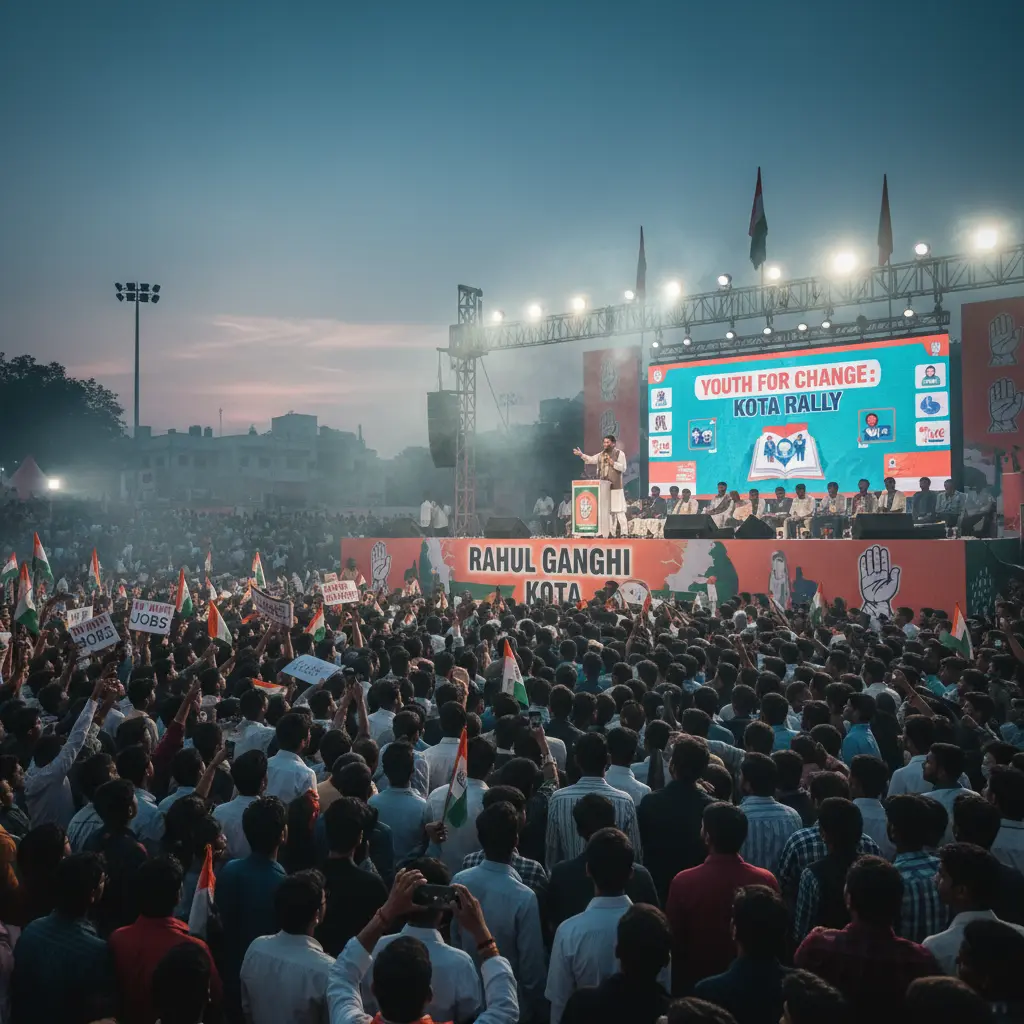
Congress leader Rahul Gandhi rolled into Rajasthan’s coaching capital this week with a message aimed squarely at India’s students and job seekers. The Rahul Gandhi rally, branded “Chhatron Ki Goonj” or “Students’ Echo,” touched down in Kota on June 17, a city that millions of Indian families associate with one thing above all else: the relentless grind of competitive exam preparation. For an Opposition leader looking to make a statement about youth employment India and the state of the country’s exam system, it’s hard to imagine a more symbolic backdrop.
Why Kota, Why Now
Kota isn’t just another stop on a political tour. It’s the engine room of India’s coaching industry, home to hundreds of thousands of students each year who move there from across the country chasing seats in IITs, medical colleges, and other elite institutions. That makes it a uniquely loaded venue for a conversation about exam reforms and the pressure cooker environment so many young Indians live under.
The event, held at Shriram Rangmanch on Kota’s Dussehra Ground, was billed less as a traditional stage rally and more as a direct interaction. Congress organizers reportedly skipped the usual podium setup in favor of a corridor arrangement, letting Gandhi move among students and hear their concerns firsthand rather than simply talking at them. Whether that format changes the tone of political messaging or not, it signals an attempt to position the event as a listening exercise rather than just another campaign speech.
The Core Complaints: Paper Leaks and Stalled Recruitment
At the heart of Gandhi’s pitch were two grievances that have dogged India’s education and employment systems for years: examination paper leaks and delayed government recruitment drives. In the days leading up to the rally, Gandhi used social media to argue that hard work no longer guarantees success for young Indians, framing every leaked paper, cancelled exam, and stalled hiring process as evidence of a system that has let an entire generation down.
This isn’t new territory for Congress. The party has tried to make student and job-seeker frustration a central plank of its youth outreach for several years now, and the Kota rally appears to be the opening chapter of a wider campaign that organizers say will extend to cities including Allahabad, Patna, and Delhi. The goal, according to Congress leaders, is to turn scattered local anger over recruitment scandals into a more organized, nationwide movement under a “Save Education, Save Your Future” banner.
Former Rajasthan Chief Minister Ashok Gehlot, who has been one of the loudest voices backing the initiative, argued that repeated paper leaks and recruitment controversies have badly damaged young people’s trust in the system, and he framed the choice of Kota as a deliberate and powerful political statement.
A Rally That Sparked a Row Before It Even Began
True to form for Indian political events, the build-up to the rally generated almost as much news as the rally itself. Congress functionaries accused the state’s BJP administration of quietly removing promotional banners and pressuring coaching institutes, PG operators, and guest house owners to discourage students from showing up. The BJP rejected those claims as baseless and politically motivated.
On the other side, BJP leaders raised a different objection entirely: timing. With the NEET-UG re-examination scheduled for just days later, BJP MP Sambit Patra accused Gandhi of trying to mislead students and create unnecessary stress right before a high-stakes test, arguing that responsible politicians shouldn’t play with the academic futures of children. Prior to the event, BJP workers also staged a protest in Kota, demanding that students concentrate on their studies instead of participating in a political meeting.
Congress dismissed the criticism as an attempt to deflect attention from the government’s own record on exam management, citing the NEET-UG paper leak controversy as proof that students need accountability, not silence.
What this means going forward Regardless of one’s political position on the back and forth, the underlying issues Gandhi raised in Kota are not going away anytime soon. Paper leaks, delays in recruitment and anxiety around competitive exams have become persistent flashpoints in Indian public life, affecting families across income levels and regions. For a city like Kota, where student stress and even student suicides have already drawn national attention in recent years, any rhetoric around exam reform lands on particularly sensitive ground.
Politically, the rally is widely expected to feed into broader campaign messaging ahead of upcoming electoral contests, giving Congress a youth-centered narrative to build on as it heads into future state and national elections. Whether the “Students’ Echo” campaign translates into concrete policy proposals, sustained street-level mobilization, or simply another news cycle will likely become clearer as the tour moves to its next stops.
For now, the Kota rally has done what it was probably designed to do: put youth employment, exam fairness, and recruitment reform back at the center of the national conversation, even if the loudest debate in the immediate aftermath was about posters and protest permissions rather than policy itself.
Rahul Gandhi Targets Youth Issues in Kota Rally.