
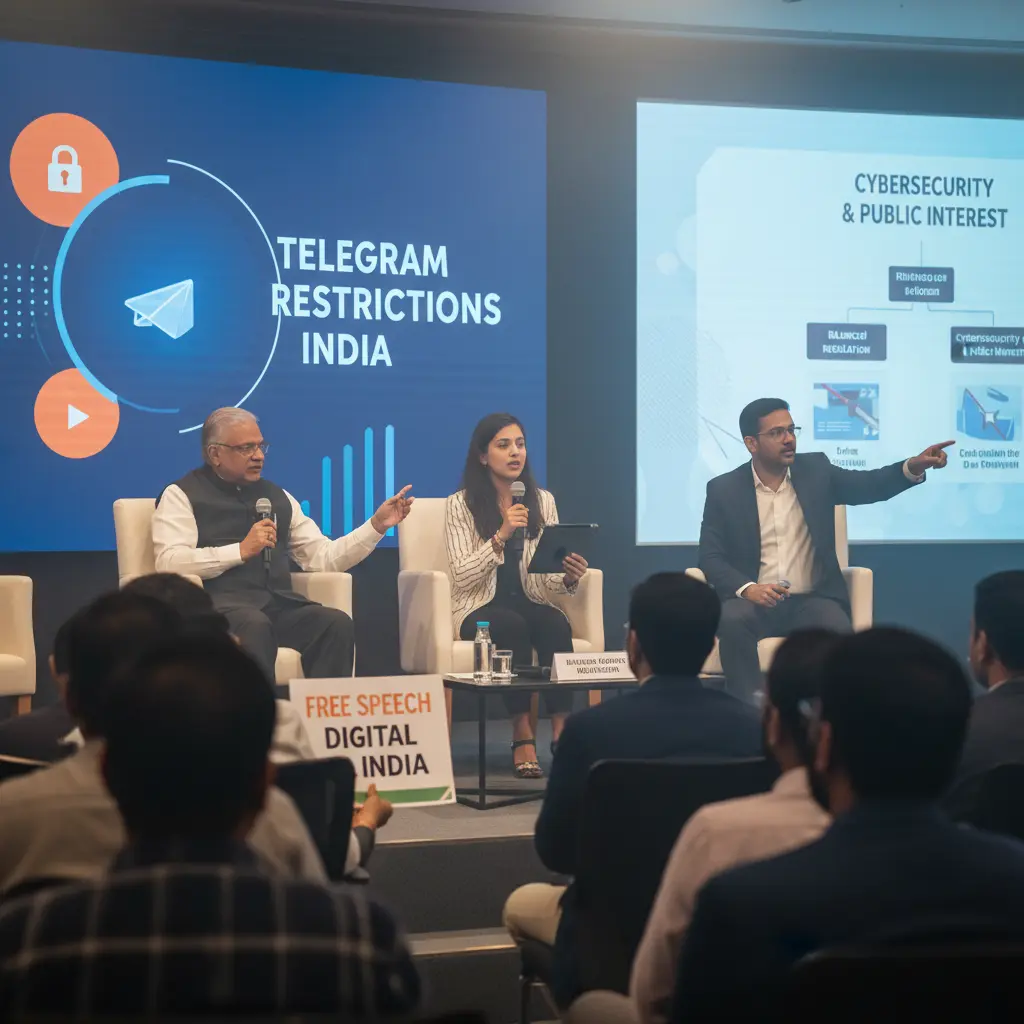
For a few days this week, tens of millions of people across India found themselves locked out of one of their go-to messaging apps. The government’s move to temporarily restrict Telegram India access has triggered a fierce nationwide conversation, one that sits right at the intersection of cybersecurity India, exam integrity, and the much bigger, messier question of how a democracy should regulate global tech platforms operating largely outside its jurisdiction.
What Actually Happened
The restriction wasn’t pulled out of nowhere. It came directly in response to last month’s NEET-UG paper leak scandal, which forced authorities to cancel the original medical entrance exam after evidence surfaced that questions had circulated before test day. With a re-examination scheduled for June 21, the National Testing Agency moved to choke off one of the channels investigators say cheating syndicates had been using to defraud candidates: Telegram.
The order, issued under Section 69A of India’s Information Technology Act, did three things at once. It blocked nationwide access to the app until June 22, the day after the retest. It directed Apple and Google to pull Telegram from their app stores in India until the same date. And it told Telegram to disable its message-editing feature until the end of June, on the theory that the edit function had been used to doctor messages and fabricate fake “proof” of leaked papers after the fact.
According to the NTA, the restrictions were framed as necessary to protect public order and prevent further exam-related fraud during a high-stakes retest affecting hundreds of thousands of students. NTA Director General Abhishek Singh defended the approach by arguing that even if fraudulent channels kept operating from abroad or through VPNs, cutting off the domestic user base would shrink the pool of potential victims and make the scams less profitable to run.
Pushback From Multiple Directions
Predictably, the move didn’t sit well with everyone, and the criticism came from some unexpected angles.
Telegram founder Pavel Durov weighed in directly, arguing on social media that the ban had done little to actually stop the leaks, which he said simply migrated to other platforms instead. His broader complaint was that the restriction punished the platform’s massive ordinary user base in India rather than targeting the specific individuals responsible for leaking exam content in the first place.
Digital rights groups raised a related but more structural concern. The Internet Freedom Foundation called the blanket ban a disproportionate response to a problem that could, in theory, have been addressed by removing specific fraudulent channels rather than shutting down an entire platform used by well over a hundred million people in the country. Their core question cuts to the heart of technology governance debates everywhere: should a law designed to protect sovereignty and public order really be the tool used to police exam cheating, or does that stretch the law’s intent past its breaking point?
Political reaction was sharper still. Aam Aadmi Party leader Arvind Kejriwal mocked the government’s overall approach to exam security, questioning whether shutting down a messaging app and flying question papers around on military aircraft would meaningfully stop determined cheating networks. He suggested the real issue was a much larger, organized racket that benefits from leaks continuing rather than stopping.
A Familiar Pattern, Playing Out Again
None of this is entirely new territory for Telegram. The app has faced friction with regulators in multiple countries recently, including extended restrictions in Russia over the platform’s refusal to share user data in fraud and terrorism investigations, along with separate legal scrutiny in France, Malaysia, and Australia. Part of what makes Telegram a recurring target is structural: the platform doesn’t maintain a physical office in India, which experts in cyber law say makes it slower to respond to local law enforcement requests compared to competitors that do have an established legal presence in the country.
That structural gap is really at the center of this latest controversy. Indian authorities have leaned on a blunt instrument, a nationwide block, partly because more targeted enforcement tools haven’t proven effective against channels that can be recreated faster than they’re taken down. Whether that justifies inconveniencing a huge swath of ordinary users is exactly the kind of trade-off that digital regulation debates tend to produce: a government insisting it’s acting in the public interest, and critics arguing the cure may be just as disruptive as the disease.
What This Means Going Forward
As the NEET-UG retest approaches and the temporary restrictions run their course, the bigger conversation isn’t likely to disappear along with them. India has dealt with platform blocks before, but the scale of this one, paired with directives to global app stores and a feature-level mandate on message editing, signals a government increasingly willing to use sweeping tools against specific platforms when public institutions like exam integrity are on the line.
For tech policy watchers, the episode is shaping up as a useful case study in how far government policy can reach when cybersecurity concerns collide with free expression and platform accountability, and how little consensus currently exists on where that line should actually sit.

