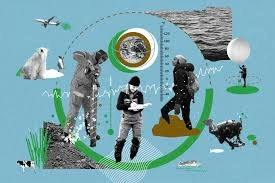
For the first time, half of the world’s people are in danger because to rising temperatures and terrible weather patterns.
The world’s climate problem has reached a breaking point. More than three billion people, which is about half of the world’s population, now live in places that are very likely to be affected by climate change. This scary number shows that one of the biggest worries for people and the environment right now is that communities all over the world are dealing with more and more extreme weather, a lack of resources, and environmental destruction that puts their basic survival at risk.
International climate research groups have done a lot of research lately that shows climate vulnerability is not a distant worry; it is a current reality that affects billions of people. These places are incredibly weak and are located on many continents. In South Asia, sub-Saharan Africa, small island developing states, and parts of Latin America, some of these places are very crowded. People who live in these areas are more likely to be hurt by climate-related disasters like floods, long droughts, heat waves, and rising sea levels. These disasters have a big impact on how they live and what jobs they can get.
What Climate Vulnerability Is and How It Affects Everyone
Climate vulnerability is the chance that climate change will hurt people, ecosystems, and infrastructure. This idea has three important parts: being exposed to climate risks, being sensitive to those risks, and being able to adapt to or recover from climate effects. “Highly vulnerable” areas often don’t have many methods to adapt since they are poor, have bad infrastructure, weak governance systems, and rely significantly on businesses that are sensitive to climate, including fishing and farming.
There are three billion people living in these unsafe places, and they are in danger of more than simply environmental difficulties. Climate change makes socioeconomic differences worse and hurts food security, water availability, public health, and the economy. In these places, communities sometimes lack the funds, technology, or institutional backing necessary to implement successful adaptation strategies or to recover from climate change-induced disasters.
Over 1.5 billion people in South Asia are at risk of catastrophic climate change, making it one of the worst-hit areas. Bangladesh, India, Pakistan, and Nepal are just a few of the countries that have to contend with terrible flooding during the monsoon season, melting glaciers that endanger water security, and extreme heat events that push the limits of what the human body can handle. The area’s high population density, widespread poverty, and reliance on farming make it very vulnerable, and when calamities happen, millions of people have very few safety nets.
Sub-Saharan Africa has a bigger climate problem than other places.
Sub-Saharan Africa is another area that is very vulnerable to climate change. There are about 800 million people living there, and they are having more and more difficulties with the environment, even though they don’t add much to global greenhouse gas emissions. The area has long periods of very dry weather that kill crops, rain patterns that are hard to predict that mess up traditional farming methods, and temperatures that are higher than the global average. In the Sahel region, the Horn of Africa, and the southern African republics, food shortages happen over and over again because of changes in the weather.
The agricultural sector, which employs more than 60% of the workers in many African countries, is still very sensitive to changes in the weather. Smallholder farmers grow most of the food on the continent, but they don’t have easy access to irrigation systems, crops that can handle harsh weather, or instruments that help them figure out what the weather will be like. When floods or droughts ruin crops, whole neighborhoods run out of food. This causes people to move, fight over limited resources, and have long-term economic problems that keep them poor.
Another big problem with the climate is that there isn’t enough water, which affects hundreds of millions of people in Africa. The Nile, Niger, and Zambezi rivers are all large river systems. Changes in rainfall and higher rates of evaporation are affecting how these rivers flow. Over the past 60 years, Lake Chad has shrunk by 90%, which has hurt the livelihoods of millions of people who depended on its waters for fishing, farming, and raising animals. People living in cities that are growing quickly have trouble getting enough water because the infrastructure isn’t able to handle both the growing population and the supply problems caused by climate change.
Climate threats could kill Small Island Developing States.
Three billion people live on small island developing states, which may be the most in risk of going extinct. Countries in the Pacific, Caribbean, and Indian Ocean are facing rising sea levels that could cover whole areas, stronger tropical cyclones that destroy communities, and ocean acidification that kills marine ecosystems that are important for food security and tourism. Climate change is bad for development in places like Tuvalu, Kiribati, and the Maldives. It also threatens the survival of nations and the preservation of their cultures.
The psychological and cultural consequences of climate vulnerability in island communities surpass mere relocation. As coastal erosion speeds up and saltwater intrusion makes farming impossible, we might lose traditional ways of knowing, burial sites, and cultural practices that are tied to certain places. Climate-induced migration from these islands poses intricate issues of sovereignty, citizenship, and the responsibilities of the international community towards communities displaced by uncontrollable environmental conditions.
Island nations that depend a lot on industries that are sensitive to climate change are more likely to be hurt by environmental problems because their economies are weak. Coral reef bleaching, beach erosion, and more storms that damage buildings and keep tourists away all hurt tourism, which is the main source of income for many island economies. Fisheries, which are another important part of the economy, are being disrupted by rising waters that change the way fish migrate and by severe weather that makes fishing unsafe for long periods of time.
#People who live in cities that are hazardous are taking more and more risks.
Cities are where environmental problems meet places with a lot of people and not enough infrastructure. This makes climate change harder on people who live in cities. Some of Asia’s coastal megacities, like Dhaka, Mumbai, Jakarta, and Manila, are home to hundreds of millions of people who might be flooded by either rising seas or excessive rain. People who live in informal settlements, which are places where poor people live in cities, often live in the most dangerous places, like flood plains, steep hillsides, and coastal areas. The bad housing there doesn’t do a good job of keeping you safe during bad storms.
When temperatures rise in tropical and subtropical cities, urban heat islands make things a lot worse. This makes it lethal during heat waves. Now, cities in the Middle East and South Asia often have wet-bulb temperatures that are close to or above the level at which people may live. People who work outside, like construction workers, street vendors, and farm workers in peri-urban areas, are more likely to get sick from heat stroke, heart stress, and other health problems that lower their ability to work, which hurts their family’s finances.
Climate change is making weak places greater all across the world, which puts more than 3 billion people at risk.