
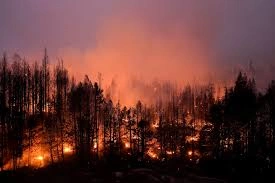
Changes to the climate make it harder for people to stay alive, which puts food and water security around the world at risk.
The climate disaster is becoming worse and worse, and it’s the most important issue of our time. More and more scientific evidence demonstrates that rising global temperatures and extreme weather patterns are directly affecting the basic building blocks of human civilization: food production and availability to clean water. Experts say that this is a very important time in history for people to act quickly to save their lives. Because of stress on the environment, farming systems are failing and water resources are running low all across the world.
The Problem That Is Getting Worse at the Intersection of Climate and Resources
Climate change has gone from being a fear that only existed in our minds to an actual danger to our lives. It has changed the natural conditions that have kept mankind alive for thousands of years. The delicate connection between steady weather patterns, crop productivity, and water availability is falling apart at an alarming rate. This is starting a chain reaction that could mess up food systems around the world and leave billions of people without enough clean drinking water.
Scientists now agree that climate change caused by people, mostly by companies generating greenhouse gases, cutting down trees, and adopting farming methods that aren’t healthy for the environment, is causing huge changes in the way it rains, the temperature, and the seasons. These challenges aren’t simply something that people talk about in school; they’re real phenomena that are happening all around the world, like crop failures, long droughts, big floods, and the steady devastation of agricultural and freshwater ecosystems.
The Intergovernmental Panel on Climate Change says that the average temperature of the world has already gone up by about 1.2 degrees Celsius since the Industrial Revolution. If emissions keep going up at the same rate, they could go up by 2.5 to 3 degrees Celsius or more by the end of the century. This small rise in temperature has a tremendous effect on the weather, the water cycle, and farming in different regions of the world. The Food Security Emergency: Agricultural Systems Under Siege
Changes in the environment caused by climate change are putting more and more stress on the world’s agriculture industry, which feeds nearly eight billion people. These changes might set back years of work to make food more secure. Extreme weather events including long heat waves, terrible droughts, frosts that come at the wrong time of year, and heavy rain are happening more often and increasing worse. These occurrences have a direct effect on crop yields and livestock output.
In locations that have long been the world’s breadbaskets, the weather is changing a lot. The weather is changing throughout North America, Europe, Asia, and Australia, where a lot of grains are cultivated. It rains less often, there are longer dry periods, and the growth seasons change. These things make it harder to decide when to plant and make the yield less consistent. The effects spread to global commodities markets, causing prices to change quickly and putting food out of reach for many who are already struggling.
Wheat, rice, maize, and soybeans are some of the most important crops for global nutrition. They have a hard time with really hot weather and not enough water. Scientists have discovered that these important crops lose between 5 and 15 percent of their yields for every degree Celsius rise in the average temperature around the world. The quantity they lose depends on where they are grown and how well they can adapt. As the temperature rises, these drops in yield get worse, which could cause big shortages in the world’s grain supply.
Plants are getting sicker and pests are spreading more because of climate change. This is a new threat to the health of crops in areas that used to be safe from climate change. Changes in temperature and humidity make it easier for viruses, fungus, and bugs to flourish. These diseases hurt crops and make farmers use more pesticides, which is bad for the environment and makes products more expensive.
Climate change affects the same ways of raising animals. For example, heat stress makes animals less productive, more likely to get sick, and less likely to discover excellent grazing space and feed crops. Pastoral populations in Africa, Asia, and Latin America that rely on livestock for food and money are at a larger risk as grasslands get worse and typical migration routes stop operating.# The Water Crisis is Getting Worse: Demand is Rising While Supply is Low
One of the most important and urgent implications of climate change is that there isn’t enough water. It has an impact on many areas of human health, including as drinking water, sanitation, industrial production, and irrigation for farming. Climate change is significantly altering the hydrological cycle.

