Fixing climate change is one of the most critical things we need to do right now. Most experts agree that people doing things, like cutting down trees and using fossil fuels, are the main culprits. Since the Industrial Revolution (1850–1900), the temperature of the Earth’s surface has risen by around 1.1°C. People that let out greenhouse gases are definitely to blame for this rise. This essay looks at the strong evidence that supports this fact, studies the processes of burning fossil fuels and cutting down trees, looks at current trends like record-high emissions in 2025, and talks about the many effects, as well as suggesting ways to lessen them.
Scientific proof that people are to blame.
People are certainly at fault for climate change. Years of meticulous research, including studies by the IPCC (Intergovernmental Panel on Climate Change), went into this. The IPCC’s Sixth Assessment Report Synthesis makes it clear that the people who release greenhouse gases are to blame for the warming. The Earth’s surface was 1.09°C [0.95 to 1.20°C] warmer from 2011 to 2020 than it was from 1850 to 1900. Isotopic monitoring of atmospheric CO2 gives us a “fingerprint” that connects the quick rise to fossil fuels. This is different from natural sources like volcanoes or wildfires.
We can’t explain the trends we’ve found by looking at things like solar activity or volcanoes erupting in the wild. Climate models indicate that their impact on the climate is less significant than that of human activities. Research on attribution shows that almost all of the warming that has happened since 1850 is due to people putting greenhouse gases into the air. Aerosols only cool things down a tiny bit. By 2025, the amount of CO2 in the air is predicted to be 425.7 parts per million (ppm), which is 52% greater than it was before industrialization. Nitrous oxide and methane levels are also higher than they have been in 800,000 years.
Important pieces of proof:
– The warmth that was observed is consistent with predictions from greenhouse gas radiative forcing models.
– There is no alternative explanation that can explain how quickly and how the data changes.
– More than 97% of experts who study climate change agree that individuals are to fault.
The main problem is fossil fuels.
The main cause of pollution is burning fossil fuels like coal, oil, and gas to power buildings, cars, and factories. It has caused about 79% of all greenhouse gasses in the past few years. Fossil CO2 emissions reached an all-time high of 38.1 billion metric tons (GtCO2) in 2025, which was 1.1% more than in 2024. This was remained the case, even if there were other ways to generate green energy. This is the largest rise ever, coupled with 2024. Coal, oil, and gas are all made up of fossil fuels.
The US (13%), India (8%), and the EU (6%) are the worst pollutants, although their rates of increase are not the same. China’s emissions only went up by 0.4%, but the US’s went up by 1.9% since it was colder and more coal was burned.India’s emissions went up by 1.4% since there was enough demand for strong renewable energy sources. Since 1850, there have been 2400 GtCO2 emissions, and more than half of them occured before 1989. This shows that certain countries care more about their own people than others do. The top 10% of families, who are the worst polluters, are responsible for 34% to 45% of emissions, depending on how much they use.
These fuels let out CO2 that has been held for millions of years, which is too much for natural sinks to handle. The land takes in 21%, the water takes in 29%, and the air takes in 49%. This will raise the level by 2.3 parts per million by 2025. If we don’t stop pumping carbon into the air, the amount of carbon will stay the same. The carbon budget of 1.5°C (170 GtCO2 left) will be eaten up in four years.
Cutting down trees makes things worse.
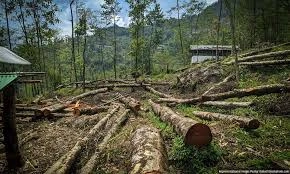
Cutting down trees and modifying how land is used makes up 22% of emissions. This means that trees, which are vital for keeping carbon in, are places where carbon can escape. Every year, cutting down 10 million hectares of tropical land releases 5 GtCO2. Every year, tropical losses release 8% of the world’s CO2. Land-use emissions fell by 9.8% to 4.1 GtCO2 in 2025. This was primarily because South America used less land. But there are still certain questions that need to be answered.
Brazil, Indonesia, and the DRC make up 57% of the total, but Brazil was able to limit its losses due of rules. When you cut down trees, they release carbon that has been stored up, and it also makes it difficult for trees to take in carbon in the future. The Amazon might start to let out more carbon than it takes in. It makes the damage, flames, and fossil effects worse. In 2025, sinks will work better because of the El Niño recovery, but over time, climate change will make them 25% less effective on land.
Fossil fuels will still be the greatest source of emissions in 2025, putting out 38.1 GtCO2 per year, or around 90% of total CO2 emissions. For the last ten years, this has gone increasing by 0.8% each year. Cutting down trees and using the land for other things releases about 10% of emissions, or 4.1 GtCO2. This is a 32% drop from the 2000s.
What is new and what will happen in 2026?
The World Meteorological Organization says that temperatures will stay close to record highs until 2029, which will make things even more dangerous.
Bloomberg talks about things that will happen in 2026, such as the electric vehicle sector separating, China’s fight against climate change, and the return of nuclear power. UNU indicated that the temperature is likely to go above 1.5°C, so people should be ready.Policies that say NDCs will produce more than 1.5°C of warming, but it’s hard to do anything because there isn’t enough money.
People thought there were problems and bad things that would happen.
People’s actions have made cyclones, heat waves, heavy rain, and droughts worse. Every year from 2006 to 2018, the sea level climbed by 3.7 mm. The glaciers are melting, and the water is getting more acidic. The loss of species, coral bleaching, and the melting of permafrost, which is exceedingly hard to stop, all damage ecosystems.
Three to six billion people are unfairly burdened by things like not having enough food or water or having to move. Floods, droughts, and hurricanes happen a lot, and they kill 15 times as many people. Mental health problems and diseases that spread by vectors also get worse. Cities are losing money on fishing and farming because of bad infrastructure.
The effects are all different:
– Africa, Asia, and LDCs don’t have enough food and water.
– Taking people away from their homes and changing the way they do things in the Arctic and on small islands.
– People who don’t have enough money die from hunger and heat.
Cutting down trees and burning fossil fuels both hurt the environment. This will make the global warming calamity worse in 2026.