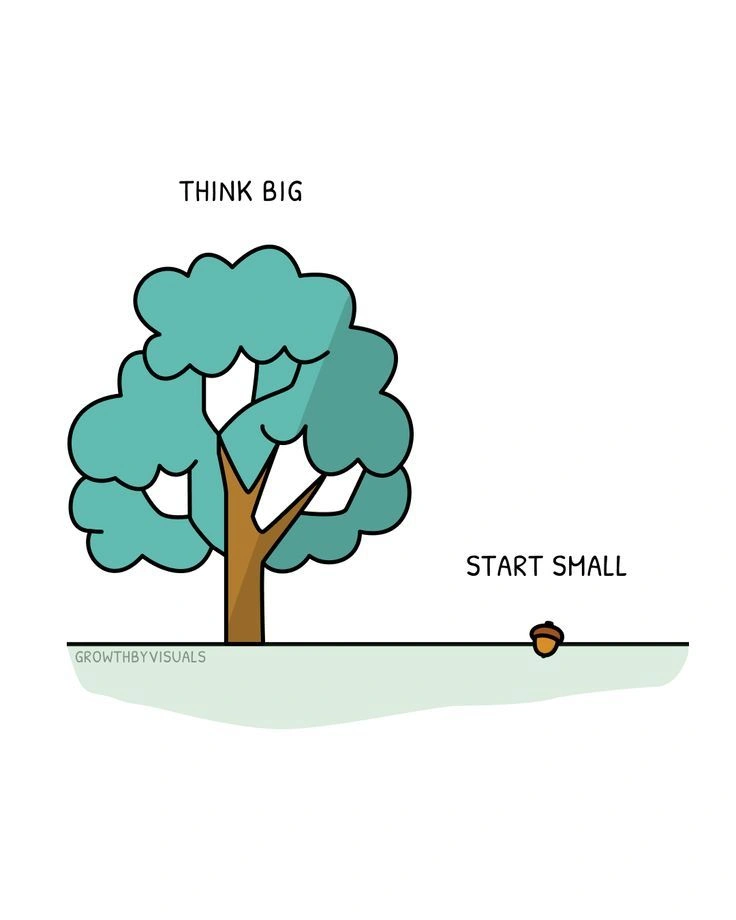
In general, the little things you do every day have a bigger impact on how well you do in the long run than the big choices you make. This is because performing the same things over and over again causes big changes over time. This idea goes against the idea that only big decisions effect our future. It shows how the activities we do every day may make us happier, richer, and stronger.
The Strength of Making Habits
Daily habits add up over time, just like compound interest in a bank account. University College London researchers observed that it takes roughly 66 days to get used to something. After that, the behavior becomes easy and natural. This automation frees up brain energy for more important things, so people may go forward without having to use willpower all the time.
Reading for 20 minutes a day adds up to 12 full books a year, which can change what you know and how you see things over the course of ten years. But short, focused study sessions don’t normally help people make long-term success because they get tired and forget things. Researchers in positive psychology have found that people who make minor changes, like saying thank you every day, are 25% happier with their lives after five years.
Why you can’t make significant decisions without your habits’ help
Big changes like quitting a job or establishing a business don’t work out if you don’t have regular routines to help you stay motivated. The American Psychological Association states that 92% of New Year’s resolutions don’t work out by February. This is usually because they only utilize willpower for a brief time instead of forming habits over time. You usually don’t get fit only by signing up for a gym once. Working exercise for 30 minutes every day does help you get fit.
Dan Ariely, a behavioral economist, says that little choices make up 80% of our results. He argues that being steady is more important than being intense. Business owners who send short messages on LinkedIn every day are better at networking than those who only go to conferences every so often. This is true in every area: those who stick to their portion sizes do better than people who go on crash diets.
Advancing your career: If you practice your skills every day, like coding for 15 minutes, you’ll get promoted faster than if you only take classes once in a while.
Financial Growth: You won’t go into debt if you keep track of how much you spend every night. This is better than just altering your budget every so often.
Harvard research shows that walking 10,000 steps per day lowers the risk of heart disease by 30%, which is greater than getting checkups once a year.
The neural basis for forming habits
Neuroplasticity is the process by which habits change the brain by making neural connections stronger through repetition. When you do things you do every day, the basal ganglia, which controls automatic actions, takes over and skips over the decision fatigue of the prefrontal brain. Andrew Huberman, a neurologist, says that behaviors that don’t take more than two minutes are the easiest to stick to. This means that you can layer habits to make them last over time.
Dopamine keeps this loop going: people keep flossing or meditating every day because they get modest rewards. These circuits slowly take over impulses, which makes it easier to do the appropriate thing. Researchers at Nature Neuroscience have revealed that doing the same thing over and over for 21 to 66 days can influence how people act. others who quit smoking by chewing gum every day are more likely to succeed than others who quit cold turkey.
In the real world, habits are what help you succeed.
In the past, a lot of individuals depended on their daily routines to shape their futures. Benjamin Franklin woke up at 5 a.m. to read and think about what was right and wrong. He remarked that these things helped him learn about a variety of various things. James Clear writes in his book Atomic Habits about how small changes British Cycling made, such getting more sleep and adjusting the pressure in their tires, helped them win 178 Olympic gold medals since 2008, up from one every 100 years.
Warren Buffett says that reading 500 pages a day is like making investments that grow over time, and it has helped him become 80% more successful in business. Serena Williams and other athletes who kept up their recuperation routines after games were able to stay at their best longer than athletes who solely relied on their talent. These examples show that even the little actions we do every day can have a tremendous impact on the future, even when we have to make large choices like signing contracts or putting money into something.
Corporate data backs this up: Google’s “20% time” turned into daily practices of coming up with new ideas that led to the launch of Gmail and AdSense. Deloitte estimates that employees who use micro-learning to spark curiosity are 37% more productive.
Getting over the ordinary issues that get in the way of daily activities
You can stick to your routines even when you’re busy or don’t want to by using the two-minute rule and other things. If a habit lasts longer than two minutes, make it shorter. Start by meditating for two minutes. According to study from Duke University, placing running shoes by the door makes it 35% more likely that you’ll work out.
Using apps to keep track of your progress can help you stay on track. According to a research from Cornell, visual streaks like habit calendars can make people 42% more likely to finish a task. The American Society of Training and Development believes that having an accountability partner to talk about your daily goals will help you succeed four times more often. People who work in high-stress jobs, like editing content, can stay focused and avoid burnout by doing things like stretching at their desks for five minutes.
Habit stacking can help you find extra time by combining new habits with old ones. This can help you stick to them up to 50% better. Motivation dips respond to things in the environment, like things that can be seen, which makes people 35% more likely to accomplish something. People are 200–300% more likely to succeed if they establish plans for how to get things done, such “if-then” plans. If you start with the bare minimum of actions, you can stop being a perfectionist and keep 80% of what you learn over time.
Wealth and relationships fluctuate throughout time.
Your regular spending habits are more important than big decisions.If you save 10% of your income every month, David Bach’s “latte factor” indicates you can become a millionaire in 30 years.The Gottman Institute’s study shows that small acts of kindness, like sending a daily “I appreciate you” SMS, can build relationships stronger than big ones. A happy marriage is one where there are five nice things for every unpleasant item.
By age 60, eating vegetables every day cuts the risk of chronic disease in half. This is faster than doing cleanses every now and then. Health trajectories change in the same way. LinkedIn suggests that networking on a regular basis, like having one coffee chat a week, gives you 70% more job opportunities than doing it only once in a while.
Putting habits into your work and digital life
Every day, social media managers and content writers need come up with new captions. This will help them get more done without feeling too fatigued. You can spend 15 minutes checking your material for SEO-friendliness and making sure the keywords sound natural.This will help them meet more people. Experts suggest that digital communication should be easier to use, and checking alt text often can help with that.
In Aurangabad’s fast-paced business world, where content needs change quickly, artists remain ahead by doing things like looking at trends in the morning.Notion and other habit dashboards illustrate how well you’re doing at both work and home, making routines a competitive edge.
Getting the return on investment (ROI) of habits for preparing ahead
Every week, write down how far you’ve come to see patterns. This can help you understand how much of an impact it had. The Journal of Personality released a long-term study in 2025 that found that habit consistency was responsible for 40% of differences in life outcomes, more than schooling or IQ. Habit multipliers and other tools that let one behavior lead to another help you get better faster. For example, working out makes you stronger, which helps you eat healthier.
In 2026, AI habit coaches will be able to give people individualized nudges, but the main idea will still be that everyday actions impact the trajectory of events.
Changes in society that are making habits more important
Japan’s kaizen philosophy, which urges to make incremental, gradual changes, helped the country rebuild its economy after World War II. Societies that reward regularity grow. In 2026, when the economy is uncertain, policies that focus on habits, such micro-savings laws, become more popular around the world. People who think this way are better at dealing with uncertainty, and they make their everyday habits into things that will help them in the future.
In the end, large choices set the course, while modest everyday habits steer the ship, which leads to happy and successful lives. Accepting them demonstrates potential that is sometimes hidden by presentation.
The small acts you do every day have a bigger effect on your future than the major ones you do.