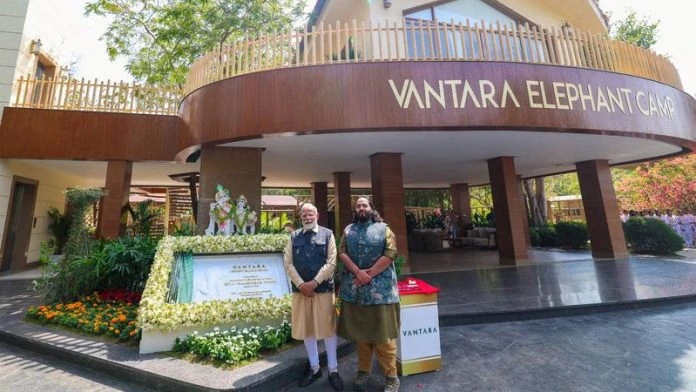
India’s wildlife governance has returned to the global spotlight after the Central Zoo Authority (CZA) withdrew its earlier recommendation to restrict exotic animal imports. The reversal came during a meeting of the Standing Committee of the Convention on International Trade in Endangered Species of Wild Fauna and Flora (CITES) held in Uzbekistan on 23 November 2025. The decision follows months of scrutiny triggered by an international investigation into Vantara, the private zoo project backed by Reliance Industries.
The shift marks a significant turnaround for India’s wildlife regulatory framework. Earlier this year, CITES raised concerns over discrepancies in import records, the authenticity of “captive-bred” declarations, and the adequacy of checks on the origin of several high-risk species imported into the country. These issues surfaced most prominently during a verification mission to Vantara, which had acquired a wide range of exotic animals from multiple countries. Questions were raised about whether some specimens labelled as captive-bred might, in fact, have been sourced from the wild.
Vantara—a sprawling rescue, rehabilitation, and conservation facility in Gujarat—had been at the centre of legal and public scrutiny. A Supreme Court-mandated Special Investigation Team reviewed its operations earlier in the year and found no violations of domestic wildlife or trade laws. India maintained that enforcement mechanisms were robust and that Vantara’s imports complied fully with national and international regulations.
Despite this, CITES initially recommended that India halt the import of certain endangered species until its vetting and verification procedures were strengthened. However, at the Uzbekistan meeting, the Standing Committee acknowledged insufficient support among member states to continue with the restriction. Several countries argued that available evidence did not justify imposing a moratorium and that India had taken adequate steps to address concerns.
The decision has generated mixed reactions within the conservation community. Supporters of the withdrawal argue it validates India’s claims of compliance and strong regulatory oversight. Critics, however, warn that the reversal may ease pressure on authorities to close existing loopholes, potentially enabling questionable trade practices to continue unchecked.
Key Issues at a Glance:
| Issue | Concern | Current Position |
|---|---|---|
| Verification of origin | Ensuring animals are genuinely captive-bred and not wild-caught | Concerns raised; India asserts compliance |
| Transparency in import permits | Robustness of CZA’s verification procedures | Under continuing scrutiny |
| Vantara operations | Legality of acquisitions and facility management | Cleared by Supreme Court inquiry |
| Global regulatory oversight | Alignment with CITES expectations | Recommendation withdrawn; monitoring continues |