
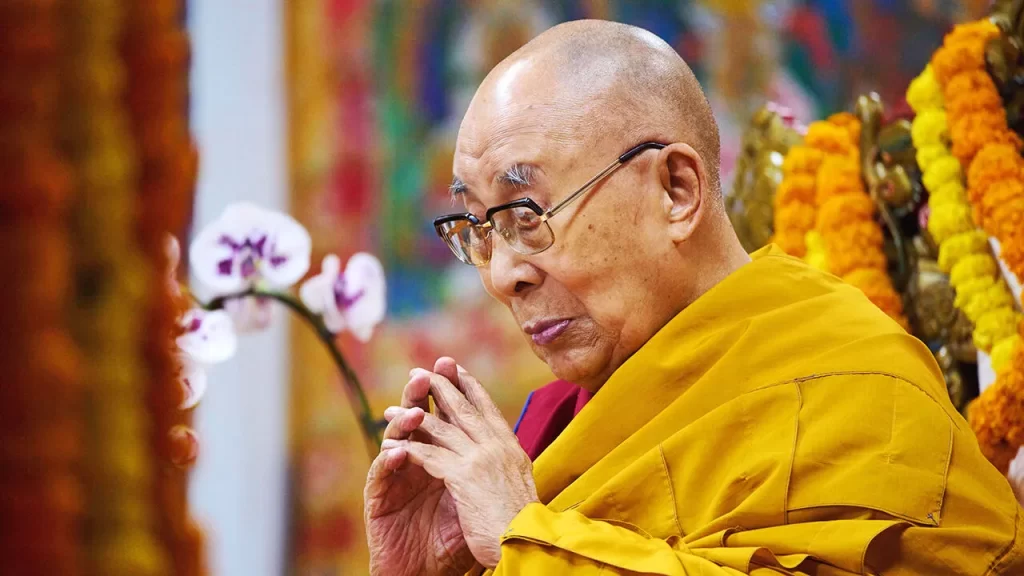
2 July, 2025-In a pivotal move that has drawn global attention, the 14th Dalai Lama has revealed plans concerning his succession, a subject of deep spiritual and political significance. The announcement, made ahead of his 90th birthday on July 6, comes as China continues to assert its authority over Tibet and its religious institutions, prompting renewed concerns over Beijing’s potential interference in choosing his successor.
According to Tibetan Buddhist tradition, the Dalai Lama is considered the reincarnation of a long line of spiritual leaders. The current Dalai Lama, Tenzin Gyatso, has served as the global face of Tibetan Buddhism since 1940 and has spent most of his life in exile in India following China’s occupation of Tibet in 1959. The question of who will succeed him — and under what conditions — has been a long-standing issue, complicated by geopolitical tensions and religious sensitivities.
In a written statement, the Dalai Lama reiterated his stance that the institution of the Dalai Lama will continue if it serves the Tibetan people’s best interests. He emphasized that the final decision regarding his reincarnation should be made based on the wishes of the Tibetan community and should be free from any political influence. He also reaffirmed that no recognition should be given to any candidate selected for political ends, especially by the Chinese government.
This statement is a direct response to China’s declaration that it reserves the right to appoint the next Dalai Lama, citing historical precedent. Beijing has long insisted on controlling the reincarnation process of Tibetan lamas, including the Panchen Lama, whom many Tibetans believe has already been replaced by a state-sponsored appointee. Critics view this as an effort to tighten China’s grip on Tibetan Buddhism and suppress religious freedom in the region.
The Dalai Lama has previously suggested that his reincarnation could take place outside Tibet and even hinted at ending the tradition altogether if it becomes politically manipulated. In 2011, he devolved his political responsibilities to an elected Tibetan government-in-exile, further separating religious and administrative roles. However, his spiritual influence remains undiminished, especially among Tibetans and Buddhists worldwide.
His latest remarks are likely to rekindle debates within the international community over Tibet’s autonomy and China’s religious policies. Human rights advocates have urged governments to support the Tibetan people’s right to determine their spiritual leadership without coercion. Meanwhile, China has maintained its narrative that Tibet is an inseparable part of the country and has condemned the Dalai Lama as a “separatist in monk’s robes.”
As the Dalai Lama approaches his 90th year, the succession issue becomes ever more pressing. Many Tibetans fear that without clear guidelines, China may attempt to install its own Dalai Lama in an effort to undermine the exiled Tibetan leadership. The Dalai Lama’s statement aims to preempt such moves and ensure that the centuries-old tradition of reincarnation remains rooted in spiritual legitimacy rather than political ambition.

