
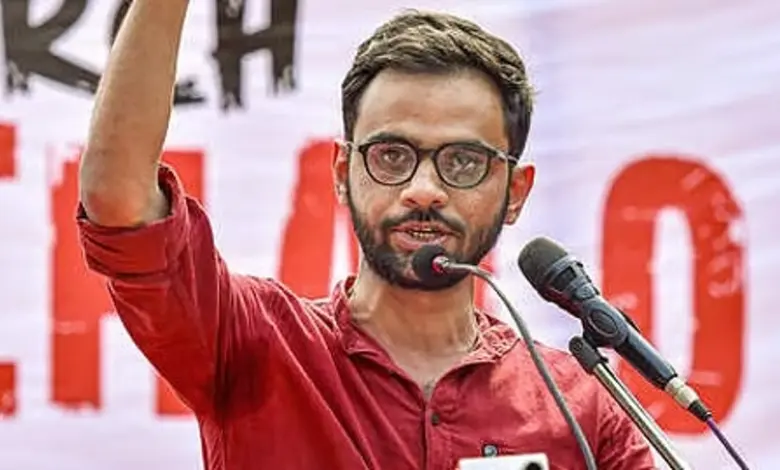
In a development that has reignited legal and political debate nationwide, a Delhi court on Thursday granted interim bail to activist and former Jawaharlal Nehru University (JNU) student leader Umar Khalid, who has been in custody since September 2020 in connection with the alleged “larger conspiracy” behind the 2020 Northeast Delhi riots. The court allowed Khalid to be temporarily released from December 16 to December 29, 2025, enabling him to attend his sister’s wedding.
Additional Sessions Judge Sameer Bajpai at the Karkardooma Court approved the 13–15-day interim relief on humanitarian grounds, emphasising the cultural significance of the family event. Khalid is required to furnish a personal bond of ₹20,000, supported by two sureties, as part of his release.
Stringent Bail Conditions Reflect Judicial Caution
While granting the temporary relief, the court imposed strict conditions designed to safeguard the integrity of ongoing legal proceedings:
- Khalid must not contact any witnesses connected to the case.
- He is barred from using social media during the bail period.
- He may meet only family, relatives and friends, either at his residence or at designated wedding venues.
- He must provide an active mobile number to the investigating officer.
- His movement will remain restricted to specific permitted locations.
- He must surrender on December 29, returning to custody without delay.
These conditions underscore the court’s intent to balance personal liberty with the seriousness of the charges and the need to maintain procedural fairness.
Context: A Controversial and Prolonged Legal Battle
Khalid’s interim bail comes amid one of the most debated legal cases in recent years. He, along with several other activists including Sharjeel Imam, Gulfisha Fatima, and Meeran Haider, faces charges under the Unlawful Activities (Prevention) Act (UAPA) and various sections of the Indian Penal Code for allegedly orchestrating a conspiracy that contributed to the communal violence in February 2020.
The riots, which erupted during nationwide protests against the Citizenship Amendment Act (CAA), resulted in 53 deaths and hundreds of injuries. Investigators allege that the violence was pre-planned, a claim repeatedly denied by the accused, who maintain there is no direct evidence linking them to any violent acts.
Khalid’s applications for regular bail have been rejected multiple times by the trial court and the Delhi High Court. The matter is currently pending before the Supreme Court, which has reserved its verdict on his broader bail plea—a decision widely expected to influence future interpretations of bail in UAPA cases.
Political and Legal Reactions Intensify
The interim bail order has sparked contrasting reactions across legal and political circles. Civil liberties advocates argue that Khalid’s prolonged incarceration without the conclusion of a trial highlights concerns about the right to a speedy trial and potential misuse of stringent laws.
Conversely, critics of the decision assert that even temporary release must be approached with caution given the serious nature of the allegations. They stress that the court’s strict conditions are essential to prevent any possible interference with the ongoing case.
The matter has reignited broader conversations about the application of anti-terror provisions, the protection of dissent, and the delicate balance between national security and individual rights in democratic societies.
Key Interim Bail Conditions for Umar Khalid
| Condition | Details |
|---|---|
| Bail Period | December 16–29, 2025 |
| Bond | ₹20,000 with two sureties |
| Social Media | Use prohibited |
| Witness Contact | Strictly barred |
| Movement | Limited to home and wedding venues |
| Surrender Date | December 29, 2025 |

