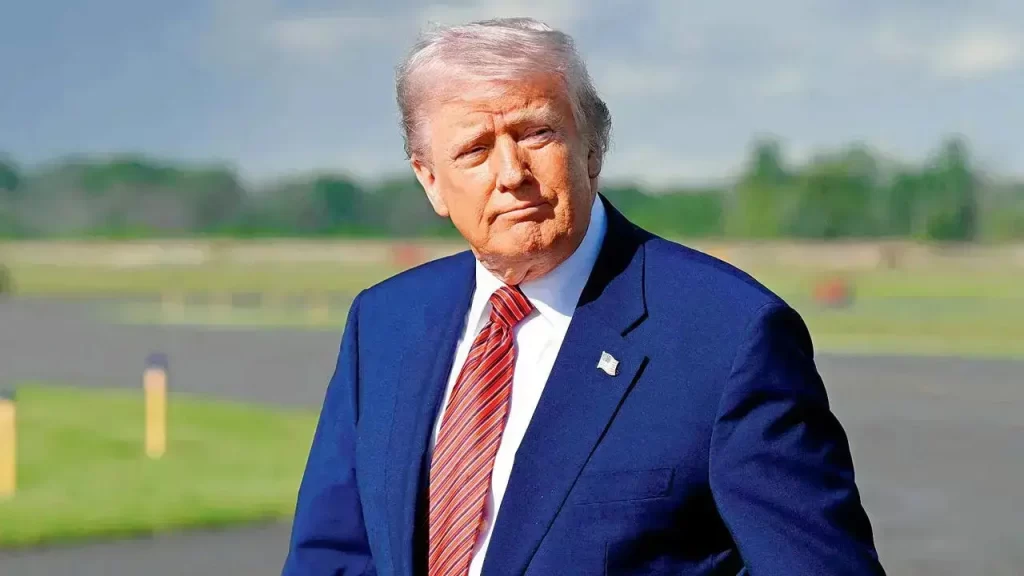
In a significant escalation of geopolitical pressure, the United States under President Donald Trump has intensified its campaign against the government of Venezuelan President Nicolás Maduro. The latest actions — including fresh sanctions against members of Maduro’s family and the high-profile seizure of a Venezuelan oil tanker — signal Washington’s intent to curtail Venezuela’s revenue streams and weaken the regime’s hold on power. The moves have triggered sharp condemnation from Caracas and ignited renewed global debate over international law, maritime rights, and energy security.
The U.S. Treasury’s latest sanctions targeted three nephews of Venezuelan First Lady Cilia Flores: Franqui Flores, Carlos Flores, and Efraín Campo. These individuals, long associated with Maduro’s inner circle, were sanctioned alongside several additional regime-linked figures and entities. By placing them on the Specially Designated Nationals list, Washington has frozen any U.S.-linked assets and barred American individuals and companies from conducting business with them. U.S. officials assert that these measures are designed to disrupt corruption networks and curtail illicit financial flows connected to the Venezuelan state.
This latest sanctions package builds upon previous measures already imposed on Maduro, his immediate family, senior officials, and key state-owned enterprises. The Trump administration’s evolving strategy clearly signals a harder line: not only restricting financial access but physically intervening to disrupt the oil trade that forms the backbone of Venezuela’s fragile economy.
The most striking example of this new approach came with the U.S.-led seizure of a massive crude oil tanker, identified as the Skipper, in early December. The tanker — one of the largest to be intercepted in recent years — was reportedly carrying Venezuelan crude, part of which was bound for Cuba. The operation involved multiple U.S. agencies and was executed under a judicial warrant, marking an unusual and assertive enforcement action in international waters. Washington has indicated it may retain the oil as part of sanctioned cargo protocols, raising concerns that dozens of other Venezuelan-linked vessels could face similar enforcement.
Caracas immediately condemned the seizure, denouncing it as “criminal piracy” and a blatant violation of international maritime law. Venezuelan officials vowed to challenge the action before international institutions, characterizing the U.S. move as theft of sovereign resources. Legal experts are divided, with some suggesting the seizure pushes the boundaries of U.S. jurisdiction, while others argue that sanctions violations justify the intervention.
The fallout has extended well beyond the U.S.–Venezuela relationship. Russia has publicly expressed solidarity with Maduro, discussing plans to expand joint economic and energy projects — a development that underscores the broader geopolitical stakes. The crisis has also unsettled global energy markets, prompting warnings about potential disruptions to crude flows and increased price volatility.
As the United States enters an election cycle, the Trump administration’s aggressive posture toward Venezuela carries domestic political implications as well. Supporters argue that the measures reinforce global norms against corruption and authoritarianism, while critics warn that escalating maritime confrontations risk destabilizing the region.