
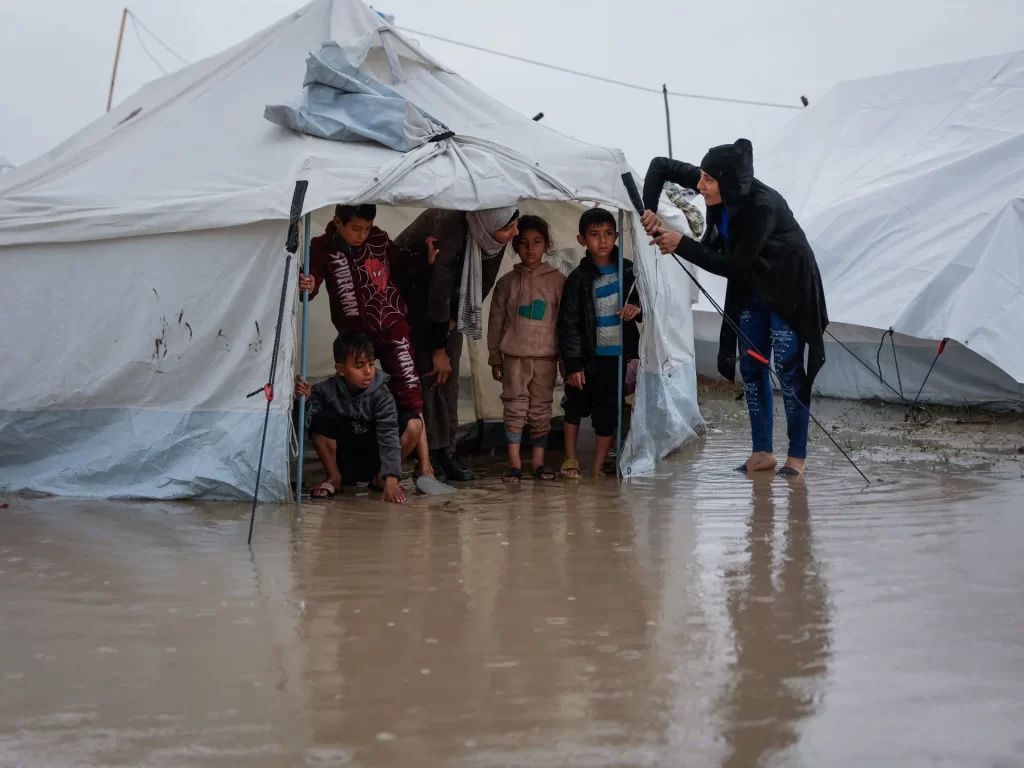
At least 12 people, including children, have died in the Gaza Strip within the past 24 hours as a severe winter storm batters displacement camps, highlighting an escalating humanitarian disaster in the besieged territory.
The unprecedented combination of a humanitarian emergency and extreme weather has left thousands of displaced Palestinians exposed to freezing temperatures, widespread flooding, and insufficient shelter. The crisis underscores the acute vulnerability of civilians living in makeshift tents and damaged structures following more than two years of conflict.
Winter Storm “Byron” Worsens Hardship for Displaced Families
Storm Byron, a powerful winter system bringing torrential rain, strong winds, and plummeting temperatures, has overwhelmed Gaza’s fragile infrastructure. Hundreds of temporary shelters housing internally displaced people have been inundated, with many tents collapsing under the weight of water and wind.
According to local medical and civil defense sources, the extreme weather conditions have directly contributed to multiple fatalities — including young children — as families struggle to stay warm and dry. In one tragic incident, an infant died from exposure after flooding swept through a tent in Khan Younis.
The casualties come amid an already fragile ceasefire that has reduced, but not ended, conflict-related violence across the enclave. Sporadic clashes and deep political tensions continue to impede effective humanitarian response.
Displacement Camps Flooded, Supplies Scarce
Estimates suggest that more than 1.5 million Palestinians remain displaced, living in overcrowded camps and temporary shelters largely unsuitable for winter conditions. Heavy rainfall has left floors and bedding soaked, blankets unusable, and families struggling to stay warm.
Humanitarian agencies report that hundreds of thousands of tents and shelters have been flooded or damaged in areas such as Gaza City, Khan Younis, and central refugee sites. Many of these structures were already compromised by destruction from previous military operations.
A United Nations migration agency warned that nearly 800,000 displaced residents are at imminent risk of further flooding, with poor drainage and sanitation conditions heightening the threat of disease outbreaks.
Aid Access and Shelter Deficiencies Highlighted
Despite agreements under a ceasefire to deliver humanitarian assistance, aid organizations continue to report significant obstacles. Limited delivery of waterproof tents, warm clothing, and essential winter supplies has left displaced families exposed to the elements. International relief groups argue that only a fraction of the required shelter materials have reached the territory, exacerbating the crisis as winter deepens.
A senior official from the Palestinian NGO Network emphasized that far fewer tents had been received than needed, while other relief coordinators highlighted bottlenecks and restrictions hampering the distribution of critical equipment.
Human Toll and International Response
The severe weather’s humanitarian impact extends beyond loss of life, with thousands facing exposure, disease risk, and loss of remaining possessions. Children, elderly residents, and pregnant women are among the most vulnerable. Aid agencies have reiterated urgent appeals for expanded shelter support and unfettered access for humanitarian convoys.
Key Humanitarian Concerns:
- Flooded and collapsing tents in displacement camps
- Shortage of waterproof winter clothing and blankets
- Increased risk of water‑borne disease and hypothermia
- Blocked or delayed delivery of essential supplies
Outlook: Strained Resources and Critical Needs
As severe winter conditions persist, experts warn that the humanitarian crisis could deteriorate further unless immediate action is taken. Without adequate shelter and emergency aid, displaced families remain exposed to life‑threatening cold and flooding — a catastrophe compounded by ongoing conflict and political stalemate.
The current state of affairs in Gaza serves as a stark reminder of the complex interplay between conflict, climate extremes, and civilian suffering — underscoring the urgent need for coordinated international response and durable solutions for vulnerable populations.

