
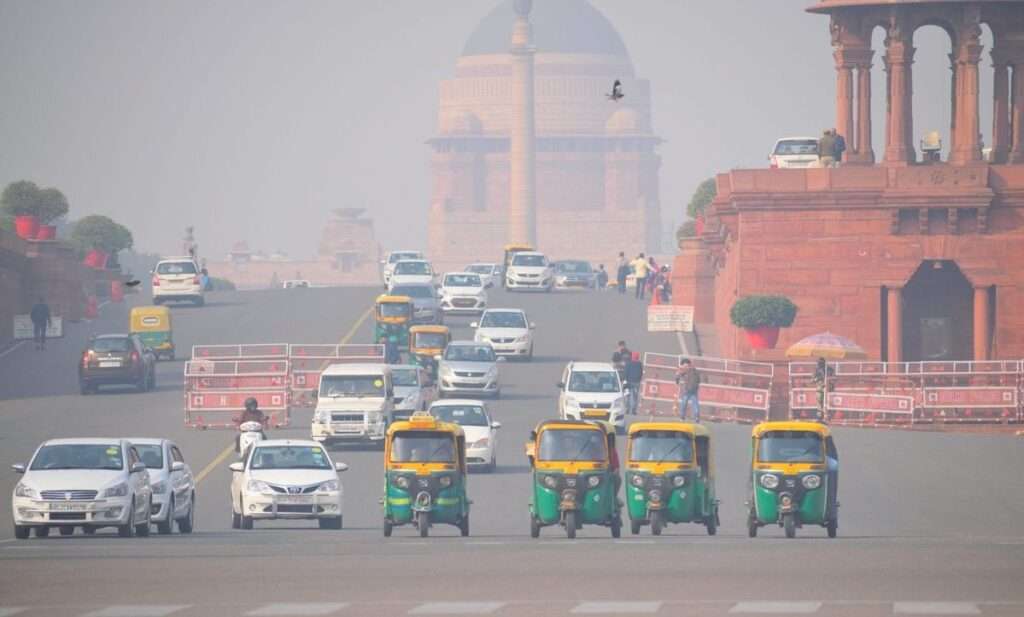
In a decisive move to mitigate one of the worst outbreaks of air pollution in recent memory, the Delhi government has banned the entry of non-Delhi-registered goods vehicles that comply only with the outdated Bharat Stage III (BS-III) emission standard, effective from 1 November 2025. The decision comes as the city’s air quality index (AQI) remains entrenched in the “poor” category and a new health study reveals that roughly one in seven deaths in Delhi in 2023 was linked to air pollution.
According to the latest report from the Institute for Health Metrics and Evaluation (IHME), based on Global Burden of Disease (GBD) data, the burden of air pollution in Delhi reached alarming proportions last year. The study estimates that 15 percent of total deaths in 2023 were attributable to air pollution, effectively equating to one in every seven lives lost in the national capital.
Simultaneously, monitoring by the Central Pollution Control Board (CPCB) shows the city’s AQI at 245 on the morning of 1 November, remaining within the “poor” range after days of “very poor” readings above 300. Officials attribute the surge in pollution to vehicular emissions, dust resuspension, industrial output, and the onset of the winter season which traps airborne particles.
In response, the Commission for Air Quality Management (CAQM) has ordered that from 1 November only goods vehicles registered in Delhi, or vehicles meeting the stricter Bharat Stage VI (BS-VI) emission norm, will be permitted entry. All non-Delhi-registered commercial goods vehicles below BS-IV standard, particularly BS-III and earlier, will be turned back at 23 key border checkpoints. Traffic police and transport officials from neighbouring districts including Ghaziabad and Gurugram have been advised to implement the restrictions strictly and coordinate with border posts.
Experts say the transport sector remains one of the largest contributors to ambient PM₂.₅ and NOₓ in the Delhi-NCR region. Vehicle emissions in Delhi have been responsible for tens of thousands of premature deaths in recent years. The ban on older trucks and vans is seen as a targeted attempt to curb one of the most significant pollution sources ahead of winter, when meteorological conditions exacerbate smog formation.
Despite these measures, analysts caution that the ban alone may not be sufficient. Delhi already remains the most polluted among India’s non-attainment cities and has utilised only a fraction of its allocated funding under the National Clean Air Programme (NCAP). Moreover, the IHME report warns that reducing air pollution could increase life expectancy in key northern states by more than a year.
With the new vehicle-entry curbs now in force and air-quality levels still troubling, Delhi faces a critical test of its pollution-control strategy. The finding that approximately one in seven deaths last year were linked to air pollution underscores the urgency of multi-pronged action—from stricter vehicular norms and industrial regulation to better enforcement of dust-control and agricultural residue burning norms. How effectively authorities implement and sustain these measures will determine whether the capital can break its status as one of the world’s most polluted cities and secure the health of its tens of millions of residents.

