
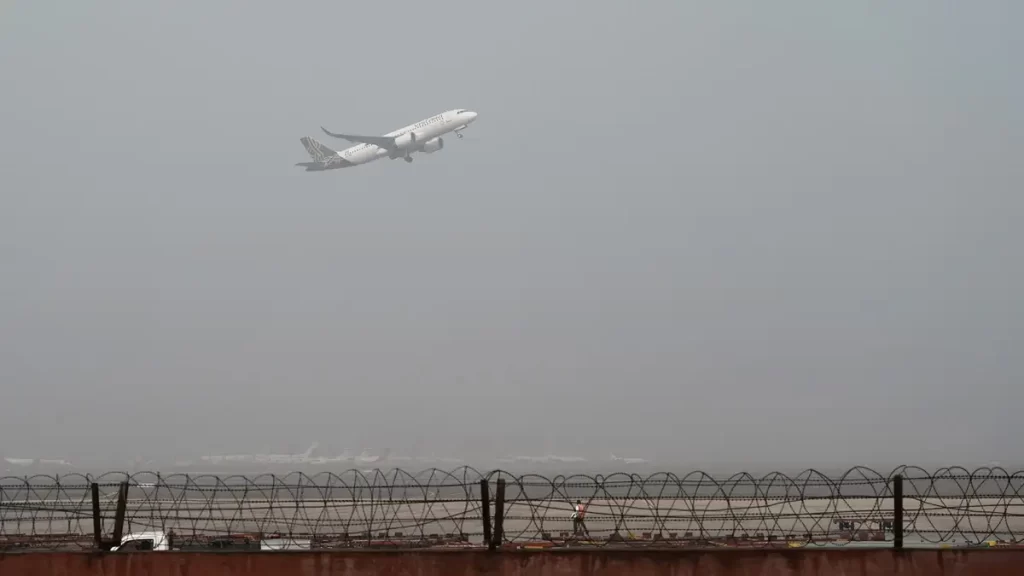
Severe winter conditions gripped the Delhi-National Capital Region (NCR) on Monday as dense fog combined with hazardous air quality caused widespread travel disruptions. Poor visibility and alarming pollution levels significantly impacted road, rail, and air transport, once again highlighting the capital’s recurring winter crisis linked to weather patterns and air pollution.
Visibility Drops, Transport Services Affected
Early morning hours saw visibility levels fall sharply, with several parts of Delhi-NCR recording near-zero visibility. The dense fog led to slow-moving traffic on major arterial roads, including highways connecting Delhi with Gurugram, Noida, Ghaziabad, and Faridabad. Commuters faced extended travel times, while authorities urged drivers to exercise extreme caution.
At the Indira Gandhi International Airport, multiple flights were delayed as low-visibility procedures were implemented. Although no mass cancellations were reported, airlines issued advisories warning passengers of possible schedule changes. Rail services were also affected, with several long-distance trains arriving late due to fog-related operational constraints.
Air Quality Remains in ‘Severe’ Category
Alongside fog, air pollution levels in Delhi-NCR remained in the ‘severe’ category, compounding health risks for residents. The Air Quality Index (AQI) crossed hazardous thresholds in several monitoring stations, driven by a combination of vehicular emissions, stagnant winds, and winter inversion.
Key factors contributing to poor air quality include:
- Low wind speed preventing dispersion of pollutants
- Increased vehicular emissions during peak hours
- Seasonal weather conditions trapping particulate matter
- Continued construction activity in some areas
Health experts advised vulnerable groups—children, the elderly, and those with respiratory conditions—to limit outdoor exposure and use protective masks when necessary.
Authorities Issue Advisories
Traffic police and civic agencies issued multiple advisories asking commuters to:
- Avoid non-essential travel during early morning hours
- Use fog lights and maintain safe distances while driving
- Prefer public transport where feasible
- Monitor official updates on traffic and air quality
Schools and offices largely remained open, though many institutions reported reduced attendance due to commuting challenges.
Broader Winter Pattern in the Capital
Delhi’s winter months routinely witness a toxic mix of dense fog and air pollution, disrupting daily life and economic activity. Meteorological experts note that such conditions are expected to persist intermittently until a significant change in weather patterns, such as rainfall or stronger winds.
Impact Snapshot (December 29, 2025):
- Road Transport: Slow traffic, minor congestion
- Air Travel: Delays due to low visibility
- Rail Services: Trains running behind schedule
- Health Advisory: Outdoor exposure discouraged
Outlook and Implications
While authorities continue short-term mitigation measures, experts stress the need for long-term solutions to address Delhi-NCR’s winter pollution crisis. Improved public transport, stricter emission controls, and coordinated regional action remain critical to preventing recurring disruptions.
As residents brace for more foggy mornings and fluctuating air quality levels, Monday’s events serve as another reminder of the capital’s fragile balance between urban growth, environmental sustainability, and public health.

