
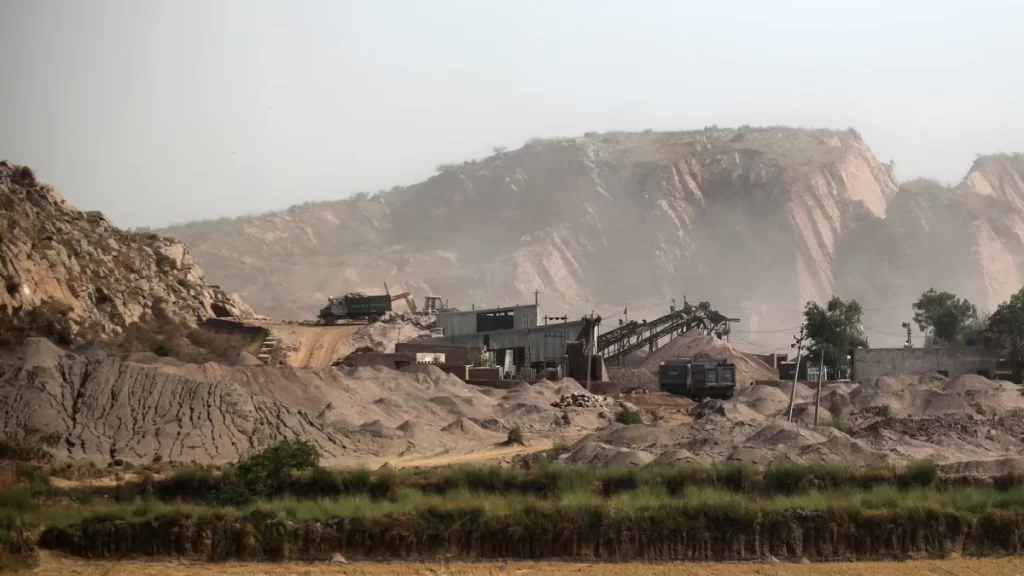
In a significant development with far-reaching environmental and legal implications, the Supreme Court of India on December 29, 2025, stayed the implementation of its own November 20 ruling that had introduced a new 100-meter elevation threshold to define the Aravalli mountain range. The interim order has reopened debate around environmental protection, land use regulations, and judicial policymaking, especially in ecologically sensitive regions spanning Delhi, Haryana, Rajasthan, and Gujarat.
Background of the November 20 Ruling
The November 20 judgment sought to bring clarity to long-standing disputes over what constitutes the Aravalli range by adopting a 100-meter elevation benchmark. Under this framework, only land parcels above the specified elevation would qualify as part of the Aravallis, directly influencing the scope of environmental safeguards, mining restrictions, and construction bans.
The ruling was initially seen as a landmark step in environmental governance, aimed at reducing ambiguity in enforcement and enabling authorities to distinguish protected hill zones from surrounding plains. However, it also triggered widespread concern among environmentalists and civil society groups, who argued that the Aravalli ecosystem cannot be defined solely by elevation and that such a narrow criterion could weaken protection for large forested and recharge areas.
Reasons Behind the Stay Order
The Supreme Court’s decision to stay its own ruling underscores the complexity of balancing legal precision with ecological realities. The bench acknowledged that the elevation-based definition raised critical questions that warranted deeper examination before implementation.
Key concerns highlighted include:
- Risk of environmental dilution by excluding low-lying but ecologically vital stretches
- Potential misuse by real estate and mining interests
- Inconsistency with earlier environmental jurisprudence on holistic ecosystem protection
By issuing the stay, the court effectively paused all administrative actions based on the new definition, restoring the status quo until further orders.
Impact on Environmental Regulation and Land Use
The stay has immediate consequences for environmental clearance processes, especially in regions where development projects were awaiting classification under the revised Aravalli definition. State governments and regulatory authorities are now required to revert to earlier interpretations while awaiting judicial clarity.
Experts note that the decision highlights a broader policy dilemma: whether natural features like mountain ranges should be defined using scientific-geographical parameters alone or through ecological and functional criteria that account for biodiversity, groundwater recharge, and climate resilience.
Why the Aravalli Range Matters
One of the world’s oldest mountain systems, the Aravalli range plays a crucial role in:
- Preventing desertification
- Regulating regional climate
- Acting as a natural groundwater recharge zone
- Supporting biodiversity across northern and western India
Any change in its legal definition has direct implications for environmental protection laws, urban expansion, and sustainable development.
Conclusion and Way Forward
The Supreme Court’s stay on the 100-meter elevation threshold marks a pivotal moment in India’s environmental jurisprudence. It reflects judicial caution in redefining natural ecosystems through rigid parameters and opens the door for a more nuanced, science-backed approach. As the case proceeds, its outcome is expected to shape future policies on environmental conservation, judicial intervention, and sustainable land management. For now, the pause serves as a reminder that protecting fragile ecosystems like the Aravallis requires both legal clarity and ecological sensitivity.

