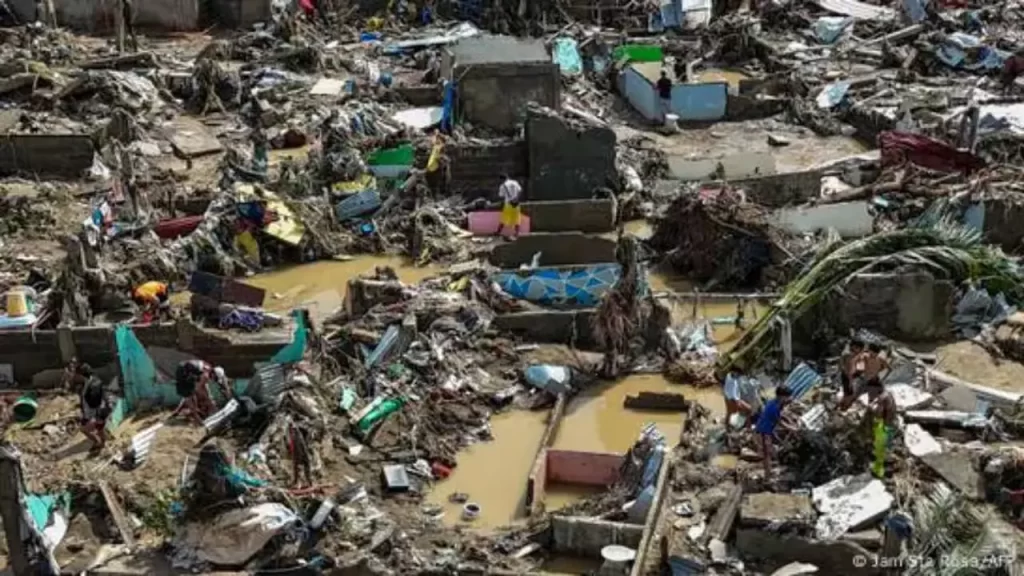
Late-season tropical cyclone Typhoon Kalmaegi struck first the central Philippines and then made landfall in central Vietnam, inflicting heavy casualties, drastic infrastructure damage, and triggering mass evacuations. The storm’s impact underscores the heightened vulnerability of Southeast Asia to intense weather events and raises urgent questions about disaster preparedness and climate resilience.
Typhoon Kalmaegi — locally known in the Philippines as “Tino” — intensified rapidly before making landfall in the Philippines on November 4, 2025. According to official reports, the storm left at least 188 people dead and 135 still missing in the Philippines alone. Widespread flooding, landslides, and storm surges flattened homes, uprooted trees, and cut off power and communication lines across multiple provinces.
In the storm’s wake, the Philippines declared a national state of calamity to unlock emergency funds and expedite disaster response. Over 500,000 people were displaced, and critical infrastructure including schools and hospitals suffered major damage. Relief operations are underway as rescue teams continue to search for missing persons amid collapsed structures and debris-strewn towns.
After crossing the archipelago, Kalmaegi moved westward into the South China Sea and made landfall in Vietnam’s central highlands on November 6. In provinces such as Gia Lai and Dak Lak, authorities reported at least five deaths, damaged homes, and heavy flooding. Evacuations of hundreds of thousands were coordinated ahead of the storm’s arrival, minimizing potential loss of life.
The storm’s impact in Vietnam includes widespread power outages, downed trees, and disrupted transport and communication networks. Local governments are now assessing agricultural losses and structural damage, particularly in coffee-producing highland areas that may face long-term economic consequences. The country’s central and coastal regions, already vulnerable to seasonal typhoons, are struggling to restore basic utilities and ensure access to clean water and medical aid for affected residents.
Meteorological agencies have flagged Kalmaegi as one of the strongest late-season typhoons in the region this year, with peak sustained winds estimated at around 183 km/h (114 mph) during its approach to Vietnam. Analysts note this event underscores recurring climate-driven patterns: warmer seas, increased rainfall, more intense storms, and higher vulnerability in coastal and mountainous zones. In both the Philippines and Vietnam, structural weaknesses in infrastructure, early-warning systems, and disaster-resilient housing have been exposed by Kalmaegi’s fury.
Typhoon Kalmaegi has inflicted severe human and economic losses across both the Philippines and Vietnam, revealing the urgent need for strengthened regional disaster preparedness, resilient infrastructure, and climate adaptation measures. As recovery efforts begin, governments, international agencies, and affected communities face the dual challenge of rebuilding in the short term and bolstering resilience in the long term. The storm serves as a stark reminder that in an era of changing climate patterns, no region can afford to remain complacent.