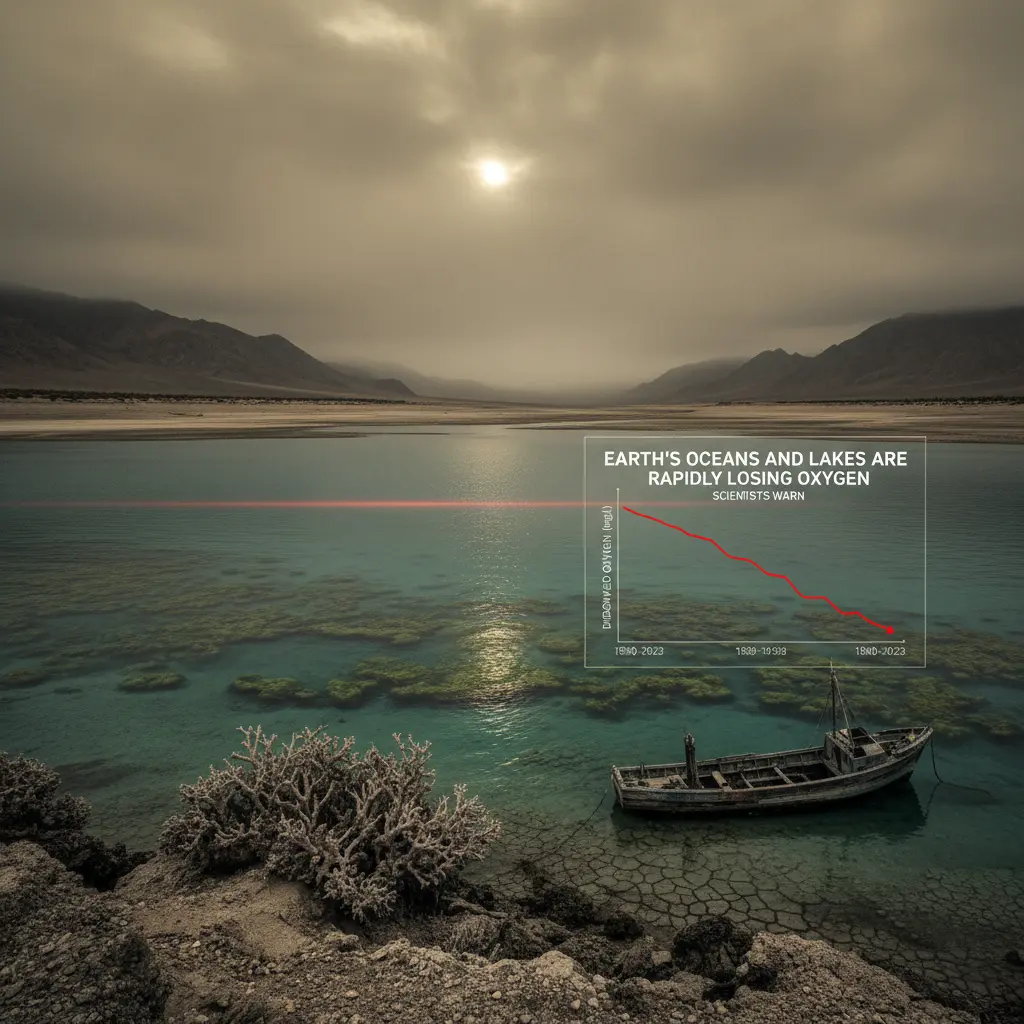
There’s a quiet crisis unfolding beneath the surface of the planet’s water, and scientists say it deserves a lot more attention than it’s getting. A growing body of research shows that oxygen is disappearing from oceans, lakes, rivers, and coastal waters worldwide, and the pace of that loss is picking up. Researchers are now calling this ocean deoxygenation and its freshwater counterpart one of the most underappreciated threats facing the planet, warning that it’s tangled up with climate change, pollution, and marine biodiversity loss in ways that make each problem worse.
A Global Pattern, Not a Local Problem
For a long time, low-oxygen “dead zones” were thought of as isolated trouble spots — a stretch of coastline choked by fertilizer runoff, or a lake that turns stagnant in late summer. But newer research paints a much bigger picture. A review led by scientists at Scripps Institution of Oceanography at UC San Diego, published in the journal Limnology and Oceanography, argues that aquatic deoxygenation should be treated as a full-blown planetary-scale threat, on par with the nine already-recognized “planetary boundaries” that track how much stress the Earth system can take before it destabilizes. According to that research, global ocean oxygen levels have dropped by roughly 2 percent over the last fifty years, with the steepest declines showing up near the poles, where warming has been most intense.
Freshwater systems are seeing something similar, and in some cases worse. A separate global analysis of more than 21,000 rivers found that nearly 79 percent of them have been steadily losing oxygen since the 1980s, with tropical rivers — including many in India — showing some of the sharpest declines. That result surprised researchers, since colder, higher-latitude rivers were expected to be hit hardest by warming. Instead, it turns out tropical rivers start off with naturally lower oxygen levels, which makes them especially vulnerable once temperatures climb even a little further. Lakes are following the same downward trend, with heatwaves in particular accelerating oxygen loss in ways that standard climate models haven’t fully captured.
Why the Water Is Losing Its Breath
The mechanics behind this aren’t especially mysterious, even if the scale is alarming. Warmer water simply holds less dissolved oxygen, so as oceans, rivers, and lakes heat up, their capacity to sustain fish, shellfish, and other aquatic life shrinks along with it. Pollution compounds the problem. Algae blooms are fed by nutrient runoff from agricultural and wastewater sources. Algae eventually die, sink and decompose. This process uses enormous amounts of oxygen and can leave entire sections of water nearly lifeless. Add in the loss of wetlands, mangroves, and other natural filtering systems, and water oxygen levels end up under attack from multiple directions at once.
What makes this especially concerning to scientists is how tightly deoxygenation is linked to other environmental pressures. Warmer, oxygen-starved waters tend to ramp up the release of greenhouse gases like nitrous oxide, which makes climate change even worse. They also identify marine species already under stress from habitat loss and acidification, pushing some populations towards collapse and others in search of cooler or better-oxygenated waters – often breaking up fisheries that coastal communities depend on for food and income. Researchers describe these interactions as a compounding effect, where each stressor amplifies the effects of the others, rather than simply adding to them.
Effects that could outlive us
The most sobering aspect of recent research may be the warning that some of these changes may not be reversible within a human lifetime. Oxygen-depleted zones in the deep ocean, once established, can persist for centuries even if the pollution or warming that caused them eases up. That’s a stark contrast to how the public often thinks about environmental damage — as something that can be undone with enough cleanup effort or policy change. For aquatic deoxygenation, the researchers argue, prevention matters far more than remediation, simply because there may be no realistic way to reverse the damage once certain thresholds are crossed.
What Comes Next
The scientists behind this push aren’t just cataloguing bad news — they’re trying to get dissolved oxygen recognized as a formal indicator of planetary health, alongside things like carbon emissions and biodiversity loss. Their hope is that formal recognition will translate into better monitoring, more funding for freshwater and ocean research, and policies that treat oxygen loss as a core piece of the climate conversation rather than an afterthought. Some fixes are within reach, like curbing agricultural runoff and restoring wetlands that naturally filter and oxygenate water. Others depend entirely on the broader fight against climate change, since warming remains the single biggest driver of the problem.
For now, the message from the research community is fairly blunt: the water that covers most of the planet, and that sustains an enormous share of its biodiversity, is quietly running out of breath. Whether that trend can be slowed depends on how seriously the warning is taken in the years immediately ahead.