
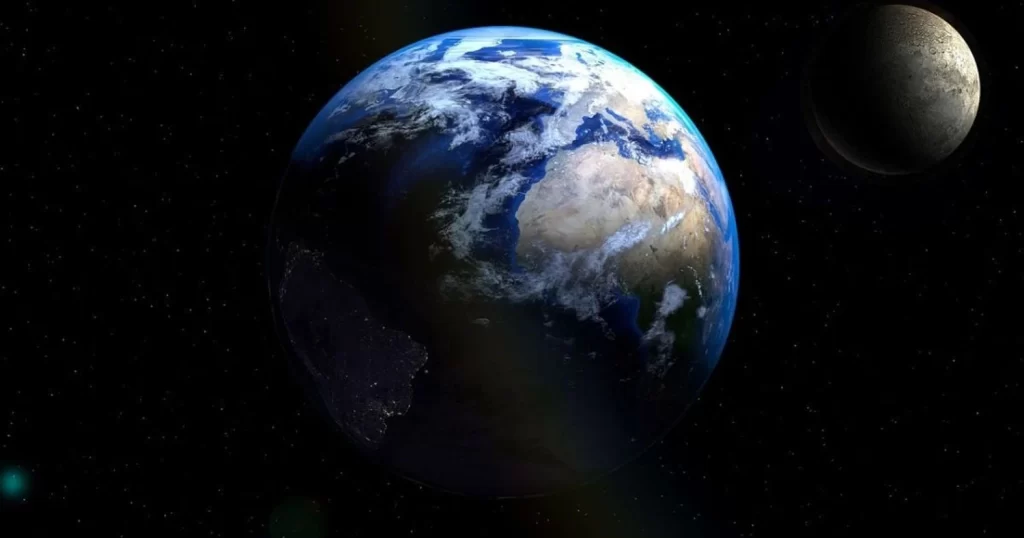
Scientists have projected that August 5, 2025, could mark one of the shortest days ever recorded, due to a slight acceleration in Earth’s rotation. Although the difference is just a few microseconds—far too brief for humans to notice—this shift holds significant implications for global timekeeping and precision-based technologies.
A typical Earth day lasts exactly 86,400 seconds, or 24 hours. However, the planet’s spin is not perfectly consistent. Various natural forces—such as ocean currents, atmospheric pressure shifts, tectonic movement, and even melting glaciers—can affect how fast Earth rotates on its axis.
On August 5, experts believe the planet will complete its daily rotation in slightly less time than usual. While the difference is minimal—only a fraction of a millisecond—it is measurable using highly sensitive atomic clocks. Institutions like the International Earth Rotation and Reference Systems Service (IERS) keep close watch on such fluctuations to ensure accurate alignment with Coordinated Universal Time (UTC).
Geophysical and atmospheric phenomena are likely contributing to the change. For example, the redistribution of mass caused by melting ice caps or changes in sea level can influence Earth’s rotational balance. This is similar to how a spinning ice skater speeds up by pulling their arms inward.
In recent years, scientists have observed an increase in the number of days that are shorter than the 24-hour standard. The year 2020 alone saw over two dozen such instances, a trend that has raised interest among researchers who study Earth’s internal dynamics and environmental changes.
The growing frequency of these shortened days may eventually impact how we manage global timekeeping. To date, timekeepers have occasionally added “leap seconds” to account for Earth’s gradual slowing. However, if Earth continues to rotate faster, experts may need to consider implementing a “negative leap second”—a never-before-used measure that would subtract a second from official timekeeping.
Though a few microseconds may seem insignificant, the fact that Earth’s rotation is changing—however slightly—reminds us that the planet is in constant motion, both above and below the surface. As scientists monitor these shifts, adjustments in global time systems may become more frequent in the years ahead.

