
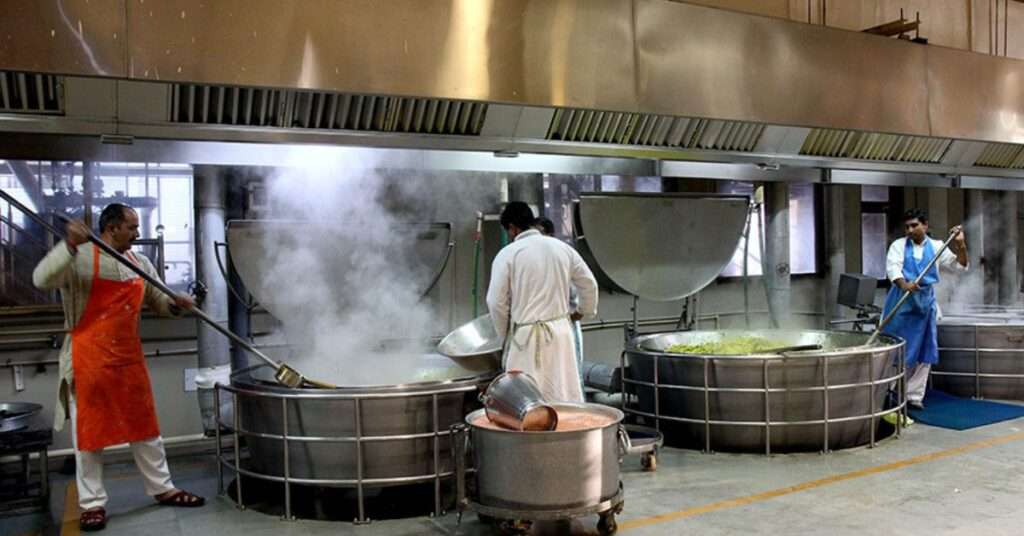
India has achieved a major milestone in clean energy innovation with the establishment of the world’s largest solar-powered kitchen at the Brahma Kumaris headquarters in Mount Abu, Rajasthan. The facility operates entirely without the use of gas or electricity, relying solely on solar energy to cook tens of thousands of meals every day.
Equipped with 84 Scheffler parabolic reflectors and over 1,200 solar mirrors, the kitchen is capable of producing steam at high temperatures — reaching up to 800 degrees Celsius — which is then used to prepare food in large quantities. The setup enables the preparation of up to 50,000 meals daily, making it a benchmark in sustainable mass cooking.
The project is a collaborative effort by the Brahma Kumaris organization, which has long promoted environmental consciousness, and technical partners who specialize in solar thermal technology. By fully eliminating the use of conventional fuels such as liquefied petroleum gas (LPG), the kitchen is estimated to save more than 200,000 kilograms of LPG every year. This contributes significantly to reducing greenhouse gas emissions and promoting climate-friendly alternatives.
“This is not just a kitchen—it’s a symbol of what renewable energy can achieve when applied on a large scale,” said a senior spokesperson from the organization. “We are committed to promoting eco-friendly practices that align with both spiritual values and environmental sustainability.”
Experts believe the solar kitchen sets an important precedent for future energy solutions in India, particularly in large institutions, religious centers, and government-run meal programs. With the rising cost of fossil fuels and growing concerns over climate change, solar cooking offers a scalable and eco-conscious alternative.
Officials from the Ministry of New and Renewable Energy have reportedly expressed interest in studying the model further for possible replication in public infrastructure projects. The kitchen’s success is seen as a strong example of India’s leadership in renewable energy adoption, particularly in non-electric applications such as thermal cooking.
Located in a region that receives strong sunlight throughout the year, Mount Abu provides an ideal setting for such a solar project. The system is designed to function year-round, with minimal maintenance and zero fuel costs, making it both sustainable and economically viable.
The initiative has been widely praised by environmental groups and clean energy advocates for its innovation and long-term impact. Beyond reducing emissions, the kitchen also improves air quality and working conditions by eliminating indoor smoke and heat typically associated with large-scale cooking.
As the world searches for practical climate solutions, India’s solar kitchen stands as a powerful example of what’s possible when tradition and technology converge for a sustainable future.

