
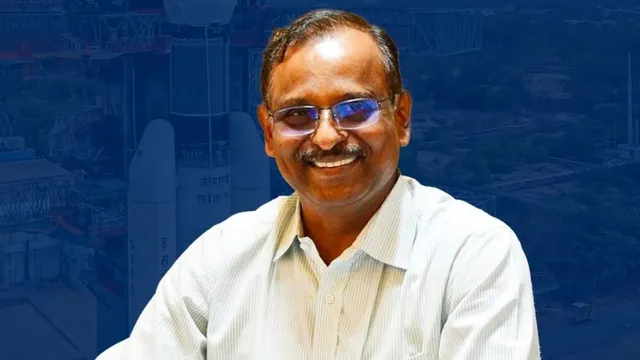
August 4, 2025 — India has set its sights on capturing between 8 to 10 percent of the global commercial satellite launch market within the next decade, according to Dr. V Narayanan, Chairman of the Indian Space Research Organisation (ISRO). Achieving this target, he noted, will depend on substantial upgrades to launch infrastructure and active participation from private space companies.
Addressing a space industry gathering, Dr. Narayanan highlighted the increasing demand for commercial satellite services and India’s growing potential to serve this market. He emphasized that expanding India’s role in the global space economy will require a collaborative model where private firms play a central role in developing and operating launch services.
“The future of India’s space sector lies in a strong industry-led model supported by ISRO’s technical expertise,” said Dr. Narayanan. “We aim to transition from being a reliable launch provider to becoming a global commercial leader in the next ten years.”
India’s Strengths and Global Opportunity
The global market for satellite launches is valued at billions of dollars annually, with growing demand for services in communication, navigation, remote sensing, and climate monitoring. India’s space program, known for its affordability and precision, offers a strong value proposition to international clients.
Launch vehicles such as the Polar Satellite Launch Vehicle (PSLV) have earned international credibility for reliability and cost-efficiency. Past missions like the record-setting launch of 104 satellites in a single flight, as well as recent successes such as Chandrayaan-3 and Aditya-L1, have demonstrated ISRO’s technical capabilities and positioned India as a dependable launch partner.
A Push for Industry Participation
Dr. Narayanan emphasized that expanding market share will not be possible without deeper involvement from private space startups and companies. The creation of organizations such as IN-SPACe (Indian National Space Promotion and Authorization Center) and the emergence of firms like Skyroot Aerospace and Agnikul Cosmos reflect this new direction in India’s space journey.
“These companies must take the lead in commercializing launch services, while ISRO continues to focus on cutting-edge research and missions of national importance,” the ISRO chief said.
Roadmap Ahead
To meet the 8–10% market share goal, India will need to improve its launch infrastructure, enhance production capacity, and build strong international partnerships. Regulatory reforms, streamlined licensing, and investment in new technologies are also expected to play a key role in scaling up operations.
Analysts believe that with the right support, India can leverage its unique strengths to gain a significant foothold in the global market. As demand for satellite launches continues to rise worldwide, India’s strategic investments and policy shifts could enable it to become a major spacefaring nation on the commercial front.
In conclusion, the next decade could mark a pivotal transformation for India — from a regional space leader to a globally competitive launch services provider — if the public and private sectors align their efforts effectively.

