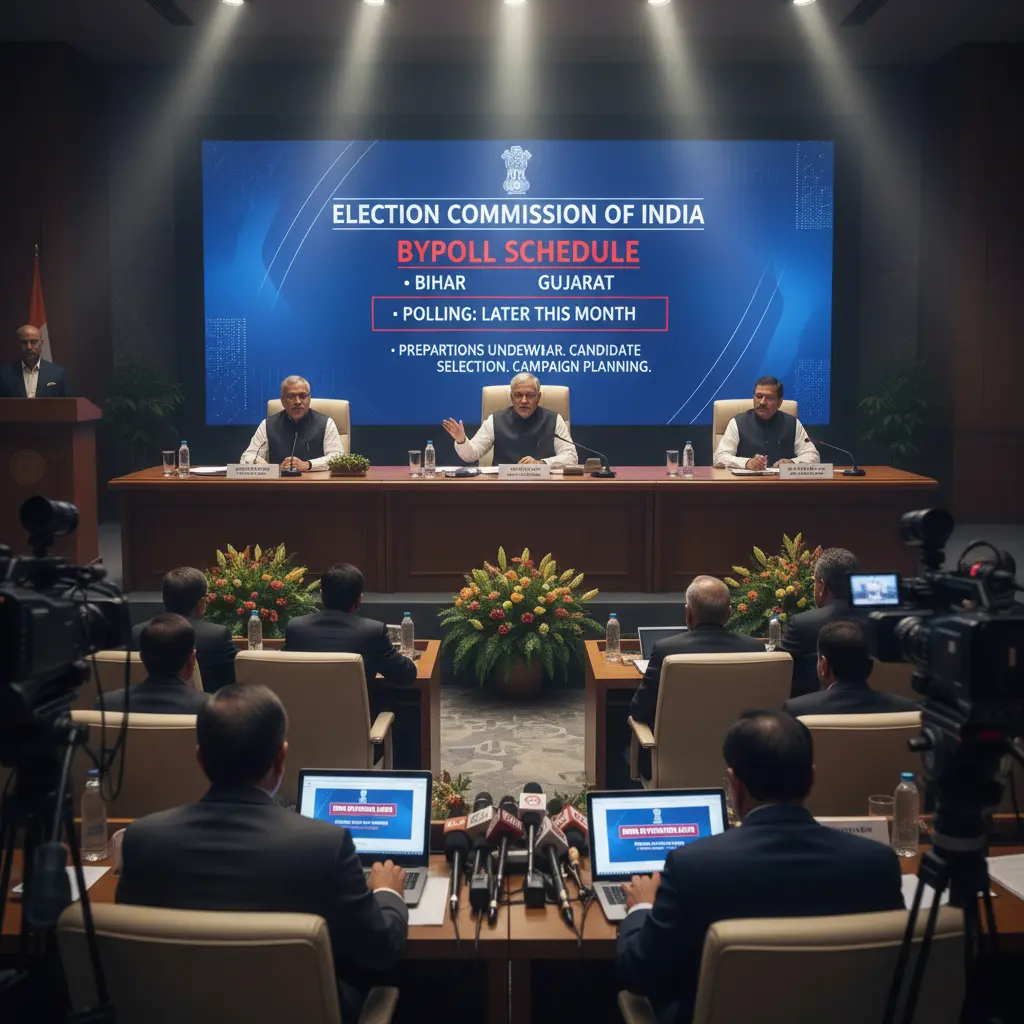
Bypolls rarely grab the same attention as full-blown state elections, but they carry a weight of their own. They fill the gaps left behind when a sitting legislator resigns, passes away, or gets disqualified, and they often end up telling us more about the current political mood than people expect. That’s exactly why the latest announcement from the Election Commission India is drawing so much interest.
The Commission has confirmed that assembly bypolls will be held on July 10 across thirteen constituencies spread over seven states, with preparations already underway on the ground. Candidates have until June 21 to file their nominations, and the window for withdrawing candidature closes on June 26, giving parties a tight but familiar runway to get their campaigns in order.
Where the Vacancies Stand
The seats going to the polls fell vacant for two main reasons: either the sitting MLA resigned, or they passed away during their term. Under both scenarios, the law requires the Commission to fill the seat through a fresh election, and this round is no exception.
Among the states involved, the Bihar election angle is drawing particular attention, with the Rupauli constituency heading back to the polls. Bihar has a habit of turning even a single bypoll into a closely watched contest, partly because of how fiercely local caste and community dynamics shape outcomes there, and partly because any result gets read as a signal ahead of bigger electoral battles down the line.
Madhya Pradesh election watchers are equally locked in, with the Amarwara seat, reserved for Scheduled Tribe candidates, up for a fresh mandate. Amarwara has seen genuinely competitive contests in the past, and with the seat now vacant, both major parties are treating this bypoll as an early test of ground-level strength in the region.
Beyond Bihar and Madhya Pradesh, the bypoll list also includes seats in Tamil Nadu, Punjab, Uttarakhand, Himachal Pradesh, and West Bengal, making this one of the more geographically spread-out bypoll rounds in recent memory. The Commission has confirmed that EVMs and VVPATs will be used at every polling station, with adequate machines already made available to ensure the process runs smoothly.
Gujarat’s Recent Bypoll Still Fresh in Memory
While this particular round doesn’t include a Gujarat seat, Gujarat politics has been very much in the bypoll conversation this year. Just a couple of months ago, the Umreth constituency in Anand district went to the polls after the death of its sitting MLA, and the result ended up reinforcing the ruling party’s grip on that pocket of central Gujarat. That contest, decided by a comfortable margin, is a reminder of how these smaller, single-seat battles can still carry real symbolic weight for state party organisations, even outside a full assembly election cycle.
Taken together, the string of bypolls across Gujarat, Bihar, and Madhya Pradesh this year paints a picture of a political landscape that never really goes quiet between major elections. Parties are constantly re-calibrating strategy based on these smaller contests, using them to test messaging, gauge local sentiment and sometimes even settle internal leadership questions before the next big fight comes along.
Why these by-elections matter more than they look
A single-seat by-election is easy to dismiss as a small footnote but to do so would be to understate what is really at stake. For one thing, these results often affect the internal confidence of state-level party units. A surprise win or an unexpected loss can shift how aggressively a party campaigns in the following months, or how much faith its central leadership places in local candidates.
There’s also the matter of momentum. With larger electoral contests always somewhere on the horizon in Indian politics, bypolls function almost like a pulse check. Political strategists analyze the turnout figures, the size of the margins and the shifts in vote shares from these smaller contests to perfect their approach before the bigger fights start. A seat like Rupauli in Bihar or Amarwara in Madhya Pradesh might only involve a few lakh voters, but the lessons drawn from these contests tend to ripple outward.
Campaign Preparations Already in Motion
With the nomination window now open, political parties have wasted no time getting into campaign mode. Candidate selection committees are working through their shortlists, local leaders are being consulted on ground realities, and early campaign material is already starting to appear in some of these constituencies. The window between announcement and polling day is short, so parties cannot afford a slow start.
As a rule, the Commission deputes central observers to oversee the bypolls and ensure that they are conducted in a free and fair manner. It has become a routine process, but it is an important one to maintain public confidence in these smaller-scale elections.
The way forward
With July 10 looming, the world will be watching how these results will shape the narrative in the coming months. In particular, the results in Bihar and Madhya Pradesh will be closely watched, as both states tend to set the tone for larger political conversations in their regions. Add to this the aftertaste of Gujarat’s recent Umreth result and it is clear that even these smaller electoral battles are having an outsized impact in shaping India’s evolving political narrative this year.
Whatever the results, one thing is certain: Bypolls may be small in scale but in Indian politics, they rarely remain small in significance for long.