
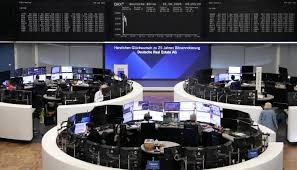
European markets closed their most turbulent week since August 2025, with the STOXX Europe 600 index posting a significant decline driven by growing fears over overheated technology valuations and ongoing uncertainty surrounding the US Federal Reserve’s interest-rate path. A steep drop in ASML Holding—the region’s largest semiconductor-equipment maker—intensified the downturn, dragging broader benchmarks lower and rattling investor confidence across sectors.
The sell-off was triggered by a convergence of market-moving factors, led by renewed scrutiny of tech-sector valuations. Technology and semiconductor stocks experienced outsized losses, reflecting concerns that their rapid price appreciation over recent months may not be supported by near-term earnings prospects. ASML’s pronounced slump, prompted by weaker-than-expected demand signals and sector-wide volatility, became a central catalyst for the week’s declines.
Adding to the pressure, expectations for an imminent US Federal Reserve rate cut waned. Investors grew increasingly wary that borrowing costs would remain elevated longer than anticipated, weighing on growth-oriented assets. European equities—particularly those sensitive to rate movements—reacted sharply, with risk appetite softening across the board.
A series of lacklustre macroeconomic indicators, both within Europe and globally, further deepened concerns. Signs of slowing manufacturing activity and muted consumer demand intensified fears of a potential economic soft patch, leading market participants to reassess risk positioning.
Weekly Market Highlights:
| Indicator | Weekly Movement | Key Insight |
|---|---|---|
| STOXX Europe 600 Index | Down ~2.2% | Largest weekly drop since August 2025 |
| Tech & Semiconductor Stocks | Broad, sharp declines | Sector remains the primary drag on European equities |
| Market Sentiment | Elevated volatility | Higher risk-aversion due to rate and valuation fears |
Analysts emphasize that the pullback, while notable, may reflect a necessary recalibration after months of strong gains driven by enthusiasm for artificial intelligence, digital infrastructure, and semiconductor growth themes. Market strategists also highlight that profit-taking ahead of year-end is not unusual, especially when valuations stretch beyond historical norms.
Still, the pace of this decline has prompted questions about whether investors had underestimated potential headwinds—particularly persistent inflation risks, geopolitical tensions, and tightening financial conditions.
Implications and Outlook:
For markets, the correction suggests heightened volatility may continue into December, with investor positioning becoming more defensive. Sectors tied to stable cash flows—such as utilities, healthcare, and consumer staples—may attract greater attention as risk appetite diminishes.
For policymakers, the sell-off serves as a reminder of the sensitivity of global markets to monetary-policy signals. As the Fed and European Central Bank navigate the delicate balance between inflation control and growth support, even minor shifts in tone could influence market trajectories.

