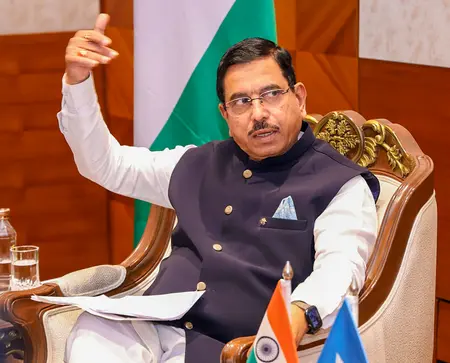
Union Minister Pralhad Joshi has intensified political tensions in Karnataka by alleging that Chief Minister Siddaramaiah and Deputy Chief Minister D.K. Shivakumar are involved in the “purchase of MLAs” amid a widening leadership tussle within the ruling Congress. The remarks come at a time when speculation is growing over a possible change in the state’s top leadership.
Allegations of Internal Horse-Trading
Speaking to reporters in Hubballi, Joshi dismissed claims that the BJP is attempting to destabilise the state government. Instead, he accused the Congress leadership of engaging in internal horse-trading to secure the loyalty of party MLAs. According to Joshi, both Siddaramaiah and Shivakumar are allegedly using “money power” to strengthen their respective camps as the question of who will lead the state in the coming months gains urgency.
He asserted that the friction between the two leaders has reached a point where MLA support has effectively become a bargaining chip, with each side attempting to outmaneuver the other in anticipation of potential leadership changes. Joshi claimed that the contest for supremacy within the Congress is responsible for the growing political instability in the state.
Controversial Jail Visit Raises Questions
Joshi also highlighted a recent development that has sparked renewed debate: Shivakumar’s visit to two jailed Congress MLAs—Vinay Kulkarni and Veerendra Pappi—at Bengaluru Central Prison. He questioned the timing of the visit, alleging it was a strategic move aimed at securing support from the incarcerated legislators, who could play a decisive role in any future leadership vote.
According to Joshi, such actions point to intense internal lobbying within the Congress, suggesting that both sides are preparing for a possible showdown if the high command decides to intervene or if Siddaramaiah is asked to step down.
Growing Signs of a Power Struggle
Political observers note that the Congress high command appears to be facing difficulty in managing the escalating rivalry. Rumours of a power-sharing arrangement—under which Siddaramaiah might hand over the chief ministership to Shivakumar before the end of the government’s five-year term—have gained traction in recent weeks.
While Siddaramaiah has consistently stated that he intends to complete the full term, supporters of Shivakumar have claimed he commands the backing of a significant majority of the Congress legislative party. Reports suggest that some leaders believe Shivakumar enjoys the support of over 100 MLAs, further intensifying the speculation.
Fallout and Future Outlook
Joshi’s allegations come at a sensitive moment for the Congress, which is already grappling with internal divisions and public scrutiny. His remarks have added pressure on the party to address perceptions of weakened leadership and internal disarray.
Key Implications:
- Concerns Over Political Stability: Accusations of horse-trading raise questions about the stability and integrity of the ruling government.
- Potential Leadership Transition: The ongoing power struggle could culminate in a formal vote or a high-command decision regarding leadership change.
- Congress Image at Stake: Allegations of internal bribery and MLA poaching risk damaging the party’s public credibility at a crucial political juncture.
As Karnataka’s leadership crisis deepens, both Siddaramaiah and Shivakumar face mounting challenges to maintain unity within the party. The coming weeks are expected to be decisive in determining whether the Congress can contain the internal rift or whether the crisis will escalate into a full-blown political confrontation.