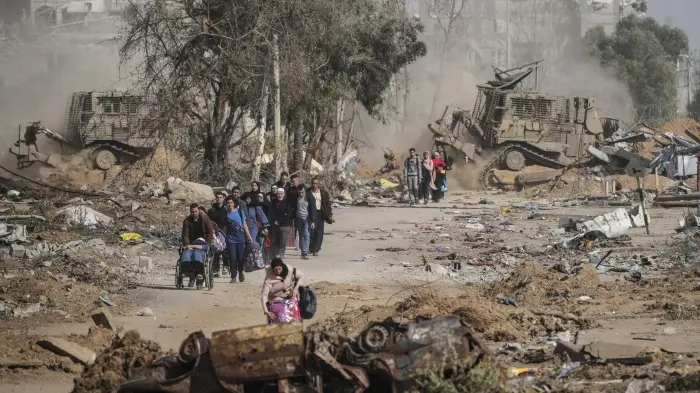
The ceasefire deal in the Gaza Strip, which came into effect on October 10, 2025, is under increasing strain as recurring strikes and retaliatory actions challenge the truce’s viability. Though the ceasefire remains officially in place, both Israel and Hamas continue to accuse each other of repeated violations, raising concern among international mediators about the potential collapse of the agreement.
The agreement, brokered by the Trump administration in Washington, was intended to freeze hostilities, facilitate the release of hostages and prisoners, and enable troop withdrawals and humanitarian aid into Gaza. The first phase was formalised with the ceasefire taking effect on October 10. However, since that time, the truce has been repeatedly tested. According to Gaza’s Government Media Office, Israel committed at least 282 violations from October 10 to November 10 — including bombings, shootings of civilians, demolitions, and detentions.
On October 19, Israeli air strikes targeted parts of the Gaza Strip after Israel alleged that Hamas militants killed two soldiers near Rafah, claiming a breach of the truce. Gaza health authorities reported dozens of fatalities in those strikes. On October 29, one of the deadliest single days since the ceasefire began, Israeli attacks reportedly killed more than 100 Palestinians, including at least 46 children.
Israel has justified its operations as responses to attacks by Hamas or other militant groups. At the same time, Hamas and Gaza civil authorities accuse Israel of failing to honour the deal’s terms regarding aid access and troop withdrawal. Aid flows into Gaza remain far below the levels envisioned in the truce. The peace plan had called for a complete lifting of the blockade and a marked increase in humanitarian relief; both remain largely stalled.
The regional and international community have expressed growing concern over the fragile state of the truce. The durability of the ceasefire now hinges on effective mediation and credible mechanisms to enforce the deal. Many analysts argue that without a clear framework for monitoring and accountability, the ceasefire risks becoming a temporary pause rather than a path toward lasting peace.
While the October 10 ceasefire deal in Gaza officially remains in place, the proliferation of alleged violations by both Israel and Hamas underscores its fragility. The humanitarian situation continues to deteriorate, and without meaningful progress on troop withdrawal, aid access, and accountability, the risk of renewed large-scale conflict persists. The next phase of the peace plan depends critically on whether the parties move from rhetoric to genuine implementation — the future of stability in Gaza may hinge on it.