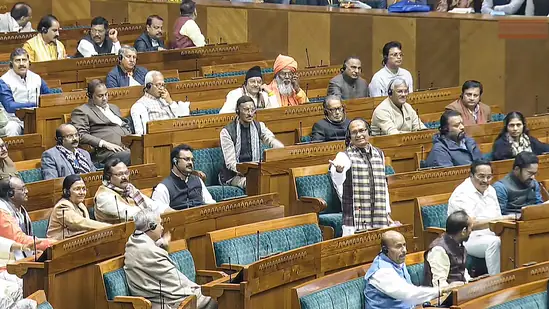
In a landmark move aimed at reshaping rural employment policy, the Indian Parliament has passed the Viksit Bharat Guarantee for Rozgar and Ajeevika Mission (Gramin) Bill, widely referred to as the G RAM G Bill, formally repealing the two-decade-old Mahatma Gandhi National Rural Employment Guarantee Act (MGNREGA). The legislation was cleared by the Rajya Sabha through a voice vote shortly after midnight on Thursday, December 18, 2025, following its passage in the Lok Sabha earlier the same day amid intense opposition protests.
A Major Shift in Rural Employment Policy
The passage of the G RAM G Bill marks one of the most significant reforms in India’s rural welfare framework since the introduction of MGNREGA in 2005. The government has positioned the new law as a future-ready employment and livelihood mission, aligned with the broader Viksit Bharat 2047 vision. Unlike MGNREGA, which primarily focused on wage employment through manual work, the new framework emphasizes skill-linked employment, sustainable livelihoods, and asset-based rural development.
Senior ministers argued that changing rural demographics, technological adoption, and aspirations necessitated a departure from a “one-size-fits-all” employment guarantee model. The new mission, they said, aims to integrate employment with local entrepreneurship, agri-value chains, and self-employment opportunities, especially for youth and women.
Key Features of the G RAM G Bill
The G RAM G Bill introduces a restructured approach to rural employment and livelihoods. Key highlights include:
- Guaranteed work plus income support, combining wage employment with livelihood incentives
- Skill-based rural jobs linked to local economic activities
- Convergence with existing schemes in agriculture, MSMEs, and rural infrastructure
- Digital monitoring and direct benefit transfers to improve transparency
- Greater role for Panchayati Raj institutions in planning and execution
To enhance clarity, the government outlined key differences between the old and new frameworks:
| Aspect | MGNREGA | G RAM G Mission |
|---|---|---|
| Focus | Manual wage employment | Employment + livelihood creation |
| Skill component | Limited | Central to scheme design |
| Work guarantee | 100 days | Flexible, outcome-based |
| Monitoring | Paper-heavy | Digital-first systems |
Opposition Concerns and Political Fallout
The Bill’s passage was not without controversy. Opposition parties staged walkouts and vocal protests in both Houses, alleging that the repeal of MGNREGA undermines a legally enforceable right to work. Critics argued that MGNREGA served as a critical social safety net during economic distress, particularly during droughts and crises, and warned that its replacement could weaken rural income security.
The government, however, dismissed these concerns, asserting that the new mission expands—not reduces—state responsibility by focusing on long-term economic resilience rather than short-term relief.
Implications for Rural India
Policy experts note that the success of the G RAM G Mission will depend heavily on implementation capacity, funding adequacy, and coordination with states. If executed effectively, the scheme could redefine rural employment by moving millions from subsistence-level work to sustainable livelihoods.
As India accelerates toward its development goals, the repeal of MGNREGA and the introduction of the Viksit Bharat Rozgar and Ajeevika Mission (Gramin) signal a decisive shift in welfare philosophy—one that prioritizes productivity, skills, and self-reliance. The coming months will be critical in determining whether this ambitious reform delivers on its promise of a truly “Viksit Bharat.”