
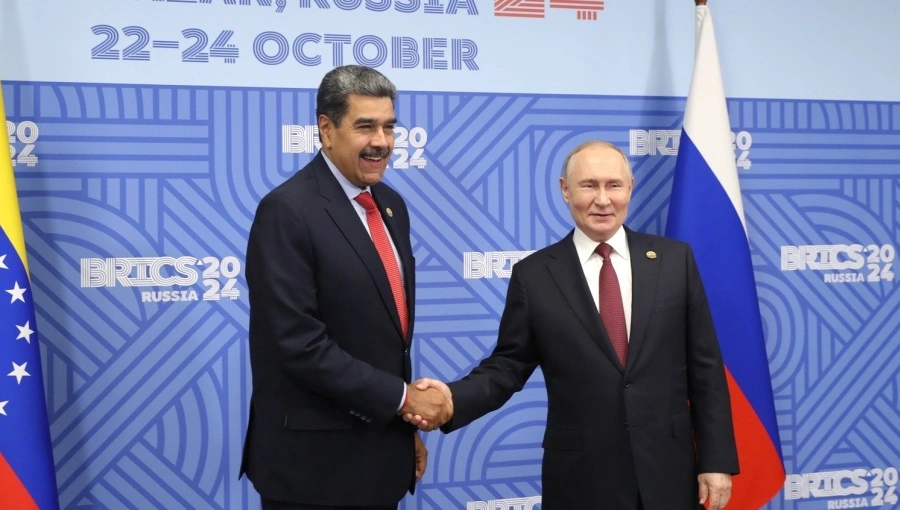
In a dramatic escalation of geopolitical tensions, the United States’ military action inside Venezuela has ignited widespread international condemnation, particularly from Iran and Russia, while Caracas has declared a national emergency amid explosions and military confrontation. The strike — described by Washington as a decisive blow against narcotrafficking and aimed at removing Venezuelan President Nicolás Maduro — has sharply divided global opinion and triggered urgent conversations regarding sovereignty, international law, and regional stability.
U.S. Military Action Sparks Diplomatic Firestorm
In the early hours of January 3, the U.S. launched a large-scale military operation against Venezuela, resulting in multiple explosions in Caracas and other regions. President Donald Trump announced that Venezuelan President Nicolás Maduro and his wife were captured and transported out of the country following the strikes — a move that the U.S. administration claims was part of its broader strategy against drug trafficking networks.
The Venezuelan government responded by declaring a national emergency, describing the U.S. action as a “blatant act of aggression” and a violation of its territorial sovereignty. Vice President Delcy Rodríguez called for proof of life for Maduro and urged citizens to mobilize in defense of the nation’s independence.
Iran Condemns U.S. Strikes as Violation of Sovereignty
Among the most vociferous critics, Iran’s Foreign Ministry denounced the U.S. military strikes, calling them a “clear violation of national sovereignty and territorial integrity” and a breach of the United Nations Charter. Iranian officials asserted that the action constituted an unlawful use of force that undermines international peace and security — urging the UN Security Council to intervene and hold Washington accountable for what Tehran described as blatant aggression.
Iran’s condemnation reflects longstanding strategic ties with Venezuela, as both countries have historically aligned against U.S. influence in global energy markets and regional politics. Tehran’s statement stressed that all countries and international institutions should uphold the principles of the UN Charter and resist unilateral military interventions.
Russia Brands the Strikes ‘Act of Armed Aggression’
Russia also issued a strong rebuke, labeling the U.S. strikes as an “act of armed aggression” and expressing “deep concern” over the escalation. The Russian Foreign Ministry criticized Washington’s justification for the military action, calling the pretexts “untenable” and highlighting the dangers of such unilateral use of force. Moscow emphasized the need to resolve disputes through diplomatic dialogue rather than military intervention — underscoring the importance of respecting sovereign rights and preventing further escalation.
Russia’s reaction is consistent with its broader foreign policy stance favoring multilateral conflict resolution and opposition to U.S. military dominance — particularly in regions where Russian interests are deeply embedded.
Wider Global Responses and Calls for De‑Escalation
International reactions have been mixed but largely critical of the U.S. operation. Several Latin American leaders condemned the strikes as violations of international law and sovereignty, urging emergency sessions at the United Nations and the Organization of American States to address the crisis. The European Union called for restraint and adherence to international legal norms, while some nations, notably Argentina, offered cautious support for efforts to curb Maduro’s regime.
Analysts warn the military action could have profound implications for diplomatic relations, regional security in Latin America, and the future of U.S. foreign policy in the hemisphere. Critics contend that unilateral interventions, especially those lacking transparent legal grounding, risk eroding established norms of sovereignty and setting dangerous precedents in international affairs.
Key Takeaways: Global Reactions at a Glance
| Country/Group | Response to U.S. Action |
|---|---|
| Iran | Condemned as violation of sovereignty and UN Charter |
| Russia | Denounced as “armed aggression,” urged diplomacy |
| Venezuela | Declared national emergency, condemned aggression |
| Latin American States | Mostly critical, called for UN/Regional response |
| European Union | Urged restraint, emphasized international law |

