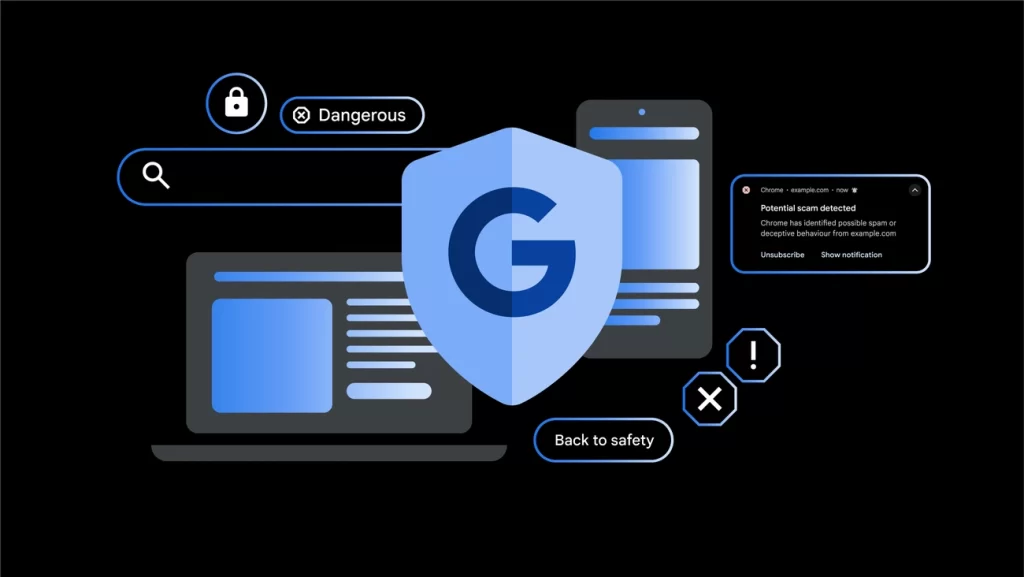
Every day, Google’s powerful AI systems stop billions of spam and phishing attacks. The company has made a lot of headway in its battle against internet threats. This report demonstrates that more and more people are using AI to be safe online, where there are a lot of scammers.
How Dangerous the Threat Is
Every day, hackers send out a lot of spam and phishing emails. They do this by taking advantage of flaws in email, search, and web services to steal data or spread malware. Google’s discovery highlights how significant AI has become; it can look at a lot of data in real time to uncover and stop these threats before they damage people. This means that AI systems can quickly and accurately tell if someone is hostile by looking at patterns in trillions of messages. This is a lot better than regular rule-based filters, which have difficulties keeping up with new methods of doing things.
How Google’s AI works
Google has an AI system with numerous levels that keeps spam and phishing emails from getting through. This includes figuring out what people are doing, understanding natural language, and finding patterns that aren’t obvious. AI looks at new Gmail messages to see if the sender is acting strangely, if the links are authentic, and if the text is easy to read.It stops spam with an accuracy rate of above 99.9%. Google Search analyzes user reports, the site’s reputation, and other factors to lower the rank of or eliminate phishing sites. Chrome and Android, on the other hand, use browser add-ons and AI built into smartphones to warn people about apps or websites that might be dangerous before they get there.
These computers can handle petabytes of data per hour and use models based on past attacks to guess what attacks will happen next. For instance, AI uses language clues and network metadata to discover phishing scams that seem like legitimate organizations. This keeps individuals safe in Google’s big ecosystem.
Google’s main goal is to use transformer-based models and reinforcement learning, which are two important technological advances.These technologies make it possible for YouTube’s spam filters and the Play Store’s malware scanner to work. Federated learning is something new. It allows devices construct models without giving over personal information. This keeps people’s information private and makes global threat intelligence better. Google’s 2025 transparency reports say that these AI safeguards stopped more than 1.5 billion phishing attempts every week. This figure goes up every year because computers are getting faster and neural networks are getting better.”AI-Driven Threat Detection” and other subheadings naturally use essential SEO keywords like “Google AI spam blocking” and “phishing attack prevention.” This makes the information simple and helpful for anyone who wish to learn more about trends in cybersecurity.
Facts and numbers that matter
Google stops billions of phishing sites, millions of malware downloads, and more than 100 billion spam emails per day. These numbers will be in the trillions by 2026. These numbers show how big Google is: it gets 90% of all web traffic. Studies that didn’t cost anything have shown that AI blocks 95% of successful attempts.These protections are quite beneficial in everyday digital life since they stop people from losing around $50 billion a year throughout the world.
What Professionals Believe AI Should Be Capable Of
Cybersecurity experts say that Google is the best at what it does. Dr. Elena Vasquez, a leading AI researcher, adds that machine learning’s ability to adapt faster than attackers is a big change that changes security into proactive threat hunting. Some businesses, like Palo Alto Networks, think this is beneficial for business, but hackers are still employing AI-generated content to hide their traces. Google fights this by giving people a lot of training. Fake attacks on models make them stronger.
How Google’s defenses have changed over time
In the early 2000s, Google simply featured simple filters. It got faster when AI was implemented in 2015. BERT came out in 2018 to help people find spam. Tensor Processing Units (TPUs) were released in 2022 to process data as it happened. In 2025, quantum-inspired algorithms were made to hunt for patterns on a wide scale. By January 2026, there were billions of delays every day because the government was behind more and more ransomware and phishing attacks. This made Google the internet’s digital security guard.
What this means for a lot of people
Google’s AI makes it safer to use the internet and delivers less unwanted notifications to people who use it all the time. This is also essential in places like India, where more people are utilizing the internet and phishing attempts on banking apps are becoming more widespread. The office’s technology does a great job of protecting the company’s data, thus it’s quite improbable that a data breach will happen. When people depend too much on Big Tech, they get concerned about centralization. But Google’s free security technologies make security fairer by making everyone safer.
Future Problems and Possible Solutions
Attackers move swiftly and use methods like homomorphic encryption to hide hazardous payloads and make them tougher to locate. Google has groups of people and AI that do the best job of looking at stuff on the edge. Using passkeys with zero-trust models could make things a lot safer in the future. AI could be able to stop 99.99% of threats by 2027. It might even be able to connect to national cyber defense systems to keep things safe.
Microsoft and Cloudflare, two of Google’s competitors, say they have done similar things using AI. But Google’s ecosystem is bigger, so it can manage a lot more information. The Cybersecurity Tech Accord and other programs that work together make it easier to share threat data without identifying where it came from. This makes everyone’s defenses better. India gets a lot of spam calls and emails, but Google’s Phone app AI catches millions of them every day. TRAI says that this is what needs to be done to protect users.”Operation Cookie Monster” will be a real thing in 2025. AI saw that a phishing outfit was trying to steal information from 10 million users by logging in in unexpected ways, so it promptly shut them down. These tools stop spam that sends out fake information during elections. This is especially important because polls will be much more important in 2026. These steps illustrate that AI is crucial for more than only getting rid of threats; it’s also important for keeping the internet safe.
Problems with AI defense that are moral
Finding a balance between security and little interruptions is particularly crucial because false positives can make people lose faith. Google uses feedback loops to make sure that its models are as accurate as possible. Ethicists, on the other hand, desire to tell the truth and be clear. Annual reports have a lot of information, but they don’t include any blunders that could be used for bad purposes. This makes people more responsible, which is good because AI decisions influence billions of people every day.
Google’s AI technologies stop billions of spam and phishing attacks every day, making the internet safer.