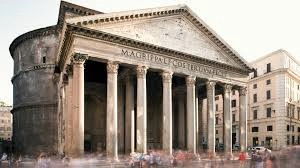
Ancient Roman concrete remains still strong in buildings like the Pantheon after two thousand years. Recent scientific studies have proven that it can cure itself in amazing ways, which makes it last longer than current cement. This incredible power could lead to a new way of making building materials that are better for the environment.
Roman engineers figured out how to produce concrete that could survive earthquakes and the sea, and that could even heal its own flaws over time. Ongoing research indicates how these tried-and-true solutions might help with today’s concerns with infrastructure durability and carbon emissions.
The Origins of Roman Concrete Innovation
Roman concrete, or opus caementicium, was a great stride forward in building on a wide scale around 200 B.C.E. Unlike other lime-based mortars, this one employed slaked lime or quicklime, pozzolana (volcanic ash from sites like Pozzuoli in Naples), and other materials including tuff, pumice, and pebbles.
The Romans built big things like aqueducts, ports, and huge buildings all over their empire with this mix. The Pantheon in Rome, which Emperor Hadrian finished in 126 C.E., is a remarkable example of this. The dome is 43 meters wide and is still the biggest of its kind in the world. It is not reinforced.
When pozzolana came into contact with lime, the silica and alumina in it generated a pozzolanic reaction that made powerful calcium silicate hydrates that kept the material together. When limestone is burned at high temperatures, it converts into quicklime. This added heat to the combination and generated lime clasts, which are lumps of calcium that made the mix stronger.
The Self-Healing Mechanism has been revealed.
Recent studies have proven that lime clasts are what allow Roman concrete to harden on its own. When stress or weathering induce cracks to form, rainwater activates these clasts, breaking them down into a calcium-rich solution that recrystallizes as calcium carbonate, sealing gaps that are up to 0.6 millimeters wide.
Admir Masic and other MIT researchers looked at samples from Privernum, an area near Rome that is 2,000 years old. Using quicklime in the lab created the same clasts, and crack testing showed that they were fully healed in two weeks, which is far faster than the current limit of 0.2–0.3 millimeters for concrete.
In 2025, investigators dug up Domus IX 10 in Pompeii and unearthed a construction site that had been frozen by the eruption of Vesuvius in 79 CE. They discovered batches of quicklime that had been combined with boiling water. This “hot mixing” raised the temperature over 200°C, which put reactive clasts in the mix that continues mending things during wet-dry cycles.
Some of the most essential elements are quicklime (CaO), pozzolana (volcanic ash), and aggregates like pumice that are used to make lighter upper structures.
The reaction process: Exothermic hydration generates lime clasts, and then calcium carbonate polymorphs start to mend themselves when they come into contact with water.
Durability edge: It doesn’t rust in saline water and can fix cracks on its own.
Science Advances and Nature Communications reported these data, which reveal that Roman concrete gets stronger over time. In contrast, modern Portland cement breaks down after 50 to 100 years.
Famous Buildings That Stay the Same Over Time
The Pantheon is still the best example of how Roman concrete is better than other kinds. The dome is made up of aggregates that get lighter as you go up, with tuff at the bottom and pumice at the top. Thanks to the oculus, which aids with weight reduction and drainage, it doesn’t weigh as much as you might assume.
Marine structures, like the seawalls in Caesarea, Israel, last much longer. When seawater comes into contact with pozzolana, it forms tobermorite and aluminous tobermorite crystals that lock together and make the mix stronger against erosion. Modern blends don’t have these traits.
The Via Appia’s Tomb of Caecilia Metella can also cure itself since the volcanic tephra enhances the matrix. These examples indicate that these materials can be used in numerous settings, like on the coast, during earthquakes, and in cities.
Recent studies of the ruins of Pompeii from 2025 validate hot-mixing methods even further by indicating that they were employed to build aqueducts and harbor moles that lasted a long time and carried water over 100 kilometers without breaking.
What Is Wrong with Concrete Today
When limestone and clay are heated to a high temperature, they make Portland cement. This process produces about 8% of the world’s CO2. It sets quickly to save time, but it doesn’t fix itself and splits under pressure, therefore it needs steel reinforcing that rusts easily.
They need a lot of repairs because they only survive 50 to 100 years. For example, the Morandi Bridge in Italy fell in 2018. Salt exposure eats away at rebar, and in colder places, freeze-thaw cycles make it even worse.
The need for energy is huge: producing one ton of cement generates almost one ton of CO2, which is bad for the environment. Roman methods, on the other hand, used volcanic materials from the area and lower temperatures, which cut down on emissions.
New scientific discoveries and proof
When Masic’s team published Roman mixes in Science Advances in 2023, things moved faster. Roman-inspired concrete was three times better at regaining tensile strength than controls in experiments that looked at how well it healed cracks.
A 2025 iScience research looked into sustainability: Roman recipes use just as much energy as modern ones, but they last longer. This could mean that we don’t have to replace roads and highways as often. Models of durability suggest that these objects will endure longer than 500 years, yet modern ones only last 75 years.
Nature Communications reported on the 2025 dig in Pompeii, which uncovered raw quicklime and pozzolana. This backed up what Vitruvius suggested and demonstrated that earlier readings had missed “hot mixing.”
Lab results: Lime clasts can mend cracks that are up to 0.6 mm wide, however modern ones can only fix cracks that are up to 0.3 mm wide.
Environmental statistics: Cement is responsible for 8% of world greenhouse gasses, however the Roman alternative has a smaller long-term impact.
Seismic proof: The Pantheon, which has very little rebar, stood up to earthquakes and inspired designs with very little rebar.
Harvard and MIT worked together to employ electron microscopy to study materials. They identified nanoscale crystals that hold broken pieces together.
What this means for making things that last
We can learn from Roman concrete how to design infrastructure that is good for the environment. Startups are producing quicklime additives for Portland mixes that say they will fix themselves without having to replace the whole mix.
Fly ash or slag might be used instead of pozzolana in maritime and seismic zones to make things last longer. This would minimize the requirement for steel and the risk of corrosion. A 2025 study suggests that these hybrids can survive two to three times longer, which means less money spent on maintenance.
It might have a smaller carbon footprint if more people utilized cement. This would help us reach our goal of net-zero emissions by 2050. Roman-style roads, bridges, and seawalls might last for hundreds of years, which means you won’t have to fix them as often.
There are still issues, such as acquiring volcanic materials and scaling hot-mixing correctly. But Italian pilots test restorations by blending old and new recipes, which is how they do it.
Planning for the Future
Roman concrete is a fantastic example for structures of the future because it can fix itself and lasts longer. Tests reveal that hybrids are better than regular cement, therefore engineers are using them to build robust, eco-friendly infrastructure.
This old notion, which worked in 2025 digs and lab tests, will transform how buildings are designed because of climate change. Infrastructure has been a primary goal for President Trump’s government since 2025. These kinds of improvements could have an impact on American initiatives for hundreds of years.
Roman concrete is stronger than modern cement because it has been around for 2,000 years.