
New Delhi, July 14, 2025 —
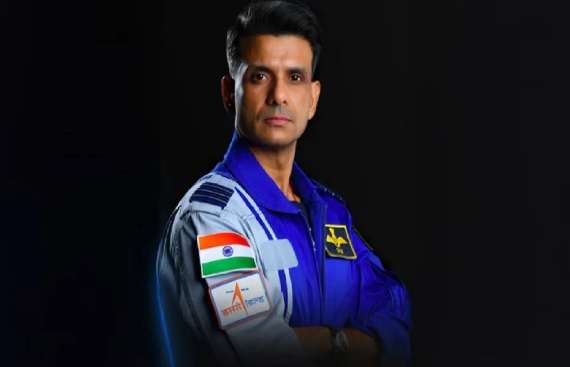
Group Captain Shubhanshu Shukla of the Indian Air Force concluded his journey aboard the International Space Station (ISS) as part of the Axiom-4 mission, marking a proud milestone in India’s expanding global space presence.
In his farewell message from orbit, Shukla reflected on India’s space legacy, drawing inspiration from the historic words of Wing Commander Rakesh Sharma, who became the first Indian in space in 1984. His tribute resonated with patriotic pride and emphasized the continuity of India’s human spaceflight journey.
The Axiom-4 mission, led by U.S.-based Axiom Space in collaboration with NASA and international partners, included astronauts from various countries. Shukla’s participation showcased India’s strengthening role in cooperative space exploration, and its readiness for upcoming indigenous missions like ISRO’s Gaganyaan.
While stationed on the ISS, Group Captain Shukla participated in multiple research activities, including microgravity-based experiments and biomedical studies. Several of these initiatives were supported by Indian academic institutions, startups, and research agencies, highlighting India’s contributions to international science from orbit.
During a modest send-off event on the ISS, Shukla—wearing a flight suit adorned with the Indian national flag—expressed gratitude to ISRO, the Indian government, Axiom Space, and the broader international space community. He acknowledged the foundational contributions of India’s earlier space explorers and credited their achievements for inspiring the next generation.
“This mission represents not just personal achievement, but a collective step forward for Indian science and youth,” Shukla stated. “Our vision for space is not just national—it’s human.”
Defence Minister Rajnath Singh praised Shukla’s accomplishment, calling it a moment of pride for the country. In a statement, he said, “Group Captain Shukla has not only represented India in space but has also strengthened our presence in global scientific collaboration.”
India’s growing involvement in manned missions is seen as a strategic step in its long-term space vision. The knowledge gained from Shukla’s time aboard the ISS is expected to contribute to ISRO’s manned spaceflight program, which will use indigenous technology to send Indian astronauts into orbit under the Gaganyaan mission.
With increasing partnerships between public and private sectors, India continues to position itself as a significant force in the evolving domain of space exploration. Group Captain Shubhanshu Shukla’s successful mission on Axiom-4 is now seen as a key chapter in India’s modern space journey—one that blends legacy, technology, and global cooperation.

