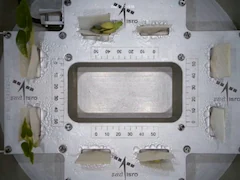
8 July, 2025-Astronauts aboard the Axiom-4 mission have successfully conducted a series of pioneering scientific experiments aboard the International Space Station (ISS), focusing on biological sustainability and human health in microgravity. The mission has gained significant attention for its work on cultivating methi (fenugreek) in space and analyzing muscle cell degeneration, marking a major step forward in space biology.
The experiments were led by astronaut-scientist Dr. Prashanth Nair, whose research agenda targeted key challenges faced during long-duration space missions. One of the primary objectives included studying the viability of growing methi in zero-gravity conditions. The plant, known for its high nutritional value and medicinal properties, was selected due to its fast growth and adaptability. Early findings suggest that methi could be a promising candidate for space-based agriculture, offering astronauts a sustainable food source and supporting mental well-being.
Alongside plant growth, the mission also focused on muscle cell research. In microgravity, astronauts often experience rapid muscle atrophy due to the lack of mechanical stress on the body. The Axiom-4 team examined cellular and molecular changes in muscle tissue samples, aiming to develop effective countermeasures. Scientists believe these findings could not only benefit astronauts but also offer breakthroughs in treating muscle-wasting conditions on Earth, such as sarcopenia and muscular dystrophy.
According to researchers, these experiments represent a crucial advancement in preparing for future deep-space missions, including planned lunar habitats and crewed Mars expeditions. Understanding how plants grow and how the human body responds to long-term space conditions is essential to building sustainable life-support systems and maintaining astronaut health.
The mission’s success has also reinforced the value of private-public collaboration in space exploration. Axiom Space, in partnership with international agencies, continues to push the envelope with each mission, bringing space research closer to real-world applications.
Experts have highlighted that the research conducted during Axiom-4 will serve as a foundation for more complex studies in the coming years. As space missions extend in duration and distance, biological experiments such as these are expected to play a vital role in ensuring mission success and astronaut well-being.
With the successful completion of the Axiom-4 mission’s scientific agenda, researchers are now analyzing collected data to inform future protocols in space agriculture and health management. The results are expected to have lasting implications both in orbit and on Earth.