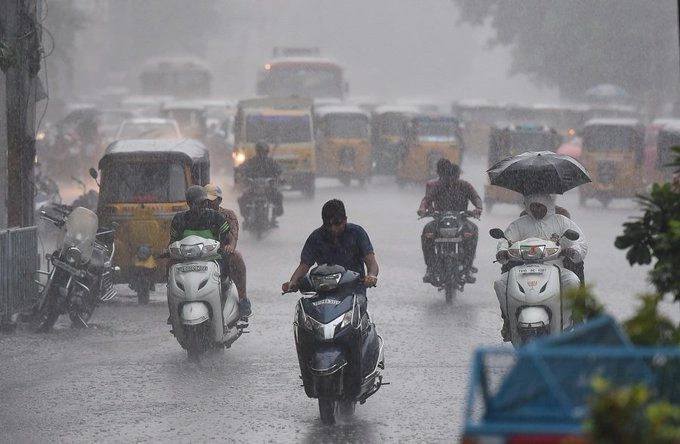
Most of the country is already reeling under the impact of severe heat, but the India Meteorological Department has some unexpected news. May 2026 may see above-normal rainfall and respite from the summer burn, it said. This projection comes even as the southwest monsoon is beginning to show signs, however El Niño conditions still persist that could impact the major rainy season later. In a country where weather determines everything from farm harvests to city streets, these projections bring both promise and caution.
Sudden Change from Heat to Heavier Rains
The early heatwaves this year have burnt Punjab farmers and Mumbai retailers with temperatures touching 45 degrees in certain places. But IMD experts predict that is soon to shift. Their latest prognosis indicates the rainfall to be more than 110% of the long period average, i.e. more than 64 mm for the country as a whole based on 50 years data. Most areas, from the northwest plains to central India, are likely to get normal to excess rainfall although pockets in east and northeast could remain on the drier side.
That is not a small increase. Storms and thunderstorms are already boiling up in the regions with gusty winds predicted at 60 kmph over western Himalayas and neighboring areas early in May. The pre-monsoon mood is looking stronger than normal, maybe giving some relief from the heat stress that has cost lives and strained electricity infrastructures. The streets of Delhi are flooded after weeks of drought-like dryness. This is a scenario that is playing out in forecasts that could change the rhythm of this month.
Why rain is important in India’s weather calendar
May is the cusp between summer and monsoon, a period when the soil thirsts for moisture before the major rains come. Above-normal rainfall is often a harbinger of the behavior of the southwest monsoon here, replenishing soils and waterways before planting season. This wet stretch in a year of irregular patterns could benefit early Kharif crops such as rice and pulses, especially in rain-fed areas that make up roughly half of India’s cropland.
But relief has a downside. Sudden onsets might cause flash floods in urban areas like Pune or Chennai which are prone to waterlogging. Officials have issued warnings about isolated heavy spells that might interrupt travel and daily life. For coastal states, it is a sign that cyclonic activity is building in the Bay of Bengal. IMD is closely monitoring this when the monsoon edge approaches the Andamans around May 14-16. Is this early generosity a harbinger of a bountiful monsoon or just a teaser before rougher times?
Monsoon Outlook: El Niño Clouds Send Strong Signals
While May looks good, the long-range estimate for the June-September southwest monsoon by the IMD is not so encouraging – below normal at 92 per cent of the long period average with an error margin of ±5 per cent. That is a harsh warning, the first bad alert in years, as a result of changing ocean currents. Neutral circumstances are currently leaning toward El Niño, when Pacific waters are warm enough to decrease monsoon winds and unevenly distribute rains.
El Niño has a history of hitting India hard. It reduced rainfall in 2015 by 14%, producing droughts that cost billions and drove up food prices. This time around projections indicate a 61% possibility of significant El Niño by mid-year that could decrease yields in crucial states like Maharashtra and Uttar Pradesh. But there is a counterforce: an anticipated positive Indian Ocean Dipole later in the season which might pull some moisture back and balance things out. The IMD has given chances of deficient rains (below 90%) at 31% and asked for preparedness.
Key monsoon figures from IMD: Normal is 96-104% of LPA (87 cm total); below-normal flags < 95%.
Regional risks: Central India most impacted, northwest may be avoided.
Historical parallel: 94% precipitation as of 2023’s El Niño, but reservoirs fed by previous years.
These “strong signals” are not apocalypse – IMD’s second-stage update, due later in May, will sharpen the outlook.
The Grip of El Niño: From Global Swells to Indian Fields
El Niño is no remote phenomenon: its repercussions reach the dinner tables of India. The Walker circulation is disrupted by the warming of equatorial Pacific oceans, sending monsoon clouds off track. 2026: Weak La Niña leftovers fade swiftly, and this troublemaker is on the way. IMD joined global organizations in warning South Asia to expect below average monsoon totals, especially in central belts.
Weak rains are bad news in India, where half of the workers are in agriculture. Kharif covers 1,000 lakh hectares, monsoon meets 70% of water needs. A shortage may push inflation higher (remember tomatoes at ₹200/kg?) and put pressure on the food subsidy bill of ₹6 lakh crore. Last year’s excess has filled reservoirs to 80% capacity, providing some cushion against protracted dry spells that will test that. The first to be hit are the sugarcane region of Maharashtra and the floodplains of Bihar, where erratic rains spawn pests or wash away saplings.
Nor are cities exempt. Monsoon fury may fill Delhi’s Yamuna or Mumbai’s Mithi river, but shortfalls mean water rationing by October. Reservoir water is also used by power plants to cool themselves . So a 10 % rainfall might reduce hydro output by 5 % .
Farmers Watch the Skies Agriculture on the Brink
Imagine a farmer in Vidarbha, staring at parched black earth. Above-normal May rainfall would be a boon, softening the ground for seed. For instance, Rajasthan saves 20-30% on irrigation costs since the early moisture helps in germination. But if monsoon fails, then government plans like PM Krishi Sinchayee Yojana with the aim of “Har Khet Ko Pani” would be under pressure. So far, just 48% coverage has been achieved.
Experts have been advocating diversification to drought resistant millets or crops insured by PMFBY which insured 5 crore farmers last season. In Maharashtra, where suicides rose during the lean monsoon of 2019, cooperatives are stockpiling pulses and maize as a backup. But if El Niño enters full force, will buffer stockpiles hold until 2025, or do we brace for import hikes from Australia and Ukraine?
The government’s approach is proactive. Agri Infra Fund of Rs 1.5 lakh crore takes weather applications, storage to 10 crore farmers under Kisan Suvidha But climatic instability necessitates more—30% of fields by drip irrigation by 2027, as NITI Aayog targets.
Urban and Economic Impacts in the Nation as a Whole
Mumbai taxis jump through May puddles, a welcome relief from congested heat. But heavy rain jams the sewers in Bengaluru and the civic entities find themselves scrambling. Heatwave conditions continue to affect Gujarat, places on east coast, IMD advises; nights sticky as minimum temps stay above normal. May hydro boost helps meet 15% jump in power demand peaks
Economically a wet May is a boost. Sales of fast-moving consumer goods and construction rise on chilly days. But the monsoon threat to the GDP is not just the agriculture sector, which directly accounts for 15-18%. RBI estimates show 1% gap in rains cuts growth by 0.2% Stock markets fell 2% in April projections and fertilizer companies like Coromandel gained on demand bets.
India’s story is the world’s tale. Weak rains and export limits on rice curb shipments from the world’s leading exporter, raising international prices. Trade partners from Bangladesh to Africa are watching this attentively.
Shifting Health, Environment and Everyday Life
Rain reduces heatstroke, important after 100+ deaths in 2024. But vectors thrive: dengue incidence in Delhi surged 50% in last wet pre-monsoon. Fogging increases vector control in 500 cities. Environmentally, the May showers replenish the aquifers, helping Pune’s struggle for ground water in the face of urban expansion.
For the average Joe, it’s a mixed bag. Schoolkids skip puddles, commuters bemoan BMC potholes. The greenest of early tourism blooming in Kerala.
Looking Ahead: Resilience or Reaction?
The silver lining is that May’s rains were above normal, and might strong-arm the monsoon into better form in spite of the shadow of El-Nino. IMD’s monitoring models of satellites and ocean buoys give India a lead over earlier droughts. Build resilience with buffer stocks, insurance and infra investments.
India braces for wet May, tense monsoon: IMD warns of above normal rains now, El Nino dangers ahead