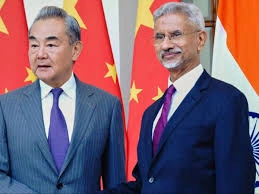
India on December 31, 2025, categorically rejected China’s claims that it played a mediating role in securing a ceasefire between India and Pakistan following the military conflict earlier this year. New Delhi described Beijing’s assertions as “factually incorrect and misleading,” reiterating that the ceasefire understanding was reached directly between the two neighbouring countries without any third-party involvement.
The issue has gained prominence amid renewed diplomatic activity in South Asia and heightened global attention on regional security, border tensions, and geopolitical alignments. India’s strong rebuttal underscores its long-standing position against external mediation in bilateral matters with Pakistan, particularly those involving security and sovereignty.
India’s Official Position
Senior government sources stated that the ceasefire was the result of direct military-level communication between India and Pakistan, carried out through established channels. India emphasized that the understanding followed existing mechanisms such as hotlines between Directors General of Military Operations (DGMOs), reaffirming a framework that has been in place for decades.
Key points highlighted by Indian officials include:
- No third-party mediation was sought or accepted
- Ceasefire discussions were bilateral and confidential
- Claims suggesting external involvement undermine established diplomatic norms
New Delhi also stressed that any attempt to project China as a mediator distorts the factual sequence of events and risks unnecessary diplomatic confusion.
China’s Claims and Regional Context
China had earlier indicated that it played a constructive role in easing tensions between India and Pakistan after the conflict, presenting itself as a stabilizing force in South Asia. These remarks were widely interpreted as part of Beijing’s broader diplomatic messaging, aimed at expanding its influence in regional conflict resolution.
However, analysts note that India views such claims through the lens of its complex relationship with China, which has been marked by border disputes, military standoffs, and strategic competition. Against this backdrop, New Delhi’s swift and firm response signals its intent to prevent any narrative that could legitimize external intervention in sensitive bilateral issues.
Implications for India–Pakistan and India–China Relations
India’s rejection carries implications on multiple fronts:
| Aspect | Impact |
|---|---|
| India–Pakistan Relations | Reinforces bilateral-only approach to conflict management |
| India–China Ties | Highlights trust deficit and competing regional narratives |
| Regional Diplomacy | Reasserts India’s opposition to third-party mediation |
Strategic experts believe the statement also serves as a message to the international community that India remains committed to resolving disputes through established bilateral frameworks, while maintaining strategic autonomy in foreign policy.
Broader Strategic Significance
The episode comes at a time when South Asia remains geopolitically sensitive, with major powers closely monitoring developments between nuclear-armed neighbours. By firmly dismissing China’s claims, India aims to protect its diplomatic credibility and prevent the normalization of external mediation narratives.