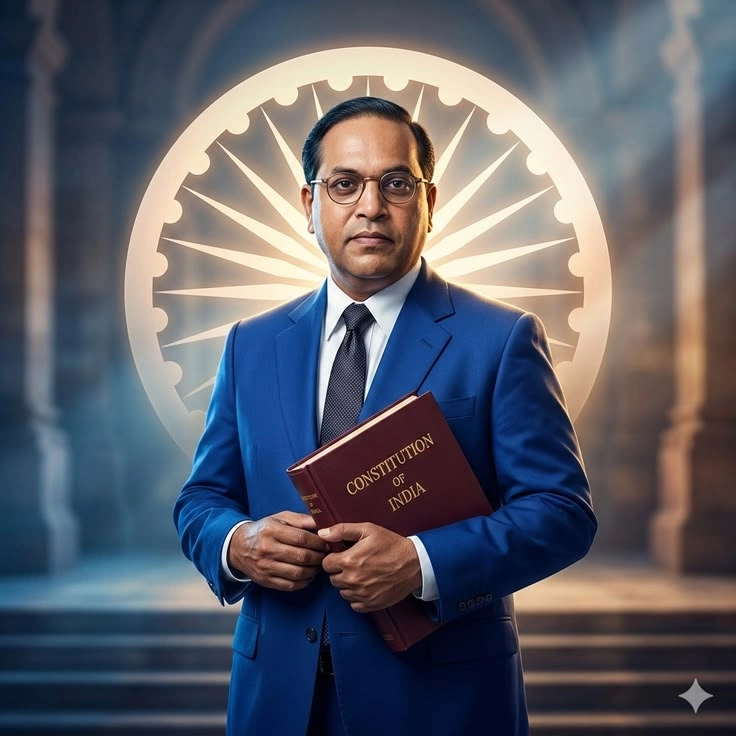
Today, April 14, 2026, all of India’s central government offices are closed. There are no frantic emails or rushed meetings today because it is Ambedkar Jayanti, a national holiday. It’s B. R. Ambedkar’s birthday, and although though many people take a break in the middle of the week, the day has more meaning. This holiday isn’t just a day off; it’s a reminder of one man’s effort to change society in a country that is currently struggling with inequity. As stock markets buzz about possible volatility and schools close, millions take a moment to think about Dr. Ambedkar’s legacy in the context of modern India’s fight for social justice.
Who Was B R Ambedkar, the Man Behind the Holiday?
On April 14, 1891, Babasaheb Bhimrao Ramji Ambedkar was born in Mhow, which is now in Madhya Pradesh. He was born into the Mahar caste, which was once considered “untouchable,” thus he had to deal with discrimination from a young age. Imagine a kid who can’t sit with his friends or touch the village well. That’s the India that Ambedkar knew. But he worked hard and got degrees from Elphinstone College, Columbia University, and the London School of Economics. By the age of thirty, he’d already become a lawyer dedicated to championing Dalit rights.
Ambedkar was a man of deeds, not just rhetoric. He made a significant move in 1927, publicly incinerating copies of the Manusmriti, a text that had long supported the caste system.
His newspapers, like Mooknayak, spoke for people who couldn’t speak for themselves. What makes someone want to fight against the whole system? Ambedkar’s vision for dignity for all came from years of being insulted. As “Ambedkar Jayanti 2026” trends on social media today, the reels of resilience circulating are resonating with young Indians, drawing them into his story.
Ambedkar’s Enduring Influence on India: From Independence to the Constitution
He fought for reservations to help groups that are often left out, a policy that is still being talked about today.
Important steps along the way for him:
Mahad Satyagraha in the 1920s got Dalits to drink from a public tank, which got people all around the country talking.
The 1932 Poona Pact, which Gandhi helped negotiate, set aside seats for lower classes and stopped separate electorates.
Conversion in 1956: He became a Buddhist and got millions of disciples, breaking free from Hinduism’s caste system.
Ambedkar was India’s first Law Minister, but he quit in 1951 because the Hindu Code Bill was watered down. He passed away in 1956, but his thoughts are still around. His work still has an impact on the battle against discrimination around the world through UN human rights conventions.
Today is Ambedkar Jayanti, a day of closures, celebrations, and a pause across the nation.
The national government proclaimed a full vacation for Ambedkar Jayanti 2026 under the Negotiable Instruments Act. Post offices and banks are both closed. Stock markets like the NSE and BSE are still open, and traders are watching sessions for signs from the US Fed meetings. However, most PSU banks and insurance companies are closed. Parliament House in Delhi is quiet, while the state administrations in Maharashtra, Uttar Pradesh, and other states are also taking a break.
Schools and colleges get involved, letting students go to events. There are a lot of processions in Pune, Ambedkar’s adoptive home. Huge rallies go through the streets, with people in blue clothing (the color of Buddhism) singing “Jai Bhim.” Temples? Not the main point. Instead, memorials and stupas hold seminars. In Chaitya Bhoomi, Mumbai, where Ambedkar was cremated, lakhs of people come. People come from far away to see Nagpur’s Deekshabhoomi, where he converted many people.
It becomes worse on social media. Hashtags like #AmbedkarJayanti2026 and #BabaSaheb are quite popular, and influencers are spreading phrases like “I evaluate the growth of a community by how far women have come.” Virtual webinars talk about his economic proposals, like land reforms and workers’ rights. This is important because India’s unemployment rate is 8.1%, according to the latest NSSO statistics.
How Ambedkar’s legacy affects India now in the real world
Ambedkar has a big impact on everyday lives. His campaign led to reservations in employment and schools, which now include EWS. But there are still problems. Dalits are victims of violence; NCRB statistics suggests that there are over 50,000 crimes against them every year. The Hathras and Unnao cases made people angry again in 2025.
Ambedkar was a supporter of state socialism in terms of the economy. His States and Minorities plan called for resource planning, which is something that is still being talked about in today’s Atmanirbhar Bharat. Women owe him money too; the Hindu Succession Act, which he signed a few days before he died, gave daughters the ability to inherit.
The Dalit diaspora from India in the US and UK is fighting “caste in tech” around the world. The bill in California that recognizes caste discrimination in 2023 is an homage to Ambedkar. Startups like the Dalit Indian Chamber of Commerce, which has more than 10,000 members developing billion-rupee businesses, show how much he believes in being self-reliant.
But is equality getting closer? There are sculptures of Ambedkar all over rural Maharashtra, but 10,000 farmers kill themselves every year, many of them from lower castes. Young people in cities want to know: Did we really break down walls, or did we just paint them over?
Not Without Debate: Controversies and Critiques
No legacy is perfect. Some people say that Ambedkar is anti-Hindu because he became a Buddhist. RSS voices say he honored traditions. Some people claim that reservations make people dependent, which is something that PM Modi’s merit discussions occasionally avoid. Ambedkar himself said that quotas should last no longer than 10 years.
How did he feel about Gandhi? Tense. He thought the Mahatma’s Harijan campaign was condescending. But both campaigned against untouchability, and their Poona Pact was a tough compromise. Parties are trying to win over Dalit voters as elections get closer in 2026. Mayawati of the BSP brings back Ambedkarite politics, and the BJP includes him in programs like the PM Ambedkar Samajik Samriddhi Yojana.
Cultural Celebrations: From Marches to Thoughts
There is more to Ambedkar Jayanti than just sadness. Folk dances of Andhra Pradesh depict the story of his life. There are discussions in libraries in Kerala. Bollywood movies like Dr. Babasaheb Ambedkar (2000), which stars Mammootty, pay homage to Bollywood. What about music? Millions of people listen to Bhim Geet records.
It’s time for families to have a picnic. School plays, those simple productions centered on the Constitution, are a surprisingly effective way for children to learn. In Pune’s hill stations, people hike to Ambedkar shrines, blending leisure with reverence. Have you ever considered the lasting impact a single day of rest can have on your life?
India honors the “Architect of Equality” on Ambedkar Jayanti 2026, when government offices across the country are closed.