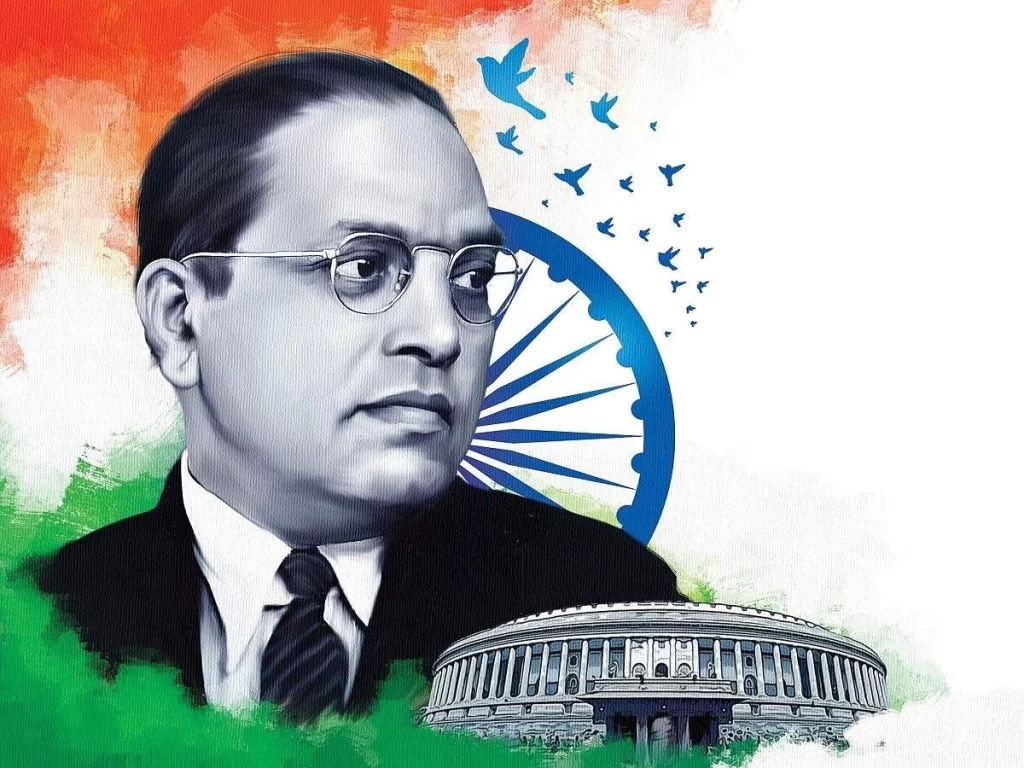
India pauses today, April 14, 2026, to observe Ambedkar Jayanti. This marks the 135th birthday of Dr. Bhimrao Ramji Ambedkar, the architect of the Constitution, a man who dedicated his life to battling caste-based discrimination.
From Mumbai to Delhi, there are rallies, speeches, and flower tributes in the streets. Schools and offices are also holding seminars about his life and ideas. In Pune, Maharashtra, where Ambedkar was born, thousands of people came at Chaityabhoomi early this morning to lay wreaths at his memorial stupa. The weather was clear. But this day makes us think about something deeper: How relevant is Ambedkar’s vision now, when there is still a lot of inequity in the country?
Ambedkar Jayanti isn’t just a day off; it’s a moment for the nation to reflect on his legacy. Born into a Dalit family in 1891, Ambedkar’s impact is felt far and wide.
He emerged from the shadows of untouchability to become India’s first Law Minister and the main writer of the Constitution. His life narrative is quite relevant right now, as India deals with both economic progress and ongoing social tensions. The first event in the country was Prime Minister Narendra Modi’s tribute on social media, in which he urged people to “live by Babasaheb’s philosophy of equality.” In regions like Uttar Pradesh and Bihar, where Dalit groups make up a large voting bloc, politicians from all parties took part in processions that mixed paying tribute with subtle messages about the forthcoming elections.
How to Become a Revolutionary: From Mhow to Global Scholar
Dr. B.R. Ambedkar’s journey began at Mhow, which is today called Dr. Ambedkar Nagar in Madhya Pradesh. He was brutally discriminated against as a child; he wasn’t allowed to touch water taps at school and had to sit alone in classrooms. But his father, who was a Subedar Major in the British Indian Army, taught him to love school. By the time he was 15, Ambedkar had read a lot of great works, such as the teachings of Buddha and John Stuart Mill’s books on freedom.
He got scholarships that let him go to Elphinstone College in Bombay and then Columbia University in New York, where he got his master’s and doctorate degrees in economics. He went on to become a barrister at the London School of Economics and Gray’s Inn. Think about a young Dalit guy in America or Britain in the early 20th century. He had to deal with racism at home and abroad. How tough did it make him? When Ambedkar returned to India in 1923, he started periodicals like Mooknayak (Leader of the Voiceless) to give Dalits a voice and fight the caste system.
His activity reached its peak in 1927 with the Mahad Satyagraha, when he led Dalits to drink from a public tank that was only for upper castes. This broke down barriers. By the 1930s, he had started the Independent Labour Party and then the Scheduled Castes Federation, which fought for reserved seats in legislatures. These early fights set the stage for his greatest effort, the Indian Constitution.
Making India’s Constitution: A Plan for Fairness
The Constitution was passed on January 26, 1950, and Ambedkar was the one who made it happen. He added protections for equality (Article 14), the end of untouchability (Article 17), and affirmative action through reservations (Articles 15 and 16) as the head of the Drafting Committee. He battled tooth and claw against Hindu Code Bills that kept women from inheriting property and getting divorced, which were rather radical views at the time.
Ambedkar didn’t just stop at the law. He saw an India where political freedom and economic freedom went hand in hand. In his last speech to the Constituent Assembly, he said, “No matter how wonderful a Constitution is, it will be awful if the people who are putting it into action are not good.” That is still true today, even though there are arguments about delays in the courts and loopholes in enforcement.
Some important parts of Ambedkar’s vision for the constitution are:
Fundamental Rights: Freedom from discrimination based on race, religion, caste, sex, or place of birth.
Directive Principles: Guidelines for a welfare state that stress education, health, and fair pay.
Federal Structure: Protecting minorities while keeping power balanced between the center and the states.
These things have changed India for the better, helping millions of people through reservations that increased Dalit participation from 0% in legislatures before 1950 to over 20% now in several assemblies.
Pune is the leader in nationwide celebrations.
There were a lot of different kinds of celebrations this Ambedkar Jayanti. More than 50,000 people came together at Deekshabhoomi in Pune, where Ambedkar’s 1956 Buddhist conversion mass ceremony took place. Bhajan Mandali sang his favorite hymns as part of cultural events, while youth groups put on street plays about caste violence. Eknath Shinde, the Chief Minister of Maharashtra, spoke to audiences and promised to apply the Atrocities Act more strictly.
Tributes rang out in Delhi’s Parliament House. Om Birla, the Speaker of the Lok Sabha, talked about how Ambedkar helped “establish a casteless society.” In southern states like Tamil Nadu and Kerala, activities centered on his economic theories, with seminars relating them to contemporary job issues. Even small communities came up with new ideas. For example, village panchayats in Rajasthan set up “Ambedkar Gyan Yatra” cycles to give away free books to poor students.
There were millions of posts on X (previously Twitter) with the hashtag #AmbedkarJayanti135, which made the news even bigger. Influencers circulated memes that put Ambedkar’s remarks next to recent statistics on inequality, which led to popular arguments.
Caste in the 21st Century: Ongoing Problems
Ambedkar’s dream is still not finished, even if things have become better. Even though India’s caste system is illegal, it nonetheless leads to subtle biases. According to NCRB data, there are more than 50,000 caste-based crimes every year, which is a 10% increase from previous year. Many of these crimes go unreported. In Indian cities, Dalits face significant barriers when seeking employment. A 2025 study by Azim Premji University revealed that resumes bearing Dalit surnames received 25% fewer callbacks.
Rural areas are plagued by horrific acts, including honor killings, land seizures, and restrictions on temple access. The Una flogging, in its brutal specifics, echoes the recent tragedies in Hathras and Sandeshkhali, where Dalit women bore the brunt of the violence.
Scheduled Castes only have 10% of the country’s wealth, even though they make up 16% of the population.
Ambedkar predicted this and criticized people who blindly believed in Parliament. He said that caste should be destroyed by intermarriage, inter-dining, and education. The Supreme Court’s 2024 ruling, which allows states to change reservation lists, highlights the ongoing debate about sub-classifications within Other Backward Classes (OBCs). This raises a key question: how do we define true equality when affirmative action policies create competition between different communities?
Additionally, the process of moving to urban areas has both positive and negative effects.
Ashok Khade, a Dalit man who transformed a humble cycle repair shop into a thriving steel business, embodies Ambedkar’s vision of self-sufficiency. In cities such as Bengaluru and Hyderabad, Dalit entrepreneurs are increasingly launching their own ventures, a trend fueled by initiatives like Stand-Up India.
Ambedkar’s Lasting Ideas: From Caste to Buddhism
Ambedkar was a genius because he was able to think in many different ways, including Buddhism, liberalism, and socialism. He became a Buddhist on October 14, 1956, in Nagpur’s Deekshabhoomi, when half a million people followed him. He was unhappy with the unfairness of Hinduism. His Navayana Buddhism was based on compassion, rationality, and equality, and it didn’t include rituals.
Annihilation of Caste (1936) and other books like it are still must-reads. They are very critical of orthodoxy: “Turn in any direction you please, caste is the monster that crosses your path.” His economic book, States and Minorities, suggested state socialism as a solution to poverty, which has influenced policies like MGNREGA.
Ambedkar is an inspiration around the world. Black Lives Matter and Dalit organizations in the US are working together, while Nepal’s Madhesi protests use his Constitution as a reason. His visage is like an emblem among Dalit houses in India, a sign of respect.
Women, Education, and the Economy: Fights That Go Unnoticed
Ambedkar was a strong supporter of women’s rights. He fought conservative MPs to get the Hindu Code Bill passed, which would provide everyone equal rights. Women’s reservation in Parliament, which passed in 2023, is a sign of his support.
“Educate, Agitate, Organize” was his battle cry. Literacy among SCs rose from 10% in 1951 to 66% presently, but the quality is still low.
He warned against laissez-faire capitalism in terms of the economy. His appeal for jobs in the public sector resonates with people who are having trouble in the gig economy, where Dalits work in low-skill occupations.
India Honors Dr. B.R. Ambedkar on the 135th Anniversary of His Birth: A Legacy of Equality in the Face of Modern Struggles