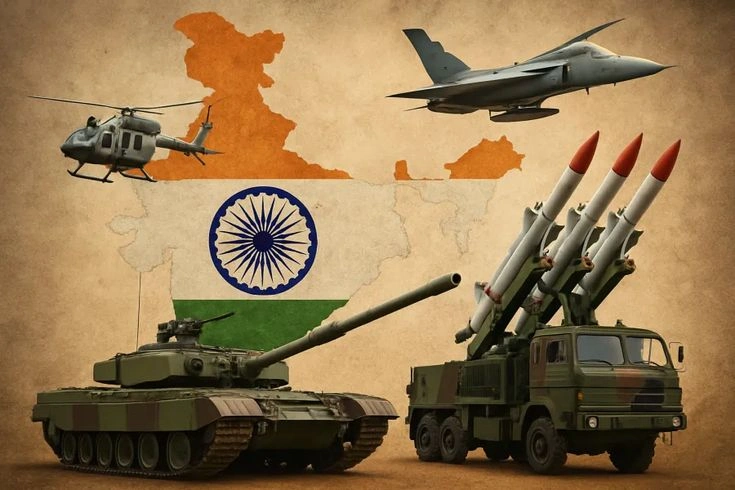
The Indian government is conducting a top-level assessment of its military preparedness in a nation where borders are in constant flux. This comes amidst escalating tensions along vital frontiers, spanning from the frigid heights of Ladakh to the rugged hills of Manipur. On April 4, 2026, senior defense officials from multiple nations convened in New Delhi to discuss troop deployments, equipment inventories, and operational strategies. This underscores the continued primacy of national security. The analysis underscores the imperative for India to maintain its edge over a resurgent China in the east and a disruptive Pakistan in the west. Why the urgency?
The government is keen to ensure its forces are battle-ready, given the growing tensions in the region.
The atmosphere is thick with unease.
Only a few weeks past, skirmishes along the Line of Actual Control with China reignited familiar tensions. Reports of incursions near Tawang in Arunachal Pradesh set off alarms, and satellite imagery revealed unusual troop concentrations. Simultaneously, cross-border firing from Pakistan in the west has increased, a development linked to the ongoing unrest in Jammu and Kashmir.
Because of the uprisings in the Northeast, the Cabinet Committee on Security (CCS) got involved. The government of Prime Minister Narendra Modi isn’t only reacting; it’s making plans for the future.
The things that are making things tense in the area
Let’s break it down. The area around India has never been this calm. China, India’s biggest trade partner and fiercest enemy, has built a lot of infrastructure along the LAC. Imagine big airports in Tibet and train lines that go all the way to the border. Beijing moved sophisticated J-20 stealth fighters to the border in 2025, which made Indian strategists apprehensive. People still remember the battle at Galwan Valley in 2020, when 20 Indian soldiers died. Patrols have fought again recently, and both sides say the other side started the conflict.
Things get worse in Pakistan. The truce along the Line of Control (LoC) has been shaky since February 2021, and it is now falling apart. Drones on the other side of the border have been dropping explosives in the Punjab and Jammu districts more and more often. Militant groups that Islamabad is alleged to fund have been attacking more in Kashmir, killing dozens of people last year. The ethnic violence in Manipur, which is a result of the civil war in Myanmar, has drawn in Indian Army units, which is putting a pressure on resources.
Then there’s the bigger picture. The Indo-Pacific is heating heated, and the US is pushing its QUAD alliance—India, the US, Japan, and Australia—to confront China. Because of the war in Ukraine, India has had to look for other places to get weaponry. These dots aren’t just random; they’re part of a web of threats that need a robust response. A former commander declared off the record, “We’re not fighting one battle; we’re getting ready for numerous.”
What Was Looked At in the Review of the Defense
It wasn’t just a casual discussion; the review was led by Defence Minister Rajnath Singh. It brought together the leaders of the military, the intelligence community, and the Chief of Defence Staff. Things that are being closely watched:
Troop Deployments and Morale: There are still more than 200,000 soldiers stationed along the LAC and LoC. The primary worry was that soldiers would get tired of rotating because they have been in harsh regions for years. People liked wellness programs and exercising at high altitudes, and now they can get new gear like heated tents and oxygen kits.
This money will be used to buy new equipment and make things better. There are a lot of significant purchases coming up, like 114 bids for Multi-Role Fighter Aircraft (MRFA). The Rafales from France have already made the air force stronger. Indigenous projects are also working well: There are additional BrahMos weapons aboard more warships, and Tejas Mk1A planes are being manufactured. But there are still disparities. For example, China has more submarines than the US.
There are problems not only on the land, but also in space and online. Government data shows that cyber attacks were up by 30% last year, with banks and power grids being the most common targets. India formed the Defence Space Agency in 2025, four years after the Mission Shakti test, with the goal of being able to destroy satellites.
Logistics Overhaul: The Army is moving faster to unite the army, navy, and air force into integrated theater commands. The Atal Tunnel is one of the changes being made to the rail and road networks linking Kashmir and Arunachal. It has already made travel times shorter.
Intelligence briefs talked on hybrid threats, such as fake news campaigns on social media and trade barriers that affect the economy. The report said that quantum-secure communications and AI-powered surveillance drones may strike back.
What does this mean for the average individual in India? Stronger borders keep families safer, but they also have to do with jobs. For instance, defense corridors in Tamil Nadu and Uttar Pradesh are giving jobs to local manufacturers.
India’s Strategic Moves: Making a Fortress
India is not starting from scratch. The Atmanirbhar Bharat (Self-Reliant India) program has transformed how defense is created. DRDO currently has the Nag anti-tank missiles and Akash air defense systems, which makes it less reliant on imports. In 2014, 70% of its weapons were imported; now, less than 40% are. L&T and Tata are private enterprises that make ships and radars.
Alliances are also very significant. The QUAD’s Malabar exercises in the Indian Ocean make their navy more able to deal with China’s string-of-pearls ports. The US sells MQ-9B drones and Apache helicopters to fill in the high-end gaps. France gives Scorpene submarines, and Israel gives Spike missiles.
But problems hurt. The forces are experiencing problems because not enough people are quitting their occupations after Galwan. There are fewer corruption scandals, but they still erode trust. And how about the weather changing? Glaciers in the Himalayas are melting and flooding bases, and cyclones are striking installations on the coast.
Here’s a quick list of things you can do to get ready:
Air Power: 36 Rafales are in action, while Russia’s S-400 systems are keeping major cities safe.
The INS Vikrant carrier group is keeping an eye on the waterways around the Andaman Islands.
Army: Since 2020, the network of roads along the border has extended by 10,000 km, and 4,000 Arjun tanks have been repaired.
These things aren’t big news items; they’re the hard labor of keeping people from doing bad things.
Voices from the Ground: Soldiers, Civilians, and Experts
When you talk to soldiers in Ladakh, you could hear both pride and hardness. One sergeant noted during a recent embed, “Now we receive nicer boots and better food.” But they expect promotions to come quickly and help from their families. Families back home watch every news article with sad hearts.
Experts don’t all agree. Strategic analyst Brahma Chellaney thinks that India needs to establish villages along its border that are just like China’s. “Demographics are destiny,” he argues. Some pacifists, on the other hand, don’t agree with the spending. Is it better to use the money to mend potholes instead? That’s a valid point, but you can’t ignore your neighbors when they get guns.
What do you think, reader? How far should a country go to stay independent in a world full of proxy wars and power struggles?
It unites people politically. Opposition leaders, like as Rahul Gandhi, have backed the probe and asked for financial transparency. People in the Northeast want more freedom to fight against insurgents.
India is bolstering its defenses as regional tensions rise.