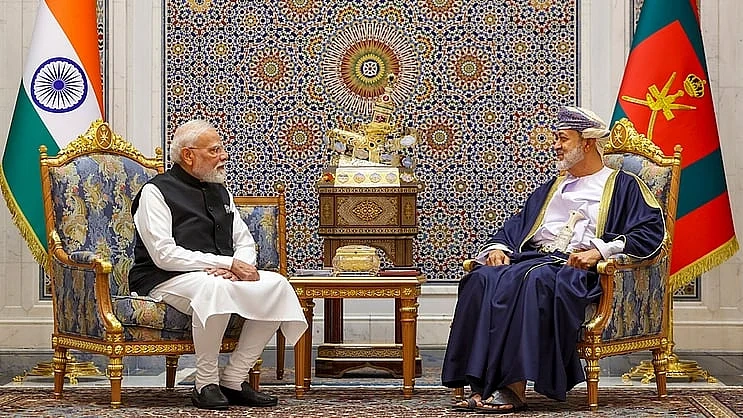
In the frenetic world of global trade, where deals are sealed after marathon negotiations and handshakes mark years of groundwork, India and Oman are on the edge of something significant. In recent discussions the two countries have moved tantalisingly close to agreeing a schedule for a Free Trade Agreement (FTA). This is not just another accord on paper – this promises to turbocharge commercial connections, reducing barriers and opening floodgates for everything from Omani oil to Indian textiles. This is the perfect time. India’s economy is racing ahead and Oman is steaming ahead with its diversification drive. As supply chains move post-pandemic and the globe looks to reliable partners, what does this mean for businesses on both sides? Let’s get into it.
The Road to This Point
India and Oman have been dancing partners in commerce for decades but the rhythm has increased up lately. Their bilateral commerce stood at over $12 billion during the fiscal year 2024-25, an increase over the previous years mainly due to Oman’s crude oil exports that account for more than 60 per cent of the total. India, the world’s third-largest oil importer, gets a consistent 10-15% of its oil from Oman. Think reliable supplies arriving at Mumbai and Kochi ports, free from the geopolitical drama that plagues other suppliers.
Negotiations for this Comprehensive Economic Partnership Agreement (CEPA), as it is properly named, began in 2020 during the COVID instability. The first hurdles were tariff sensitivities and rules of origin — these are the nitty-gritty elements that determine whether items qualify for duty decreases. But by April 2026, high-level negotiations in Muscat between Indian Commerce Minister Piyush Goyal and Omani counterpart Qais Al Yousefi had them working out sticky problems. Sources close to the talks indicate they have agreed 90% of the wording, with a goal to finish by the end of Q3 2026. That’s massive considering India’s recent spate of FTAs with UAE, Australia and the works.
Oman’s side is also motivated. The sultanate’s Vision 2040 intends to wean the economy off oil dependency, with non-oil GDP expected to reach 90% by mid-century. India with its huge market of 1.4 billion customers is the right fit. Ever wonder how a little Gulf nation like Oman packs a punch? It’s that strategic position on the Arabian Sea, and close links – more than 800,000 Indians live and work there, from construction workers in Duqm to executives in Sohar.
Table Stakes: Sectors Set to Blow Up
The devil is in the details and this FTA is chock full of them. Expect zero tariffs on 95 percent of items within five years, covering a stunning $10 billion in immediate trade value. Here’s a quick snapshot of the winners:
Energy and Petrochemicals: Oman’s access to downstream products such as plastics and fertilisers improves. India eyes green energy, may ship solar panels, EV batteries duty free
Gems, Jewellery and Textiles: Oman’s diamond obsession may quadruple Indian exports, presently worth $2 billion. Clothing and fabrics? Oman’s retail boom a no-brainer.
Food Processing And Pharma: Indian mainstays like basmati rice and generics see lesser restrictions, reaching Oman’s $ 5 billion import market.
Services and Logistics: Big for India’s IT Companies and Omani Ports Think simpler visas for professionals and collaborative ventures in logistical hubs.
The chatter on trade forums is already rife with terminology like “India-Oman FTA timeline” and “CEPA negotiations 2026”. Streamlined customs using digital platforms, mutual recognition of norms. Non tariff obstacles get dealt with also. This levels the playing field for Indian SMEs, frequently crushed by red tape, versus Chinese counterparts that have long dominated Omani shelves.
India’s global context spices it up. With land and energy inexpensive, Oman’s 2,000 sq km industrial zones like Duqm are ‘Make in India’ drive for manufacturing. A food processing joint venture there? In pilot talks already. And don’t forget the planned rail-ship combo, the India-Middle East-Europe Corridor (IMEC). An FTA greases those gears, shaving weeks off transportation times to Europe.
Boosting India’s Economy: Jobs, Growth and Beyond
This is not abstract for India – it is jobs and growth.” According to think tanks like ICRIER, the FTA will boost trade by $5-7 billion every year and add 0.2% to GDP over 10 years. Oman’s biggest Indian trading partners, Maharashtra and Gujarat, are likely to gain the most. Gujarat refiners to enhance oil ties Pune’s IT hubs to connect with Omani fintech
50,000+ Indian small enterprises export to the Gulf. Go the MSME way Lower taxes ensure competitive pricing, crucial as Oman imports 80% of its food. India’s $25 billion pharma export engine is eyeing Oman’s $10 billion healthcare spend by 2030.
It’s good for the environment too. Both countries are considering hydrogen trade – Oman’s bright deserts and India’s electrolyzer technology might create green corridors. Practical significance? India imports 70% of its oil via the Gulf and the Oman lines, which are steady despite Red Sea interruptions from Houthi attacks, ensure these supplies.
Sure. Challenges remain. Omani cheese by the truckload is a worry for India’s dairy producers, but such protections like limits are baked in. Labor mobility rules safeguard Indian expats, a contentious subject after prior visa rows.
Oman’s Perspective: Diversification in Progress
Flip the coin over: Oman needs this more urgently. Diversification is needed when oil prices change – Brent was at $75 a barrel in May 2026. No oil shipments to India? Fisheries, minerals and gypsum could go boom but a paltry $1 billion now. India’s development boom is fed by Oman’s limestone.
Another jewel is tourism. Indian visitors were 200,000 a year before the FTA. If visa-on-arrival modifications increase that, rupees will feed Muscat’s hotels. Oman Air flights to Delhi are full. Direct cargo links too?
This matches Oman’s “gateway” policy, on a global level, linking Asia and Africa. India’s Act East Policy is looking towards the Middle East, hence this is synergistic. Have you wondered how these pacts influence the decisions you make every day – like cheaper Omani dates in your Diwali basket or Indian mangoes in Salalah markets?
Challenges Ahead and Final Count
No deal’s perfect. Last sticking points? Pharma and e-commerce rules for intellectual property. India wants data localisation, Oman wants open digital flows. Geopolitics is heating up, US-Iran tensions could have rippling effects yet both maintain neutral.
Post-Ramadan conference in Muscat by Sept 2026, ratification by 2027, live by 2028. India’s FTA frenzy – 15 in pipeline – shows determination; Oman’s with Indonesia and others shows desire
India, Oman get closer to free trade pact: A game-changer for bilateral trade?