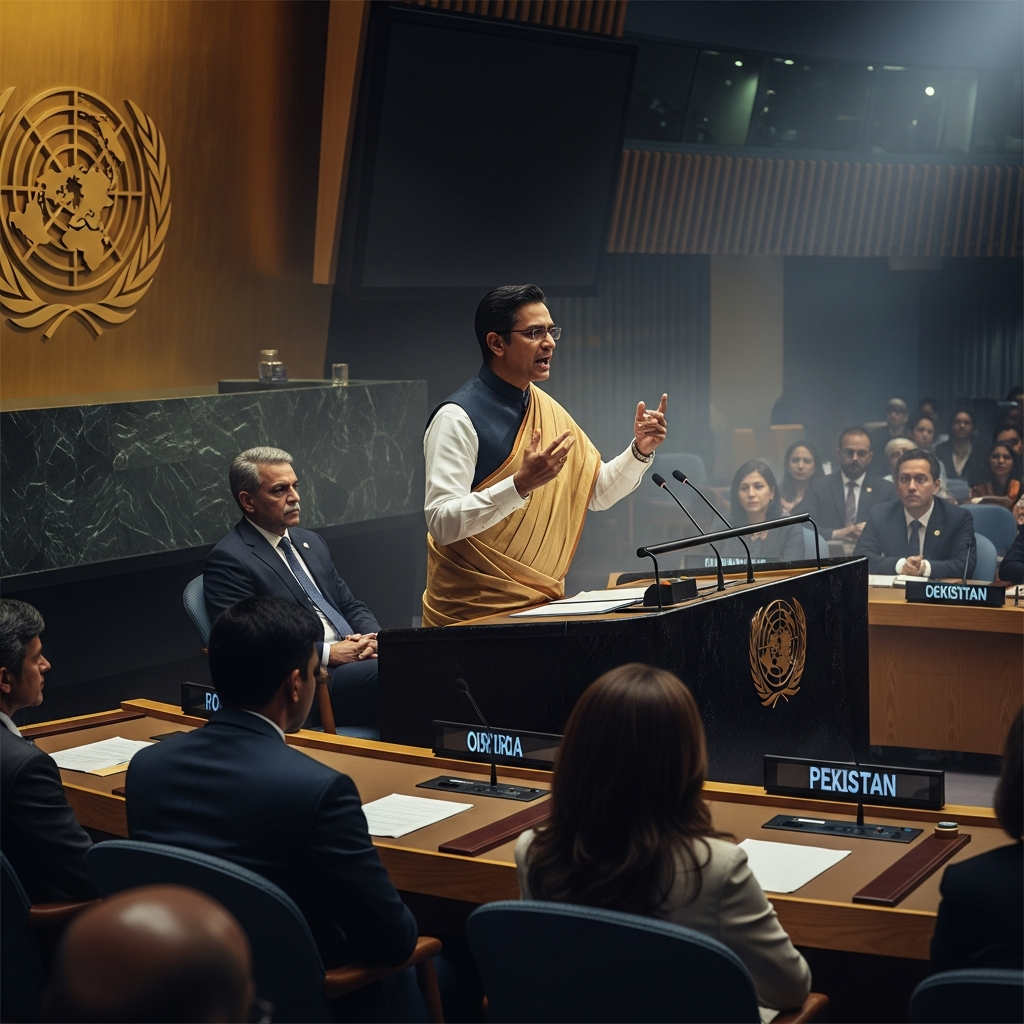
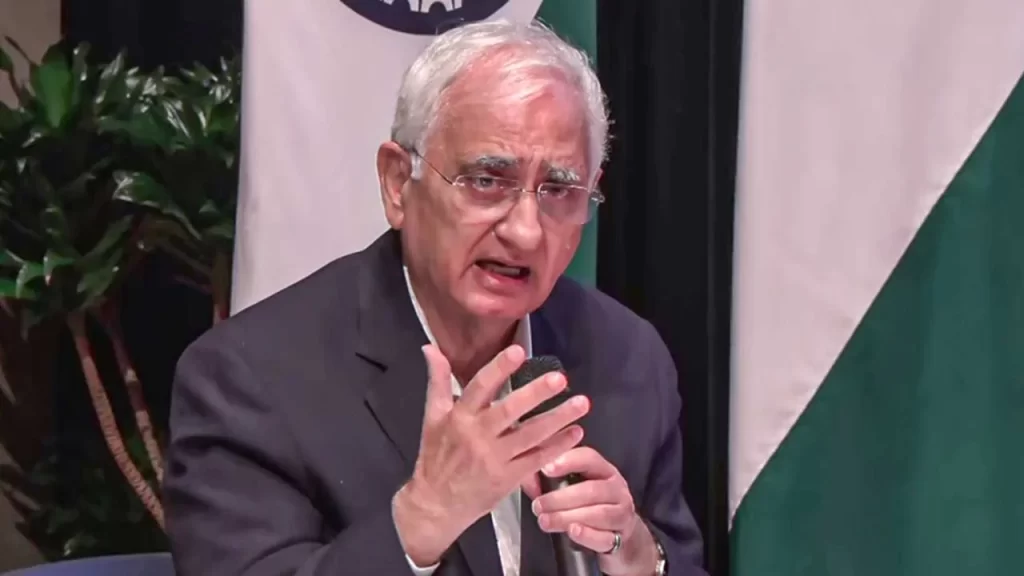
There are moments in diplomacy when silence speaks louder than words — and then there are moments when a nation simply has had enough. India’s recent statement at a United Nations Security Council discussion on Afghanistan was firmly the latter. Sharp, direct, and carefully worded, New Delhi’s remarks pulled no punches, calling out Pakistan for spreading what Indian representatives described as misinformation and for supporting activities that continue to destabilize an already fragile region.
For watchers of South Asian geopolitics, it was little surprise. But the venue – the UN Security Council – and the sharpness of India’s tone made it a moment to pause on.
A Familiar Flashpoint, A Significant Platform
The UN Security Council discussion was centered on Afghanistan — a nation that has lurched from one crisis to another, particularly since the Taliban’s return to power in 2021. But as it often does in multilateral forums, the conversation quickly pulled in the broader neighborhood, and India made sure its perspective was heard.
Indian representatives used the platform to lay out what New Delhi has long maintained: that Pakistan’s conduct in the region is not that of a responsible neighbor, but of a state that continues to harbor and enable elements that fuel instability. The India UN statement accused Islamabad of pushing narratives that distort facts on the ground, while simultaneously turning a blind eye — or worse, lending quiet support — to forces that undermine peace.
These are serious allegations. And while Pakistan has always denied any role in such matters, India’s decision to raise this issue at the UN stems from a mixture of strategic calculations and genuine frustration.
Counter-Terrorism and the Dispute
The issue of counter-terrorism is central to the dispute and has been a defining, often disruptive, feature of India-Pakistan relations for decades. India has long argued that effective regional security in South Asia is impossible without Pakistan genuinely dismantling the infrastructure of terror that, according to New Delhi, operates with some degree of state tolerance on Pakistani soil.
This isn’t just a bilateral grievance. The Afghanistan situation has added a new dimension to these concerns. The porous border between Pakistan and Afghanistan, combined with the complex web of militant networks that operate across that terrain, has made counter-terrorism cooperation in the region both more urgent and more difficult. India’s diplomacy at the UN is partly an effort to keep international attention on this fact.
India is taking the issue to a global forum, signalling that it sees this as beyond a dispute between two belligerent neighbours, something that has wider bearings on international peace and security. It is a message to the world as much as to Islamabad.
Reading Between the Lines of India’s Diplomacy
India’s UN statement also tells us something important about where Indian diplomacy stands today. “India under the government of Prime Minister Narendra Modi has become more assertive on the world stage, less willing to take provocations lying down, more willing to call out and shame in international forums.
This approach, of course, carries its own risks. Aggressive rhetoric at forums such as the UN can sometimes harden positions rather than shift them. Pakistan, for its part, is unlikely to respond to public criticism by suddenly changing course. If anything, statements such as these tend to deepen the mutual mistrust that has characterized India-Pakistan relations for much of their post-independence history.
But there is a strategic logic to this too. India knows that Pakistan’s international standing – particularly its relationships with important donors, partners and multilateral institutions – is susceptible to external pressure. By consistently and publicly linking Pakistan’s behaviour to regional insecurity, New Delhi hopes to build an international narrative that slowly raises the cost of choices made by Islamabad.
Afghanistan: The Shared Crisis Nobody Wants to Own
One of the tragic ironies of the current Afghanistan situation is that virtually every country in the region claims to want peace and stability there — and yet the collective outcome has been anything but. India, Pakistan, Iran, China, Russia, and the Central Asian states all have stakes in what happens in Kabul. Their interests often overlap but rarely coincide, and their relations with the Taliban government are complicated by history, ideology and strategic calculation.
Afghanistan is both a loss and a worry for India. New Delhi invested heavily in Afghanistan’s development over two decades — in roads, dams, schools and institutions — only to see that investment jeopardized by the return of the Taliban. India has no formal relations with the current Taliban government, and any influence it once had in Kabul has diminished considerably.
Pakistan, by contrast, has historically seen Afghanistan as strategic depth, and the Taliban’s return was viewed by many in Islamabad — at least initially — as a victory of sorts. But since then, things have got complicated, with the Taliban proving less pliable than Pakistan had hoped.
This fluid situation is one reason why the Afghanistan security question continues to be so relevant in international discussions and why India’s UN statement has resonance beyond its immediate bilateral context.
Next Steps?
The India-Pakistan diplomatic stalemate is unlikely to be resolved anytime soon. The structural issues – Kashmir, cross-border terrorism, water disputes, trade – are deep and the political will to address them is in short supply on the two sides. What India’s statement at the UN does is ensure that the international community remains aware of New Delhi’s position, and that Pakistan cannot count on global forums being a neutral space.
Expect the issue to continue surfacing in international discussions. India has shown it is willing to use every available multilateral platform to make its case, and Afghanistan’s ongoing instability will keep providing the occasion. For the region, and for global efforts toward sustainable peace, the hope remains that dialogue eventually replaces denunciation — but that day still feels some distance away.
India Takes a Hard Stand at the UN: What It Means for South Asia’s Future.