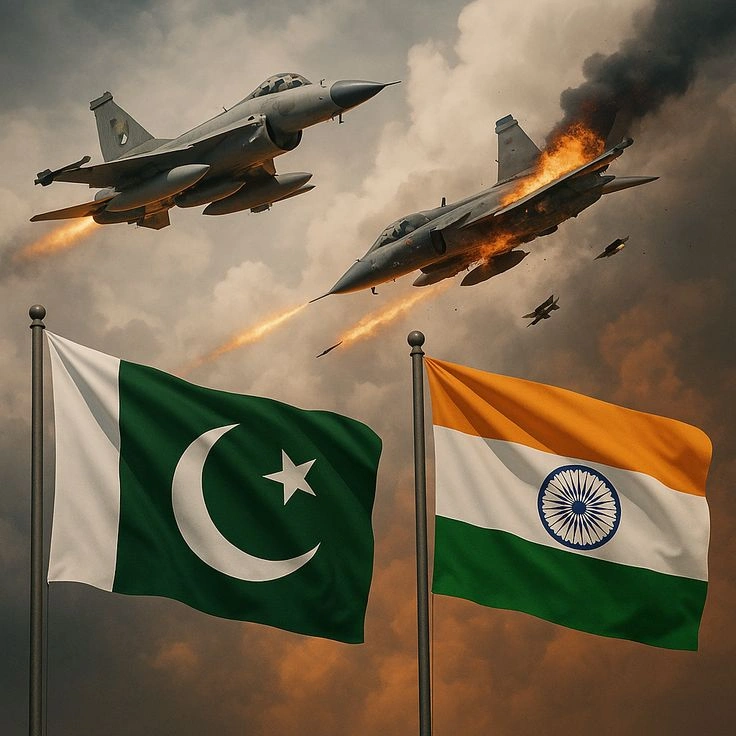
India has drawn a clear line in the sand with Italy, formally asking Rome not to share or transfer any sensitive defence technology with Pakistan. The move, delivered during high‑level talks between Defence Minister Rajnath Singh and Italian Defence Minister Guido Crosetto in New Delhi, sends a strong message about how New Delhi intends to protect its national security interests in an increasingly complex web of global defence partnerships.
At the same time, India is embracing Italy as a prospective defence industrial partner, exploring joint development and co‑production of advanced weapon systems under India’s “Atmanirbhar Bharat” (self‑reliant India) framework. This dual approach—deepening ties with Europe while strictly ring‑fencing technology from Pakistan—reflects a more assertive and calculated foreign‑policy posture in the Indo‑Pacific and beyond.
Why India went public with this warning
For India, the concern is not just about a single Italian platform or missile but about systemic risk. Italian defence firms such as Leonardo have already supplied naval platforms, helicopters, drones, and surface‑to‑air systems to Pakistan in the past, including helicopters and components that feed into Islamabad’s maritime and air‑defence capabilities.
Indian officials have repeatedly pointed to Pakistan’s role as a “hub of international terrorism,” arguing that any advanced defence technology flowing into Islamabad could indirectly enhance the capabilities of militant groups operating along the India–Pakistan border or even in other regions. By asking Italy to refrain from sharing sensitive defence tech, India is trying to harden Europe’s understanding that assistance to Pakistan carries strategic costs, not just commercial benefits.
This is also a preventive move. As India ramps up its own defence‑industrial ambitions, it wants to avoid situations where technologies developed or co‑produced with European partners eventually find their way into adversarial arsenals through third‑party sales or technology transfers.
How Italy fits into India’s defence‑industrial map
Italy is not just any European country for India; it represents a niche but critical node in Europe’s defence‑industrial ecosystem. Italian firms such as Leonardo and Fincantieri are active in naval platforms, helicopters, torpedoes, and advanced sensors—areas where India is aggressively modernising its armed forces.
In the same meeting where India flagged its concerns about Pakistan, both sides agreed on a Bilateral Military Cooperation Plan (MCP) for 2026–27, which lays out joint exercises, training programmes, and deeper coordination between the Indian and Italian armed forces. India also signalled openness to co‑production and co‑development deals, including setting up production lines for Italian naval hardware in India with technology transfer. One example already in play is the Indian Navy’s recent purchase of heavyweight torpedoes from WASS, an Italian defence firm, with discussions underway for local production.
Italy’s defence ministry, meanwhile, has indicated that it is ready to co‑develop systems exclusively with Indian partners, bypassing third‑country routes that could be used to route technology to Pakistan. This suggests Rome is willing to adjust its export‑control calculus to align with India’s strategic sensitivities.
The bigger picture: Pakistan’s defence‑technology pipeline
Pakistan’s defence posture has long relied on a mix of Chinese, Turkish, and European suppliers, along with dual‑use technology that can slip through the cracks of export‑control regimes. Over the years, Italian companies have supplied everything from naval vessels and helicopters to critical subsystems that feed into Pakistan’s air and missile‑defence architecture.
India’s current warning is therefore part of a broader pattern. New Delhi has previously raised concerns with other countries—including the Netherlands—when European defence‑technology links with Pakistan began to deepen. The message is consistent: any European partner keen on doing business with India on defence must also respect New Delhi’s red lines.
The question here is both technical and political: How many Italian defence systems can Pakistan realistically absorb without triggering a broader backlash in Europe? And how willing will European governments be to enforce strict “end‑use guarantees” if India continues to frame Pakistan as a terrorism‑linked security threat in West Asia and beyond?
What this means for India–Italy relations
Far from souring the relationship, India’s firm stance appears to be part of a recalibration designed to make the partnership more strategic. While raising alarms about technology transfers to Pakistan, Indian officials have also emphasised that Italy is a “valuable partner” for defence industrial cooperation, training, and joint exercises.
The Military Cooperation Plan 2026–27 is a concrete manifestation of this. It lays out a structured roadmap for everything from staff talks and training exchanges to joint exercises in the Indo‑Pacific and maritime security cooperation in the Indian Ocean. For Italy, which is expanding its naval and security footprint in the Indo‑Pacific as part of its broader “global” strategy, aligning with India offers both strategic leverage and industrial opportunities.
At the same time, Italy’s parliament has already backed a broader military‑cooperation pact with India, signalling that Rome sees this relationship as multi‑year and multi‑pillar, not a one‑off transactional deal. In this context, India’s request on Pakistan can be read as a compact: higher‑end cooperation and industrial integration on the condition that Italian defence technology does not flow into a country that India treats as a regional security concern.
India’s broader national‑security logic
India’s message to Italy is, in many ways, an extension of its own domestic defence‑industrial doctrine. Under the “Atmanirbhar Bharat” umbrella, New Delhi is pushing for co‑development, co‑production, and licensed manufacturing instead of simple off‑the‑shelf purchases. The goal is to reduce dependence on any one country, absorb critical technologies into Indian industry, and build a self‑sustaining defence ecosystem.
But there is a flip side. Greater technology transfer and co‑production also mean that India must be more vigilant about how that technology is used and by whom. If European partners are willing to share sensitive designs, subsystems, or manufacturing know‑how with India, New Delhi wants to ensure the same level of control over where those technologies ultimately end up.
This is particularly sensitive because India continues to face cross‑border terrorism, infiltration, and hybrid threats from Pakistan‑linked networks. From New Delhi’s point of view, every piece of advanced hardware or software that enters Pakistan’s arsenal—whether directly or indirectly—has the potential to alter the security calculus across the Line of Control and along India’s western and maritime frontiers.
How this plays out in a global security environment
The India–Italy–Pakistan dynamic is not isolated. It sits within a larger landscape of shifting alliances, defence‑technology competition, and great‑power rivalry. As China deepens its defence and economic ties with Pakistan, India is under constant pressure to diversify its own technology partnerships and avoid being boxed into dependence on any one bloc.
Europe, meanwhile, is trying to balance several objectives: maintaining defence‑industrial competitiveness, complying with international export‑control regimes, and avoiding the appearance of fuelling conflicts in Asia. India’s strong articulation of its concerns about Pakistan may push European governments to tighten “end‑use monitoring” clauses and make it harder for companies to route Italian‑origin hardware to countries New Delhi explicitly flags as high‑risk.
One question worth asking: If India continues to frame Pakistan so starkly in its security narrative, how will European partners reconcile that with their own diplomatic and economic interests in Pakistan? Can European states afford to completely isolate Pakistan economically while still keeping basic communication channels open, or will they be forced to choose sides in a more explicit way?
The business angle: Italian defence firms in India
From a business‑development standpoint, Italian defence companies see India as a high‑growth market. Firms such as Leonardo are already eyeing big contracts in naval helicopters, trainer aircraft, naval guns, torpedoes, and electronic‑warfare systems. Indian authorities have lifted previous restrictions on Leonardo, imposed after the VVIP helicopter scandal, and the company is now pursuing major deals, including naval‑helicopter partnerships with Indian firms like Adani Defence & Aerospace.
By seeking to co‑develop systems exclusively with Indian partners, Italy is essentially betting that long‑term integration with India’s defence ecosystem will be more profitable than one‑off deals with other countries. It also aligns with Europe’s broader push to strengthen defence‑industrial cooperation with democracies and rule‑of‑law states, as opposed to opaque or conflict‑prone regimes.
For India, this creates a rare opportunity: access to European technology without the political baggage of becoming overly dependent on a single supplier. The caveat, of course, is that New Delhi must be equally serious about its own export‑control standards and ensure that any technology it acquires from Italy does not leak into unauthorised hands through illicit channels or lax oversight.
What this means for Pakistan
For Pakistan, India’s explicit warning to Italy is another signal that its defence‑technology options are becoming more constrained. As long as India can frame Islamabad as a regional security concern tied to terrorism and cross‑border militancy, many Western and European partners will hesitate to transfer cutting‑edge systems that could be used against India.
The challenge is not just the Pakistani hardware but how it is perceived in the global security discourse. If India’s narrative about Pakistan’s support for terrorism continues to hold sway in European capitals, it will become harder for Pakistan to quietly build its defence capabilities without provoking diplomatic or export‑control pushback.
A long‑term trend: India’s more assertive diplomatic language
India’s message to Italy is emblematic of a broader shift in how New Delhi talks to the world about its national‑security interests. In the past, India often couched its concerns in diplomatic generalities and behind‑the‑scenes demarches. Today, it is increasingly willing to speak directly and publicly about where it sees red lines, especially when it comes to defence technology and terrorism.
This assertiveness is not without risks. This can put pressure on relations with countries that want to maintain a more balanced posture vis-à-vis Pakistan. But from India’s perspective, the alternative—that critical defence technologies quietly flow into a hostile neighbour—represents a far greater threat.
The question is how sustainable this approach is over time. As India seeks deeper defence‑industrial integration with Europe and other democracies, will partners accept that India’s security concerns about Pakistan must be treated as a core condition of cooperation? Or will some countries quietly find ways to keep channels open, even if they outwardly agree with India’s stance?
India tells Italy: No defence technology for Pakistan – A strategic red‑line in Europe‑Asia power play