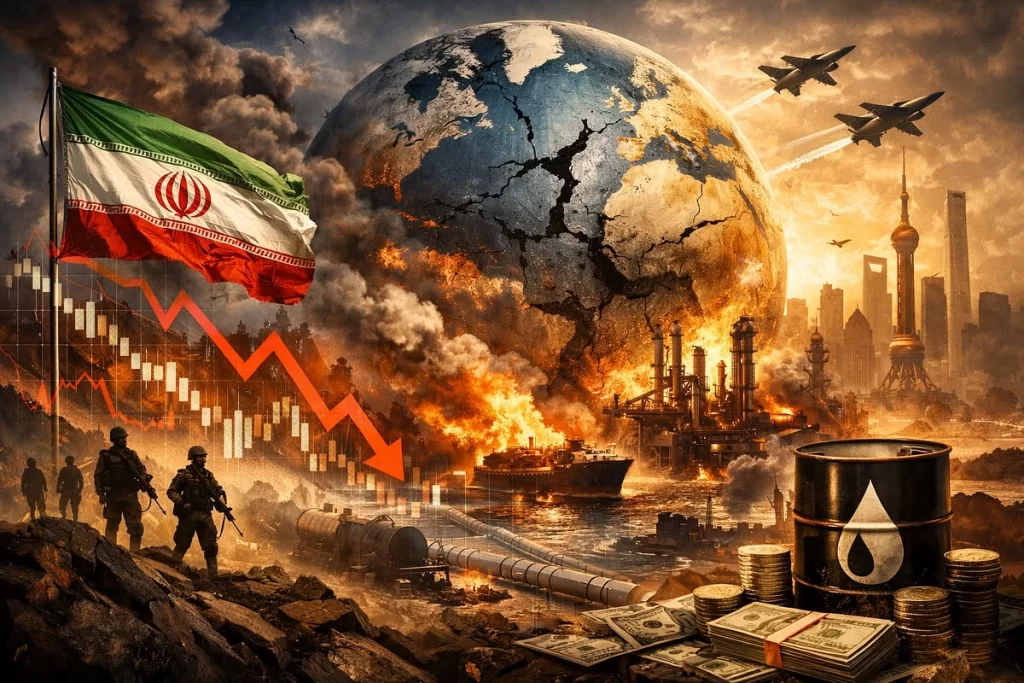
The drums of war are ringing louder once more in the Mid-East. Just days ago, a senior Iranian general delivered a harsh warning to the United States that any fresh attack, however swift or limited, will be answered with “sustained, wide-ranging and devastating retaliation.” The news comes as reports that President Donald Trump has been informed on new military options against Iran, pushing the fragile ceasefire in the 2026 Iran war to the brink. Old grievances mingle with new provocations as the world waits uneasily, global oil markets already on edge and economies feeling the pinch.
Firestorm Roots
It all started on February 28, 2026, when U.S. and Israeli forces launched Operation Epic Fury, a massive onslaught of roughly 900 airstrikes against Iranian military sites, government buildings, and even assassinating Supreme Leader Ali Khamenei in the midst of nuclear discussions. Iran responded with Operation True Promise IV, shooting hundreds of drones and missiles against Israel, U.S. sites across the Gulf, and allies like Saudi Arabia and the UAE. They slammed shut the Strait of Hormuz, choking off 20% of the world’s seaborne oil and sending shockwaves across energy markets.
The first week was turmoil. Iranian proxies like Hezbollah stepped up attacks, resulting in the 2026 Lebanon war that killed more than 2,000. U.S. carriers streamed into the region, the largest buildup since Iraq in 2003. Trump termed it a preemptive strike to destroy Iran’s nuclear goals and missile stockpile, but IAEA reports revealed no hard evidence of weaponization, only hedging for leverage. Critics denounced the strikes as illegal aggression, and Iran saw it as pure and simple imperialism.
By early April a two week truce negotiated by Pakistan had quickly collapsed. Iran will not open the Strait without guarantees, Israel resumed hammering Lebanon, and Trump imposed a naval blockade. Now, three months later, both sides are in a “dual blockade” – U.S. ships locking Iran in, Iranian mines and threats keeping oil tankers out. Death toll rises, thousands dead. Schools, hospitals damaged. UNESCO sites, including Golestan Palace, vandalized.
The Latest Hot Spot
Enter the IRGC Aerospace Force’s Brigadier General Seyed Majid Moosavi. He blasted off a statement May 1 to Axios claims that Trump received a 45-minute CENTCOM briefing on “quick and powerful” strikes against Iranian facilities. “Any enemy operation will be met with a persistent, wide-ranging and painful response,” Moosavi said. He cited recent strikes on 16 U.S. locations, warning that warships may be next: “We have seen the fate of your bases; we will see your vessels too.”
This is no bluff. Iran has proved it is still able to fire, even after losing 90% of its missile and drone rates early on. Trump, fresh off his inauguration in 2025, has doubled down on “maximum pressure,” dismissing Iran’s peace proposals that postponed nuclear negotiations for Strait access. Iran’s latest bid for the second round of Islamabad Talks in uncertainty. One approach is to send waves of precision attacks to push Tehran back to the table — on nuclear, proxies, everything, Axios sources say.
But why at this time? Deadlock. The war has cost the U.S. $18 billion as of March, plus a proposal for another $200 billion. More than $120 billion: Arab states. $300 billion to $1 trillion: Iran asserts it. Censorship conceals the entire cost – Trump claims “victory” but Iran pledges to persevere.
Economic Ripples Take Toll
Nobody feels this more than regular people watching gas costs jump. The closure of Hormuz cut off 20 million b/d, pushing Brent crude to $110+ a barrel by late March, the worst supply shortage since the 1970s. Fuel prices soared globally, with several areas experiencing double-digit increases between February and March alone.
Brent crude: up 40%+ since conflict start, $80-96 lately but erratic.
Global aviation, tourism disrupted–ships laid up, planes diverted
Pentagon wastes funds on carriers, bombs; financial markets whipsaw.
For India, it’s personal. As a big oil importer, Pune retailers like you watch fuel rise up, pinching budgets. Rupee wobbles, food and transport inflation hurts. New Delhi issued recommendations to its people in Iran to leave even if ceasefires were in place. PM Modi walks a tightrope —historic links with Iran (Chabahar port), but US strategic ally. Quiet diplomacy demands discipline, but no visible tilt. What if Hormuz Remains Closed? Is 6-7% growth India’s new stagnation?
The World Is One Tweet Away From Disaster
This mess tests alliances across the globe. NATO split – U.S. strikes without consulting, Europeans complain of fallout from refugees and security issues. Russia , China near Iran exchanging drone technology , battlefield tips – new axis powering future wars. Turkey downs Iranian missiles three times Cyprus bases buzzing with drones. Even Qatar has shot down Iranian jets.
The big picture: Iran’s “Axis of Resistance” – Hezbollah, the Houthis and Iraqi militias — is light but nevertheless punches. U.S. senses regime change vibes, but no major defections Nuclear hanging shadow. IAEA cannot investigate bombed locations. Iran has enriched uranium stocks for bargaining chips. Israel’s unacknowledged nuclear weapons? Some call it a double standard and add to the race.
Human toll’s loudest screams. By mid-March, at than 1,100 children have been killed or injured, millions displaced and schools closed. Pre-war Iranian protests suppressed; now blackouts, hazardous rain from strike at depot. Civilians in the Gulf duck shrapnel. But one wonders: how many other families pay for leaders’ games?
Voices from the Ground and the Analyst’s Eye
Tehran streets deserted under curfew, rumors of rebellion, resistance. IRGC’s “Death to America” but economic pain—rial fall, sanctions—fuels uncertainty. Iran still has thousands of drones after hits: U.S. intel. Trump loyalists like Hegseth say “just beginning”; foes denounce overstretch.
Experts disagree. CSIS warns of strengthening Russia-Iran-China ties, weakening U.S. deterrence in Europe Trump blockade forces deal: Some see; others prolonged quagmire repeating Iraq. Iran’s transition to heavy missiles is adaptive. Pakistan’s mediation worked once. Will Oman or Qatar try again?
The Way Forward: Deal or Disaster?
Ceasefire’s threadbare. Trump seeks strike to overcome standoff; Iran warns of pain.” 150+ ships stuck as double blockade chokes trade. Diplomacy flickers: Iran’s latest idea dangle talks if blockade lifts But Trump demands nukes first.
Iran has threatened “painful retaliation” as US-Iran tensions threaten to ignite new strikes in an ongoing war.