
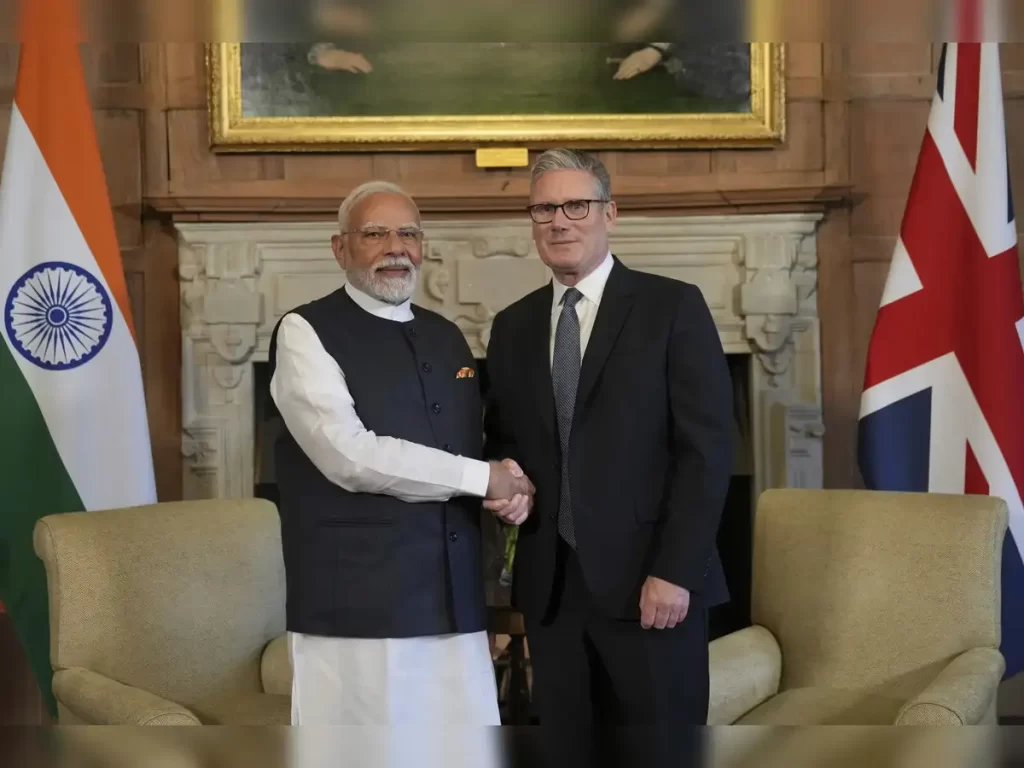
July 25, 2025 — India and the United Kingdom signed a landmark Free Trade Agreement (FTA) on July 24, 2025, marking a significant step forward in strengthening economic and strategic ties between the two nations. The agreement, finalized after over three years and 14 rounds of negotiations, is expected to transform the trade landscape and deepen cooperation in key sectors.
The agreement was signed in New Delhi during an official ceremony attended by Indian Prime Minister Narendra Modi and UK Prime Minister Keir Starmer. Both leaders described the pact as a “historic milestone” that reflects shared democratic values and economic ambitions.
As part of the FTA, over 90% of goods traded between India and the UK will be exempt from tariffs, with immediate and phased reductions across sectors. Indian exports such as textiles, pharmaceuticals, jewellery, automobiles, and IT services are expected to benefit significantly. On the UK side, key sectors including Scotch whisky, premium automobiles, financial services, and medical equipment will see improved access to India’s growing consumer market.
The deal also includes provisions for relaxed visa norms for Indian professionals in healthcare, technology, and finance sectors, as well as stronger rules surrounding intellectual property rights, digital trade, and investment protection.
According to officials, the FTA is projected to boost annual bilateral trade from the current $36 billion to over $100 billion by 2030. It is also expected to create jobs, support innovation, and provide businesses on both sides with greater market certainty and transparency.
“This agreement is a powerful testament to the growing partnership between India and the UK. It is about building a shared future of prosperity and resilience,” said Prime Minister Modi. UK Prime Minister Starmer echoed the sentiment, calling the deal “a vital pillar in our global trade strategy post-Brexit.”
The Confederation of Indian Industry (CII) welcomed the development, calling it a “transformative step for Indian exports,” while the UK’s Federation of Small Businesses (FSB) said it would unlock new avenues for British SMEs in one of the world’s fastest-growing markets.
Experts, however, warned that the full benefits of the FTA would depend on effective implementation and the resolution of potential non-tariff barriers. Industry stakeholders have urged both governments to ensure seamless coordination to facilitate smoother cross-border trade.
The India–UK FTA is the first comprehensive trade deal India has signed with a major Western economy and aligns with its broader strategy of expanding trade partnerships beyond traditional allies. For the UK, the agreement supports its efforts to diversify trade in a post-Brexit world.
The signing of the deal is being seen as a geopolitical signal as well, reinforcing the commitment of both nations to uphold open trade and democratic values in an increasingly fragmented global order.

