
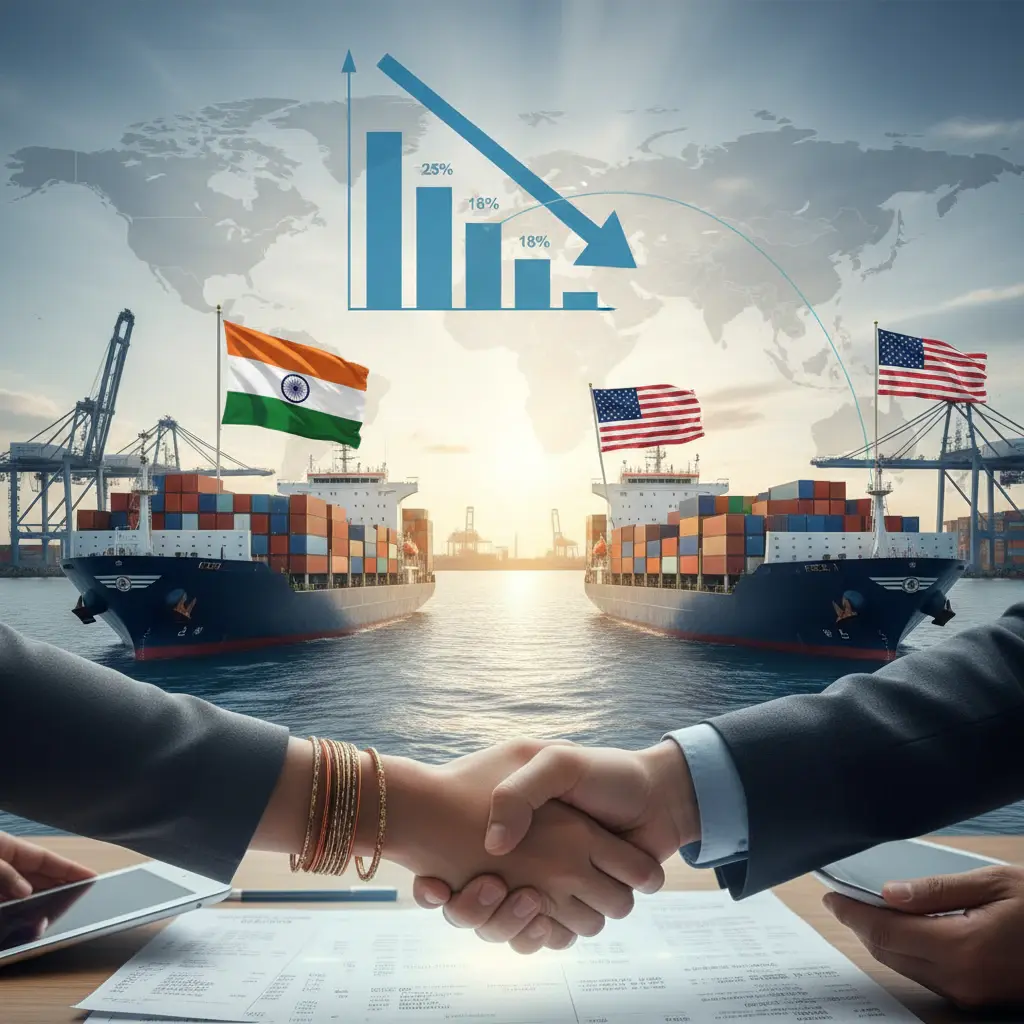
India-US Trade Deal 2026: How a Tariff Cut to 18% Is Changing the Game for Exporters.

For a while, it looked like India and the United States were headed for a rough patch on trade. Tariffs on Indian goods had climbed as high as 50% at one point, a number that had exporters across the country genuinely worried. Fast forward to where things stand now, and the picture looks very different. Under the India-US interim trade agreement finalised earlier this year, the effective tariff on Indian exports has come down to 18%. That's not a small adjustment, it's close to a two-thirds cut from where things stood at the peak, and it's already changing the conversation for Indian businesses that sell into the American market. From 50% Down to 18% The tariff reduction didn't happen overnight. It followed months of negotiation between Indian and US officials, building on a joint statement issued in early February this year when the two sides first agreed on the broad contours of a deal. From there, teams on both sides worked through the legal text, with Indian negotiators traveling to Washington and American officials making return visits to New Delhi to iron out the details. Commerce and Industry Minister Piyush Goyal has been the face of these talks from the Indian side, and he's been fairly vocal about what the new tariff rate means in practical terms. Speaking about the deal, Goyal pointed out that India now faces a lower tariff burden than several of its regional competitors, including China, Bangladesh, and Vietnam. That comparison matters a lot more than it might seem at first. Global buyers, especially large retailers and sourcing companies in the US, often make purchasing decisions based on where they get the best landed cost. If India's tariff sits meaningfully below what a competing manufacturing hub faces, that can translate into real order volumes shifting India's way. Who Stands to Gain A handful of sectors are particularly well positioned to benefit from this shift. Textiles, one of India's oldest and most labour-intensive export industries, is expected to see a meaningful lift, since garment and fabric exporters had been among the hardest hit when tariffs were sitting near the 50% mark. Gems and jewellery, another major India export category, should also see improved competitiveness in the American market. And pharmaceutical exporters, who supply a large share of generic medicines to the US, stand to gain from more predictable trade terms even though pharma tariffs have their own separate considerations. Goyal has also flagged that agriculture and dairy interests were kept largely protected during the negotiations, a sensitive point domestically given how much political weight farm policy carries in India. At the same time, a number of items entering the US, including several fruits, spices, and nuts, are expected to see duty benefits under the new arrangement, giving Indian agri-exporters a bit more room too. The Bigger Picture: A Full Bilateral Trade Agreement What's been finalised so far is an interim agreement, essentially a first tranche that locks in the tariff relief while the two governments continue working toward something more comprehensive: a full Bilateral Trade Agreement. That broader deal is expected to cover a wider range of issues beyond tariffs alone, things like market access for industrial goods, rules around agricultural products, investment provisions, and possibly digital trade as well. Negotiations toward this fuller agreement have been ongoing through much of the year, with several rounds of talks already completed between Indian and American teams. A US trade delegation has been expected to travel to New Delhi to continue pushing this process forward, a signal that both sides still see value in deepening the relationship rather than treating the interim deal as the finish line. The path hasn't been entirely smooth, there have been sticking points around competitive positioning versus other countries and legal complications on the US side tied to how tariffs are structured, but the overall direction has stayed consistent: both governments want to keep talking. Why This Matters Beyond the Numbers Trade deals can sometimes feel abstract, a set of percentages that don't mean much outside a finance ministry briefing. But for the businesses actually involved, a tariff cut like this one has very direct consequences. It affects pricing decisions, hiring plans, and whether a factory owner in a textile hub decides to expand production or hold steady. For India, positioning itself with a tariff advantage over Bangladesh, Vietnam, and China in the US market isn't just a bragging point, it's a genuine opportunity to capture manufacturing and export business that might otherwise go elsewhere. There's also a longer-term angle here. Both countries have talked about ambitions to significantly grow bilateral trade over the coming years, and getting the tariff structure right is one of the foundational pieces needed to make that happen. Whether the full Bilateral Trade Agreement gets wrapped up smoothly or takes a bit longer to negotiate, the interim deal at least gives Indian exporters something concrete to work with right now, a lower tariff wall and a clearer sense of where they stand compared to their regional competition. For now, the message from New Delhi has been fairly upbeat. Indian exporters in the hardest-hit sectors finally have some breathing room, and with talks continuing toward a deeper agreement, there's reason to expect the relationship between the two countries on trade will keep evolving rather than stall out where it currently stands.

For a while, it looked like India and the United States were headed for a rough patch on trade. Tariffs on Indian goods had climbed as high as 50% at one point, a number that had exporters across the country genuinely worried. Fast forward to where things stand now, and the picture looks very different. Under the India-US interim trade agreement finalised earlier this year, the effective tariff on Indian exports has come down to 18%. That’s not a small adjustment, it’s close to a two-thirds cut from where things stood at the peak, and it’s already changing the conversation for Indian businesses that sell into the American market.

From 50% Down to 18%

The tariff reduction didn’t happen overnight. It followed months of negotiation between Indian and US officials, building on a joint statement issued in early February this year when the two sides first agreed on the broad contours of a deal. From there, teams on both sides worked through the legal text, with Indian negotiators traveling to Washington and American officials making return visits to New Delhi to iron out the details.

Commerce and Industry Minister Piyush Goyal has been the face of these talks from the Indian side, and he’s been fairly vocal about what the new tariff rate means in practical terms. Speaking about the deal, Goyal pointed out that India now faces a lower tariff burden than several of its regional competitors, including China, Bangladesh, and Vietnam. That comparison matters a lot more than it might seem at first. Global buyers, especially large retailers and sourcing companies in the US, often make purchasing decisions based on where they get the best landed cost. If India’s tariff sits meaningfully below what a competing manufacturing hub faces, that can translate into real order volumes shifting India’s way.

Who Stands to Gain

A handful of sectors are particularly well positioned to benefit from this shift. Textiles, one of India’s oldest and most labour-intensive export industries, is expected to see a meaningful lift, since garment and fabric exporters had been among the hardest hit when tariffs were sitting near the 50% mark. Gems and jewellery, another major India export category, should also see improved competitiveness in the American market. And pharmaceutical exporters, who supply a large share of generic medicines to the US, stand to gain from more predictable trade terms even though pharma tariffs have their own separate considerations.

Goyal has also flagged that agriculture and dairy interests were kept largely protected during the negotiations, a sensitive point domestically given how much political weight farm policy carries in India. At the same time, a number of items entering the US, including several fruits, spices, and nuts, are expected to see duty benefits under the new arrangement, giving Indian agri-exporters a bit more room too.

The Bigger Picture: A Full Bilateral Trade Agreement

What’s been finalised so far is an interim agreement, essentially a first tranche that locks in the tariff relief while the two governments continue working toward something more comprehensive: a full Bilateral Trade Agreement. That broader deal is expected to cover a wider range of issues beyond tariffs alone, things like market access for industrial goods, rules around agricultural products, investment provisions, and possibly digital trade as well.

Negotiations toward this fuller agreement have been ongoing through much of the year, with several rounds of talks already completed between Indian and American teams. A US trade delegation has been expected to travel to New Delhi to continue pushing this process forward, a signal that both sides still see value in deepening the relationship rather than treating the interim deal as the finish line. The path hasn’t been entirely smooth, there have been sticking points around competitive positioning versus other countries and legal complications on the US side tied to how tariffs are structured, but the overall direction has stayed consistent: both governments want to keep talking.

Why This Matters Beyond the Numbers

Trade deals can sometimes feel abstract, a set of percentages that don’t mean much outside a finance ministry briefing. But for the businesses actually involved, a tariff cut like this one has very direct consequences. It affects pricing decisions, hiring plans, and whether a factory owner in a textile hub decides to expand production or hold steady. For India, positioning itself with a tariff advantage over Bangladesh, Vietnam, and China in the US market isn’t just a bragging point, it’s a genuine opportunity to capture manufacturing and export business that might otherwise go elsewhere.

There’s also a longer-term angle here. Both countries have talked about ambitions to significantly grow bilateral trade over the coming years, and getting the tariff structure right is one of the foundational pieces needed to make that happen. Whether the full Bilateral Trade Agreement gets wrapped up smoothly or takes a bit longer to negotiate, the interim deal at least gives Indian exporters something concrete to work with right now, a lower tariff wall and a clearer sense of where they stand compared to their regional competition.

For now, the message from New Delhi has been fairly upbeat. Indian exporters in the hardest-hit sectors finally have some breathing room, and with talks continuing toward a deeper agreement, there’s reason to expect the relationship between the two countries on trade will keep evolving rather than stall out where it currently stands.

Leave a Comment

Your email address will not be published. Required fields are marked *

Scroll to Top
“5 Best Forts Near Pune to Visit on Shivjayanti 2026” 7 facts about Dhanteras