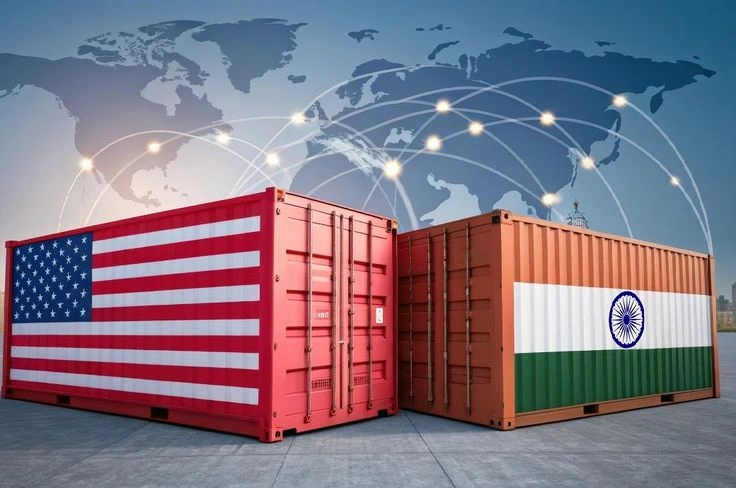
There are no fixed deadlines for talks, which India and the US are moving on with. Delegations were wrapping up tough sessions in Washington. Recent discussions suggest to actual progress, but unresolved issues such as tariffs and market access leave everyone in the dark about what the final contours of a deal would look like.
Recent Developments in the Negotiations
Indian officials led by their top negotiator Darpan Jain have wrapped up three days of negotiations in Washington (April 20-22). The sessions were described as constructive by both sides, who agreed to remain active and build on the momentum. This happened after Prime Minister Narendra Modi and President Donald Trump spoke on the phone and reaffirmed their commitment to deepening economic ties.
There is no specific timetable but authorities say an interim deal might be completed in the near future. Commerce Minister Piyush Goyal had said in February that the accord may be implemented by April 2026 but tariff twists from a recent US Supreme Court ruling thrown a spanner in the works, leading to this current round. India’s commerce ministry said it has made positive progress in finalising the first phase of a bilateral trade agreement (BTA), which will focus on legal aspects.
They don’t begin with nothing. The US earlier this year reduced various tariffs on Indian products from 25% to 18% and granted duty-free access for products such as spices, tea, coffee, machinery, aircraft components and pharmaceuticals. But the April talks were meant to give insight into shifting US tariff policy under the new administration.
Major Issues on the Table
“The biggest challenge is the tariffs. US wants India to cut hefty levies on agricultural, dairy, cars and steel, areas where New Delhi staunchly defends its farmers and makers. Meanwhile, India wants easier access to its products such as apparel, leather, seafood, textiles and handicrafts, which faced high US restrictions.
Another flashpoint is non-tariff barriers. Washington urges agreements in oil, LNG, Boeing airplanes and nuclear innovation, and pushes for loosened FDI regulations in multi-brand retail, benefiting giants like Amazon and Walmart. India wants security for its MSMEs and sensitive farm products.
Digital trade and supply chain resilience are also getting traction. The two countries agreed to confront cumbersome digital practices and cooperate on economic security, export restrictions and countering non-market policies, code for keeping an eye on China. India even promised to buy up to $500 billion in US commodities over five years, including energy, aviation and technology.
What does this signify for the ground trade? A short look at the important sectors in play:
Agriculture and Food: US wants to increase exports of nuts, cotton, soybean oil; India preserves dairy but opens door for spices/tea.
Manufacturing: Auto parts, machinery and leather gain tariff relief; pharma, electronics may see zero-duty possibility.
Energy and Tech: India to buy more US oil/LNG; data centers, aircraft cooperation
These chats seem like a chess game, with each move carefully plotted, and real dollars and jobs on the line.
The Bigger Picture Trade Stats & Stakes
India’s bilateral trade reached an all-time high of $132 billion in FY25 against $119.71 billion a year ago with India recording a surplus of $40.82 billion. India sent $86.35 billion to the US in 2024. Top exports: medicine ($10.7B), electronics ($8.8B), diamonds, equipment, fuels. US ships re-export mineral fuels, nuclear reactors and electrical equipment.
This is a massive deal for India. Exports, tied to US demand, are some 4% of GDP and tariff cuts might add 0.2% to annual growth. Lower obstacles could benefit MSMEs in textiles and leather, helping manufacturing under Make in India. And it challenges China’s global dominance and is in line with India’s multi-alignment strategy.Think of EU FTA talks going in tandem.
Indian industry from Pune to the mills of Bombay will be watching. A Punjab farmer may ask: Will more US almonds flow into markets or will spice exports finally boom? Exporters in Tamil Nadu’s leather hubs hope for steady orders without tariff shocks.
Current Progress and Challenges
There is real movement. The February interim framework cuts reciprocal duties to 18%, opening up the US’s $30 trillion market for Indian exports. Zero-duty extensions and “Buy American” nods from India open the door to energy and tech flows. And early on, Piyush Goyal dubbed it a “big reset” with no major sticky issues remained.
But obstacles remain. Uncertainty: US “Section 301” probes and President Trump’s tariff revisions. Washington is annoyed by India’s excess. Protection for dairy/agri is non-negotiable. Gaps exist, a US official said, after the April talks. Geopolitical factors like West Asia supply snarls hinder timetables.
No bad deal is better than no deal. India has changed its stance. This is a shrewd diversification, weighing the EU pacts with
What’s at stake for India, and others
For Indian laborers, an agreement might bring thousands of employment in export centers. Hyderabad pharma companies, car parts producers in Chennai — tariff relief means orders, growth. Cheaper US tech or energy could benefit consumers, but agricultural imports might push up local costs.
It boosts the Quad on the world stage against China, enhancing supply routes for strategic minerals and defense technology. India treads a careful line as Trump’s ‘America First’ pushes strategic buys
Businesses need certainty today. One exporter was blunt: “Tariffs change overnight – we cannot plan weddings around that.” Will this mean a full BTA or just more virtual meets?
What’s Next: No Deadline, But Mounting Pressure
There is no set end date so talks could drag on but the momentum from Modi-Trump phone calls and Washington huddles predicts action soon. Watch for additional delegations, perhaps virtual bridges until next push in person.
If completed, this interim deal clears the way for bigger wins – digital rules, investment flows, resilient chains. Goodwill powers energy security; India plans $500B US purchases Agri protection, retail FDI challenges will test resolve but progress points to win-win.
In these era of trade warfare, this alliance is a beacon of hope. For India, it’s about jobs, growth and power. The ball is in motion. The question is: how far will it go? Slow and steady wins the race. That’s what Piyush Goyal keeps saying.
(Word count: 1428)
India-US trade talks pick up pace despite tariff hurdles, high stakes