India’s women’s badminton team were stunned to the tune of 0-5 by China, exiting the Uber Cup 2026 and laying bare the gap that still exists between the two countries on the world stage. The loss in Horsens, Denmark on April 27 came at a crucial juncture, extinguishing India’s hopes of progressing to the group stage and casting the spotlight on the future of a sport that has swept the country off its feet.
Tournament Setup & India’s Rollercoaster Ride
The 2026 Uber Cup Finals in Denmark from April 24 to May 3 featured 16 best women’s teams competing in a high-stakes clash for supremacy. Four groups went into quarter-finals, just the best two making it through – easy on paper, brutal on the pitch.
India were drawn in Group A together with hosts Denmark, Ukraine and the juggernaut China. They opened with a tough 2-3 loss against Denmark on April 24. PV Sindhu began strongly, defeating Line Christophersen 21-13, 18-21, 21-17, but losses for Unnati Hooda and Tanvi Sharma turned the tide. The doubles duo rallied back but Denmark held on.
That was followed by a morale-boosting 4-1 win over Ukraine on April 25. India started on a positive note, collecting the points to keep their quarterfinal hopes alive. But China, the defending champions with a record 16 titles in badminton history, was all of that.
The Decisive Battle: A Match By Match Analysis
There were no miracles versus China. The tie was a masterpiece in dominance but India did make them sweat at moments.
Singles 1: PV Sindhu lost to Wang Zhiyi 16-21, 21-19, 19-21
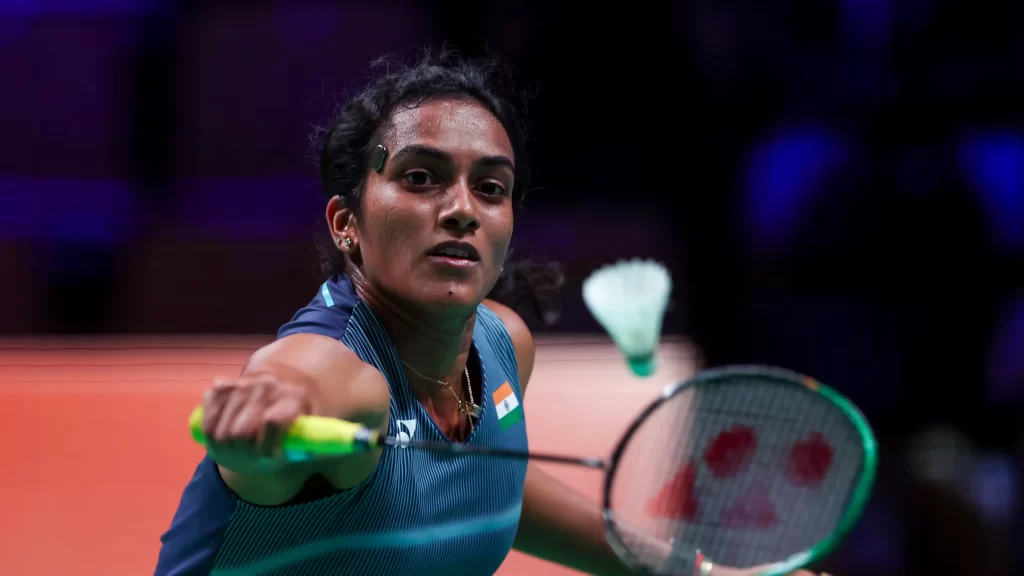
Two-time Olympic medallist Sindhu had a cracking start, trading blows Wang lost the first game but fought back from 14-10 to snatch the second. In the decider, Sindhu cut loose to 18-12 – a contest on a knife’s edge. But world No 2 Wang hit the right notes, sealing it when Sindhu netted. Heart-breaking, especially after Sindhu’s Uber Cup bronzes of 2014 and 2016.
Singles 2: Isharani Baruah vs Chen Yufei Baruah showed promise but could not break through a world-class defense. Olympic gold medallist Chen surged to triumph to give China an unassailable 2-0 lead. The match exposed the lack of depth in the Indian singles department – no back-up firepower when Sindhu falters.
Singles 3: (Probably Tanvi Sharma or Priya Mahar) v Han Yue
China also did this with sharp smashes and net play. India never led at any stage and sealed the 3-0 even before the doubles began.
Doubles 1: Tanisha Crasto/Kavipriya Selvam vs. Zhang Shuxian/Luo Xumin (10-21, 21-12, 19-21)
The scratch Indian pair snatched the second game after a bad start and pushed hard in the third. But expertise prevailed – China took a thriller, proving why doubles remains their citadel.
Doubles 2: (Probable Simran Singhi/Shruti Mishra) versus Zheng Yu/Liu Shengshu
By then a formality, China completed the clean sweep. India’s fightback spirits were high, but finishing touch lacked.
China and Denmark moved on. India third. Ukraine last. The scoreline was a stinger, but close games like Sindhu’s suggested shrinking margins.
This image from the Sindhu-Wang contest shows the heat, with rackets flying mid-rally. “This is why we are in badminton’s grip,” enthusiasts say.
China’s Iron Grip on the Badminton
China’s success was no fluke. They have won the Uber Cup 16 times, including recent wins over Indonesia. Their system breeds talent. State-sponsored academies, intensive training from youth and depth such that they can rotate players without losing form.
This is Wang Zhiyi, perfect when it counts. Chen Yufei and combinations such as Zhang/Luo are on another level, combining power, speed and strategies. India made them but China’s bench strength was too much. How does a nation possess such mastery? Millions play. Thousands compete elite. Sheer volume.
India’s Journey: Pain with Progress
The badminton explosion in India is true. From Saina Nehwal’s breakthroughs to Sindhu’s Olympics, the sport has gone mainstream. 2014: First time beat Indonesia 3-0 to make history in Uber Cup semis with Saina and young Sindhu excelling.
The roster has young faces like Hooda, Sharma, Crasto along with veterans like Sindhu. Ukraine shows grit and wins. But the pattern of group exits is the same – good starts and dismal finishes. Sindhu’s breakdown in the decider was a reflection of a bigger problem – lack of mental resilience in crunch time.
The Badminton Association of India promotes growth through camps and leagues. Prakash Padukone’s academy guides, coaches, comprehensive skills. But resources lag China’s size. Rural talent is rushing to cities like Pune, Hyderabad to fulfill goals. But finance and infrastructure need to be scaled up.
Major Gaps India Needs to Fill
0-5 The fissures revealed.
Depth of Talent
China has a few top 10 players in each discipline. India has Sindhu. The Hoodas of the world have flashes of brilliance but they are not consistent.
Double Trouble
India’s pairs tried but Crasto/Selvam took a game against China’s synchronized onslaught. Mixed doubles success (think Satwik-Chirag) hasn’t entirely percolated to women.
Psychological Edge
Sindhu’s 18-12 advantage was wiped out. Cups are fine margins. Now sports psych is looking at training, it’s changing.
Infrastructure India has added courts, China has mega-centers. Training? Vimal Kumar, Padukone guide but numbers not enough.
India has won 50% of deciders against Denmark and 100% against Ukraine, but fell to 0% against China – a case in point for execution differences.
Silver linings and lessons
Loss is painful, but it’s a lesson. The coaches liked the fight. Forward development is to push China over the lines. Sindhu spoke of pride in effort and asked the youth to step forward post-match. Bright spots: Hooda’s promise, Tanvi Sharma’s emergence.
Badminton goes global – Indonesia, Japan challenge China. This loss is a motivation for India especially the Maharashtra centers like Pune. Local shuttlers dream big inspired by stars. Can grass roots programs bridge the gap? Can Priya Mahar’s new skills deliver? These questions remain.
Road Ahead: Building a Champion Squad India aims for 2028 Olympics, next Uber for 2030 Focus: National camps, worldwide exposure to develop depth. BAI’s youth schemes aims at 10,000 trainees each annum. Private academies proliferate, combining tech such as video analysis.
Mentoring while competing, Sindhu, who turns 31 on Saturday. It would be nice to have a squad where No. 2 singles wins big. Perhaps the Denmark hosts can help, passing on hosting wisdom.
China’s wall is big but India’s arc is big also. From group exits to glory? History suggests it can be done. 0-5? Fuel for the flames. As the buzz in Delhi cafes and Mumbai courts continues, one thing is clear: The Indian tale of badminton is far from over.
Uber Cup 2026: China’s 0-5 thrashing of India lays bare harsh truth about women’s badminton