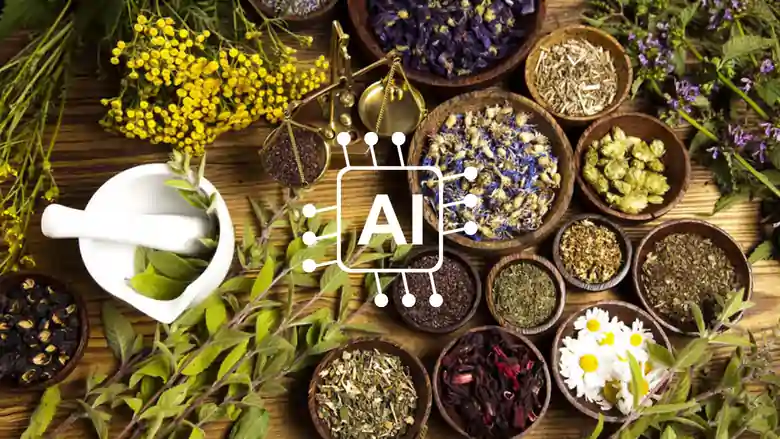
22, July 2025 — In a major step towards bridging traditional knowledge with modern scientific research, India has expanded and upgraded its Traditional Knowledge Digital Library (TKDL) using Artificial Intelligence (AI) to digitise and globalise thousands of ancient texts from the Ayurveda, Unani, and Siddha systems of medicine.
The project, led by the Council of Scientific and Industrial Research (CSIR), now enables global researchers, pharmaceutical companies, and patent offices to access over 400,000 formulations and ancient remedies, many of which were previously confined to manuscripts written in Sanskrit, Persian, Arabic, and Tamil. The AI-driven initiative has made these texts machine-readable and searchable in several international languages, including English, French, German, Spanish, and Japanese.
Originally launched in 2001, TKDL was designed to prevent biopiracy and stop the misappropriation of India’s traditional medicinal knowledge. With the new AI capabilities introduced in 2025, the platform now not only protects intellectual property but also facilitates global research into holistic and natural treatment systems.
Speaking on the development, Union Minister of Science & Technology Dr. Jitendra Singh stated, “The enhanced TKDL ensures that India’s rich traditional knowledge is preserved and shared responsibly with the world. AI integration allows us to modernise how we store and disseminate this heritage, especially for health and wellness research.”
The digital platform also aims to support the World Health Organization’s (WHO) push for evidence-based traditional medicine practices. With rising global interest in alternative medicine and wellness therapies, India’s move comes at a strategically important time. Experts believe the AI-backed TKDL will be instrumental in accelerating scientific studies and drug discovery based on centuries-old formulations.
CSIR Director General Dr. N. Kalaiselvi noted that AI tools have helped streamline the extraction, classification, and indexing of data from complex classical texts. “Researchers now have unprecedented access to validated formulations, reducing duplication and enhancing innovation in natural product-based drug development,” she added.
The AI-powered TKDL is also expected to boost India’s soft power by positioning it as a leader in traditional medicine knowledge-sharing. Plans are underway to further expand the repository to include Yoga, homeopathy, and other indigenous healing practices.
As nations seek sustainable healthcare solutions, India’s digital leap in preserving and sharing its ancient medical heritage offers a model for how technology can be harnessed to globalise traditional knowledge responsibly and ethically.