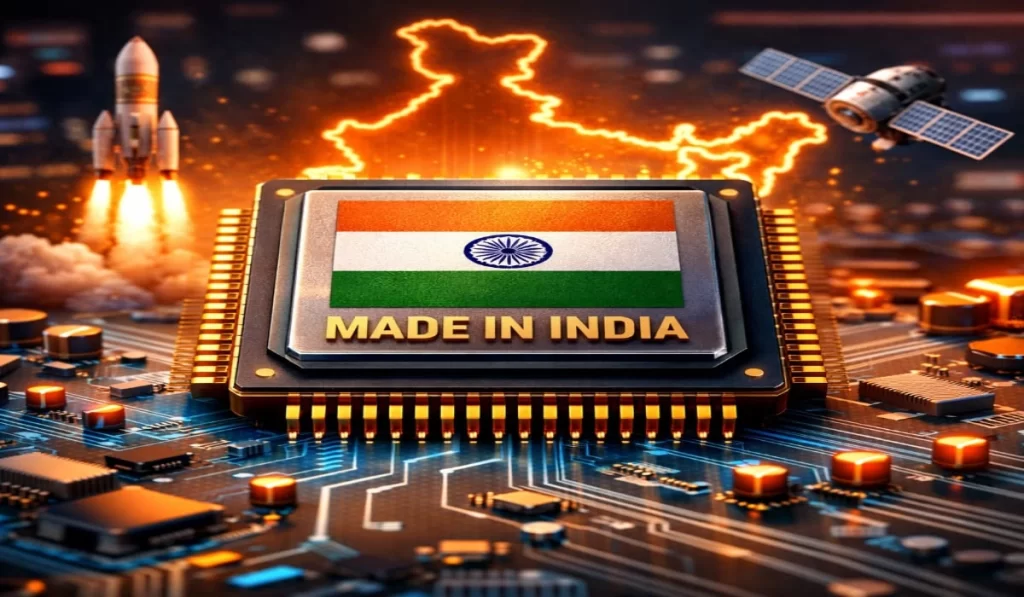
India’s long‑held ambition to become a global semiconductor hub is no longer just a policy dream—it’s now being built in concrete, clean rooms, and silicon wafers. At the heart of this transformation sits the Tata Group, which has announced a sweeping expansion of its semiconductor manufacturing footprint, from Gujarat to Assam, as New Delhi doubles down on reducing the country’s dependence on imported chips. For a country that spends over 30 billion dollars a year on semiconductor imports, this shift toward domestic chipmaking could change everything—from automotive and telecom to defence and AI.
From import dependency to indigenous fabs
Right now, India remains one of the world’s largest importers of semiconductors, relying on hubs in Taiwan, South Korea, and China for everything from smartphones and smart TVs to industrial control systems and defence hardware. This dependence has proved risky in times of global supply‑chain shocks, from pandemic disruptions to geopolitical tensions over Taiwan’s chip dominance. The logic behind India’s semiconductor push is simple: if chips are the new oil, then relying on a handful of foreign suppliers is a strategic vulnerability the country can no longer afford.
The India Semiconductor Mission (ISM), launched with a roughly ₹76,000 crore fiscal package, is meant to turn that reality around. By 2029, the government targets domestic production of chips for about 70–75 percent of India’s own application needs, and by 2035, aims to position India among the top semiconductor‑manufacturing nations globally. To reach those goals, India isn’t just waiting for foreign giants; it’s backing home‑grown industrial champions, with Tata Electronics emerging as the flagship player.
Tata’s three‑pronged chip strategy
Tata’s semiconductor push rests on a three‑layer strategy: fabrication (fab), assembly and test, and embedded design. This isn’t scattered investment; it’s a deliberate attempt to cover the entire semiconductor value chain, from silicon wafers to fully packaged chips ready for smartphones, cars, and servers.
At the top is the Dholera semiconductor fabrication plant in Gujarat, billed as India’s first AI‑enabled fab. With an estimated investment of up to ₹91,000 crore (about $11 billion), the facility is expected to churn out up to 50,000 wafers per month, producing chips for power‑management integrated circuits, display drivers, microcontrollers, and high‑performance computing logic. The technology will span mature nodes, including 28 nm, 40 nm, 55 nm, 90 nm, and 110 nm, achieved through a partnership with Taiwan’s Powerchip Semiconductor Manufacturing Corporation (PSMC).
Then there’s the Assam angle. Tata Electronics plans a greenfield semiconductor assembly and test facility in Jagiroad, Assam, with an outlay of ₹27,000 crore. This plant will handle the critical “back end” of the chip‑making process: once wafers are manufactured (either in India or abroad), they are cut, packaged, and rigorously tested before being shipped to OEMs and electronics firms. The Jagiroad project is expected to create over 27,000 direct and indirect jobs and is positioned under the India Semiconductor Mission framework, with state support from Assam.
What makes Tata’s approach distinctive is the ambition to build a “multi‑fab” ecosystem. The Dholera site is envisioned as a multi‑fab cluster that could eventually host multiple fabs, generating over 100,000 skilled jobs and anchoring India as a reliable node in global semiconductor supply chains. In parallel, Tata is developing advanced packaging technologies—such as wire bond, flip‑chip, and Integrated Systems Packaging—aimed at meeting the needs of electric vehicles, AI‑driven data centres, and next‑generation telecom infrastructure.
Why Dholera and Assam matter
Dholera, in Gujarat, is more than just another industrial zone. It’s being developed as a special economic zone (SEZ) tailored for high‑tech manufacturing, with ready‑made infrastructure, customs clearances, and logistics support. For a semiconductor fab, where uptime, power stability, and environmental controls are non‑negotiable, locating inside a well‑planned SEZ reduces execution risk and shortens timelines. The Gujarat government’s active role in land acquisition and policy support has also given global investors a clearer signal that India can now deliver complex mega‑projects with speed.
Assam, on the other hand, offers a very different set of advantages. The Jagiroad site benefits from abundant water, access to hydropower, and a relatively lower‑cost operating base in the northeast. For a power‑hungry and water‑intensive industry like semiconductor assembly and test, these factors matter. Assam is also promoted as a gateway to Southeast‑Asian packaging hubs in Taiwan, Malaysia, Vietnam, and Singapore, giving Tata a potential “hub‑and‑spoke” model for regional supply chains.
For a country that has long struggled to spread industrialization beyond traditional hubs like Bengaluru, Pune, and Chennai, these two locations send a dual message: India’s semiconductor future will be national, not regional. The question now is how quickly the rest of the ecosystem—equipment makers, materials suppliers, and design houses—can follow.
India’s broader semiconductor roadmap
Tata’s entry is not happening in isolation. The India Semiconductor Mission has approved multiple projects, including fab, assembly‑test, and display‑panel plants, with the government aiming for a semiconductor ecosystem worth over ₹7 trillion by the late 2020s. Under the recently announced “India Semiconductor Mission 2.0,” the focus is shifting from “me‑too” fabs to higher‑value capabilities such as domestic production of semiconductor equipment and materials, as well as full‑stack Indian IP design.
By 2029, the government expects India to handle chips for the bulk of its own domestic applications, from consumer electronics to industrial automation and defence systems. Beyond that, there is an explicit roadmap for advanced nodes: 3 nm and 2 nm technologies are on the medium‑ to long‑term horizon, aligning India with the cutting‑edge race led by companies like TSMC, Samsung, and Intel. How realistic that is will depend on sustained capital, consistent policy, and, crucially, the ability to retain top talent in a globally competitive field.
Jobs, skills, and the “India stack” for semiconductors
The numbers around employment are eye‑catching. The Dholera fab alone is projected to generate over 20,000 direct and indirect jobs, while the Assam assembly‑test facility could add another 27,000. Zooming out, industry analyses suggest that India’s semiconductor push could support up to 1 million jobs by 2026 if multiple fabs and ancillary industries come online as planned.
But jobs are only half the story. The real challenge is skills. Semiconductor manufacturing is among the most complex, capital‑intensive, and precision‑driven industries on earth. Tata has already begun building a design and engineering team with over a thousand years of combined global experience, as well as investing in indigenous technology development for packaging platforms like wire bond and flip‑chip. Government and industry are also ramping up semiconductor‑focused education and research, from chip‑design labs in engineering colleges to specialised courses in microelectronics and VLSI design.
One of the more intriguing questions emerging from this boom is whether India can develop its own “India‑stack” for semiconductors—home‑grown tools, IP, and design methodologies that reduce dependence not just on foreign chips, but on foreign design ecosystems. For a country that has built a globally respected software stack, this could be the next frontier.
Global supply chains and tech sovereignty
From a geopolitical lens, India’s semiconductor push is as much about resilience as it is about growth. Global buyers, particularly in the US, Europe and Japan, are actively looking for diversification after years of concentrating semiconductor manufacturing in East Asia. India’s large domestic market, an expanding electronics ecosystem and a relatively stable political climate make it a good alternative.
Tata’s partnerships speak to that global logic. The collaboration with PSMC brings proven technology and process know‑how into India, while the Intel‑style engagement—where Tata will manufacture and package chips for global brands—positions India as a “trusted” node in the supply chain. For multinationals, the message is clear: India is not just a back‑office or a call‑centre destination anymore; it can be a high‑value manufacturing partner for critical technologies.
But there are obstacles to overcome. Semiconductor factories are notoriously costly to design and operate, and the return on investment is often more than a decade. Any downturn in global chip demand, change in export controls, or delay in policy support could put pressure on India’s timeline. There is also the perennial risk of “rent‑seeking” behaviour, where companies treat subsidies as a profit centre rather than a springboard for sustainable scale.
What this means for India’s economy and tech future
If India’s semiconductor ambitions succeed, the impact will ripple far beyond the electronics sector. Domestic industries—from automotive and aerospace to defence and healthcare—will have more predictable access to chips, reducing the risk of production halts when global supply‑chains tighten. Indian startups building AI‑driven solutions, IoT devices, and clean‑energy systems will gain a home‑grown hardware base, instead of remaining perpetually at the mercy of foreign component availability.
There is also a bigger symbolism at play. For decades, India positioned itself as a services and software giant; now it is trying to prove it can be a hardware powerhouse too. If Tata can successfully scale its semiconductor operations, it will not just create chips; it will reshape the narrative of India’s industrial capabilities for the next generation.
As you watch the next smartphone launch or electric‑car unveil in India, ask yourself: which of these chips inside were actually designed or made on Indian soil? That question may soon move from hypothetical to measurable, as Dholera and Jagiroad gradually light up India’s semiconductor map—and as the country edges closer to the day it no longer has to apologise for its reliance on imported silicon.
India’s Chip Dreams Take Shape: Tata Group’s Semiconductor Push Redefines Make in India