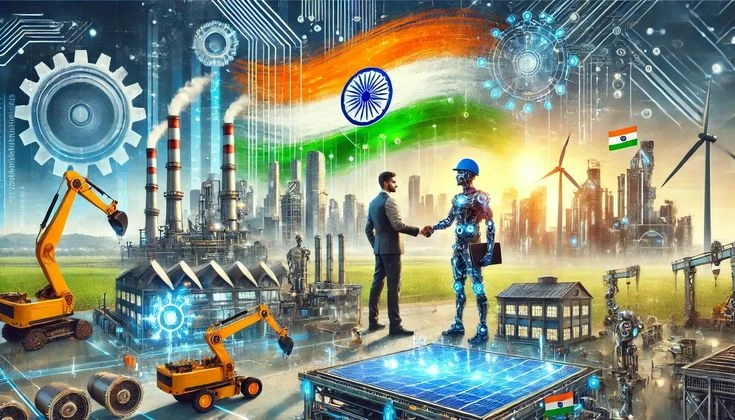
With the arrival of April 1st, the Indian government ushered in the financial year 2026-27. This marked the beginning of a series of policy initiatives designed to fortify the economy against international headwinds. The measures, encompassing expanded tax incentives for startups and substantial investments in infrastructure, unmistakably signal New Delhi’s intentions. The aim? To stimulate economic expansion while simultaneously curbing inflation.
Finance Minister Nirmala Sitharaman’s team is banking big on measures that would make life easier for everyone, such cheaper electric vehicles, better roads, and a tax system that is friendlier to the middle class. GDP growth is expected to be around 6.8% this year. The question remains: will these proposed changes genuinely improve the situation, or will they simply increase the burden on companies?
Tax Changes: Streamlining the Growth Engine
India’s tax framework saw immediate alterations this fiscal year.
The focus was on making direct taxes easier to understand, and the Income Tax Department’s recent adjustments to the tax brackets certainly made news.
For people who make up to ₹15 lakh a year, the refund under Section 87A went up to ₹75,000. This meant that income up to that amount was tax-free. It’s a gesture to the middle class, who have been hit hard by rising prices since the outbreak.
Corporate India is also not left out. The 15% concessional tax rate for new manufacturing units has been put out until March 2027. This is meant to attract investments in areas like semiconductors and renewable energy. Early reports reveal that more than 200 enterprises, including big names like Tata and Reliance, are hurrying to qualify. “This isn’t simply a tax cut; it’s a green light for factories that create jobs,” says economist Rajiv Kumar, who used to work for NITI Aayog.
Indirect taxes saw a record ₹2.1 lakh crore in GST collections for March 2026, paving the way for rate adjustments. Items costing more than ₹10 lakh are now subject to the 28% tax rate. However, necessities such as cereals and medicines continue to be exempt from this tax.
A potentially significant shift? The e-invoicing threshold for small and medium-sized enterprises (SMEs) was lowered to ₹2 crore in sales. This move simplified compliance for many businesses, though it stirred up some discontent among smaller vendors in places like Pune’s vibrant markets.
What does this mean for you? If you work for yourself in Mumbai or have a store in Delhi, your filing just became digital-first. By July, AI-powered pre-filled returns will be available across the country. Some people say it’s a hidden monitoring state, while supporters point to a 20% decline in evasion instances last year.
Important tax points for FY 2026–27:
All people under 60 who file taxes will have to follow the new rules.
The deduction for family pensions has gone up to ₹50,000.
30% tax on crypto gains, no offsets permitted.
These aren’t spectacular handouts; they’re targeted attacks to raise disposable income and compliance. But with personal income tax collections expected to be ₹12 lakh crore, the government is walking a tightrope: revenues are rising, but growth isn’t being strangled.
Infrastructure Overhaul: Making Things Better for the Next Ten Years
Taxes are the fuel, and infrastructure is the engine room of India’s FY 2026–27 plan. The ₹11.11 lakh crore budget, which is the same as last year’s but with private partnerships added, will be used to build 50,000 km of new highways, 5,000 km of dedicated freight corridors, and expand urban metros in 20 cities. For example, Pune gets a lot of money—₹5,000 crore—for its ring road and airport improvements, which will make it easier for its IT workers to get to work.
The National Infrastructure Pipeline (NIP) 2.0, which started in April, would put ₹50 lakh crore into energy, rail, and water projects over the next five years. What do you mean by “standout”? The ₹1 lakh crore upgrade of 100 airports under UDAN 5.0 will connect smaller cities like Coimbatore and Bhubaneswar to major cities throughout the world. It’s not only concrete. For example, smart cities with IoT sensors that cut traffic by 15% in pilot zones.
Renewables also get a big boost. Solar capacity goals were raised to 500 GW by 2030, with ₹2 lakh crore in viability gap funding to help. India’s push is in line with worldwide net-zero goals, but problems on the ground make it hard to get land for 30% of projects in Rajasthan and Gujarat.
Have you ever thought about why your train is late? By 2028, rail infrastructure improvements would create high-speed lines like Delhi-Mumbai, cutting the journey duration from 20 hours to 12. Private companies like Adani and Jio are in the running to revamp more than 100 stations. The economic ripple? According to the RBI, every ₹1 crore spent on infrastructure creates 3–4 jobs. This is important because young unemployment is still around 8%.
Economic Context: Navigating Global Turbulence
These developments aren’t isolated. India’s GDP grew by 7.2% in the fiscal year 2025–26, outpacing China’s, yet trailing behind the United States and the challenges facing the Red Sea region. During the initial quarter of 2026, exports experienced a 2% decline, with textiles and pharmaceuticals bearing the brunt of the impact.
What are the policy responses? The production-linked incentives (PLI) have been expanded to 14 sectors, and ₹1.97 lakh crore has been given out so far. This has brought Foxconn and Pegatron plants to Tamil Nadu.
Last fiscal year, foreign direct investment (FDI) reached $85 billion. This was made possible by less strict rules in defense (now 74% automatic) and space (100% for satellites). But the RBI keeps the repo rate at 6.5% because inflation is at 4.8%, mostly because of rising vegetable costs. The fiscal deficit goal is 4.9% of GDP, which is a little higher than stated. This is based on the idea that disinvestment windfalls, like LIC’s next tranche, will help.
It’s a mixed bag for Indian companies. Under a new credit guarantee scheme, MSMEs, which make up 45% of the economy’s jobs, can access loans of up to ₹5 crore without having to put up any collateral. Women business owners get a 2% interest rate cut. In a global sense, this is like Biden’s infrastructure package but with an Indian twist: more public-private partnerships and less debt.
Have these rules been put into place yet? Yes, stories from Bengaluru’s startup clusters say so: tax cuts helped 500+ businesses get started in March alone. But we need to keep an eye on rural distress—farm loan waivers in states that are going to vote show that there are populist trends.
Sectoral Spotlights: Areas to Watch and Areas to Win
If you look more closely, different sectors light up. EVs are at the top of the list. The customs duty on imported batteries was cut to 15%, which made Tata and Mahindra speed up. By 2027, 30% of two-wheelers might run on electricity instead of gas, saving the country $20 billion a year in oil imports.
Digital public infrastructure is expanding rapidly, fueled by initiatives like ONDC 2.0, which is taking on Amazon in the e-commerce arena, and UPI, handling an impressive 50 billion transactions monthly.
Housing? PMAY 3.0 aims for 2 crore apartments and offers stamp duty discounts in places like Maharashtra. Tourism is also booming, with ₹2,500 crore going to eco-resorts in the Himalayas, which fits in with your plans for a weekend escape.
Not everything is going well. Banking sector reforms need 75% compliance with Basel III by June, putting pressure on NPAs, which are still at 3.5%. Policy for farming? MSP goes up for 23 crops, but Punjab still has problems with buying them.
India’s Fiscal Year 2026–27: Tax Revisions and Infrastructure Expansion Take Center Stage