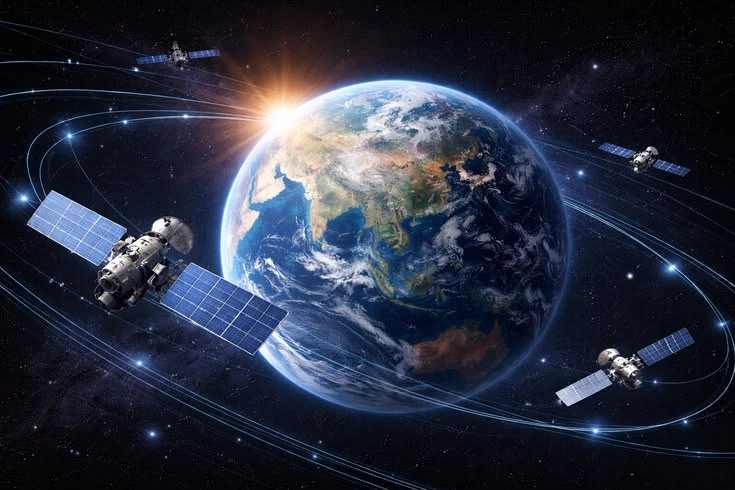
As the world’s space agencies gear up for a string of ambitious deep‑space ventures in 2026, one message comes through clearly: no single nation can do this alone. From the Moon and Mars to the distant Martian moons and the ever‑threatening solar wind, the missions slated this year are increasingly built on shared hardware, data, and scientific protocols. This surge in global collaboration in space is fundamentally altering our approach to solar system exploration. It’s also subtly redefining the dynamics of international relations, our strategies for weathering climate change, and the prospects for life beyond our planet.
Looking ahead to 2026: Moon, Mars, and what lies further.
The year 2026 is shaping up to be a watershed moment for space exploration.
NASA’s Artemis II mission will send four astronauts around the Moon for the first time since Apollo 8, testing the Orion spacecraft and the Space Launch System (SLS) in a true deep‑space environment. This un‑landed loop around the Moon is a prerequisite for Artemis III, where humans will once again walk on the lunar surface later this decade.
At the same time, Japan’s Martian Moons eXploration (MMX) mission, scheduled to launch in 2026, will travel to Mars and spend years studying and sampling Phobos, one of the Red Planet’s two small, potato‑shaped moons. The mission, led by Japan’s space agency JAXA, will deploy a French‑German rover on Phobos and return a sample to Earth by 2031, offering a rare chance to understand whether these moons formed from captured asteroids or debris from an ancient collision with Mars.
Over the Pacific, India is also stepping up its presence. The country’s Gaganyaan programme has already entered its trial phase, with an uncrewed mission carrying a humanoid robot, Vyommitra, planned for early 2026 on a re‑designed, human‑rated LVM3 launcher. The ultimate goal is to fly three Indian astronauts to low Earth orbit by 2027, joining nations like the US, Russia, and China in the human‑spaceflight club.
Meanwhile, the United Arab Emirates is preparing Rashid Rover 2, a new lunar rover set to land on the far side of the Moon in 2026 aboard a US‑built Firefly Aerospace lander. This mission is part of the broader Artemis ecosystem, where the US, Europe, Japan, India, and the UAE are all contributing payloads, instruments, and technologies to build a sustainable lunar presence.
These missions are not just national trophies; they are overlapping nodes in a much larger, interconnected web of partnerships.
Why collaboration is no longer optional
In the past, flagship missions were often national solo projects: Apollo, Soyuz, Shenzhou, or Chandrayaan. Today, the cost, complexity, and scientific ambition of deep‑space exploration have outstripped the capacity of any single agency. Building a lunar base, operating interplanetary orbiters, or sending humans to Mars requires distributed expertise in propulsion, life support, communications, robotics, and data handling.
Take the SMILE (Sun‑wind Magnetosphere Ionosphere Link Explorer) satellite, a joint project between the European Space Agency (ESA) and the Chinese Academy of Sciences (CAS). Scheduled for launch in spring 2026, SMILE will fly to a distant Earth‑Sun orbit to study how the solar wind interacts with Earth’s magnetic field. This kind of space‑weather monitoring is critical for protecting satellites, power grids, and even astronauts from giant solar storms. By pooling resources, Europe and China can maintain a more robust, long‑term observation capability than either could afford alone.
On the Moon, the Artemis Accords, first signed in 2020, now bind more than 40 countries—including India and the UAE—into a shared framework for lunar exploration. Under these agreements, signatories agree on common principles like transparency, debris‑mitigation, and the safe sharing of resources. For India, which plans to land an astronaut on the Moon by 2040, this framework offers a structured way to integrate into deep‑space logistics, such as lunar lander services, orbital outposts, and astronaut‑exchange programmes.
In a world where space is crowded with satellites, lunar missions, and proposed Mars landings, the need for common rules, compatible standards, and shared data is no longer a technical nicety—it is a survival requirement.
How deep‑space partnerships are being built
International cooperation in 2026 is not just about treaties and data‑sharing; it is also being built piece by piece in hardware, software, and human‑capital investments.
In Japan’s MMX mission, contributions from NASA, ESA, CNES (France), and the German Aerospace Center (DLR) cover everything from onboard instruments to the rover systems. For example, the MEGANE gamma‑ray and neutron spectrometer on MMX is being jointly developed by Japanese and US scientists, creating a shared scientific stake in the mission’s success. Such instrument‑level partnerships ensure that even if one country leads the mission, the scientific community is distributed across continents, making it politically and economically harder to walk away from collaboration.
On the economics side, services like NASA’s Commercial Lunar Payload Services (CLPS) are turning the Moon into a shared marketplace. In 2026, the UAE’s Rashid Rover 2 will fly alongside payloads from Australia, ESA, and NASA on Firefly Aerospace’s Blue Ghost 2 lander. This “ride‑share” model reduces costs for smaller space‑faring nations and lets larger agencies focus on their own flagship missions while still gathering data from diverse partners.
For India, the entry into the Artemis Accords and a planned joint mission to the International Space Station with the US are also part of a broader strategy to become a reliable node in the global deep‑space infrastructure. By aligning its human‑spaceflight standards with those of NASA and ESA, India can eventually contribute crew rotations, orbital modules, or even lunar landers to future multinational missions.
All of this raises a natural question: As more countries become capable of deep‑space missions, will space become a field of shared science—or a new frontier for strategic rivalry masked as collaboration? The answer may lie in how the 2026‑era partnerships are managed in practice.
Science, security, and sovereignty in orbit
The rise of deep‑space collaboration inevitably brings tension with national security and sovereignty. Military satellites, anti‑satellite tests, and the growing number of dual‑use technologies—systems that can serve both civilian and defence purposes—mean that every joint mission carries implicit political weight.
Yet, the current trend in 2026 is toward “civil” frames with clear transparency. The Artemis Accords, for instance, explicitly promote the peaceful use of space and prohibit territorial claims on the Moon or other celestial bodies. Similar logic underpins SMILE, where ESA and China coordinate openly on orbits, data formats, and mission timelines, even as their governments navigate broader geopolitical friction on Earth.
Space‑weather monitoring itself is a powerful example of how global risk can drive cooperation. Solar storms can knock out communications, damage satellites, and even induce currents in power grids that threaten entire national infrastructures. A single nation’s early‑warning satellite at the Sun‑Earth L1 point can only provide a limited lead time; adding a satellite like SMILE—or the planned ESA deep‑space CubeSat HENON, which will operate in a distant retrograde orbit—can stretch warning windows by several hours, giving utilities and space agencies more time to prepare.
In India, this has direct relevance. The country’s digital economy, power‑grid modernisation, and satellite‑based navigation systems (like NavIC) all depend on stable space‑based infrastructure. Being part of international space‑weather and Earth‑observation networks gives India access to early‑warning data, better weather forecasting, and more robust satellite‑operations planning.
Here’s another question worth pondering: If a major solar storm hits while astronauts are on the Moon, how will nations with rivalries on Earth coordinate the evacuation or protection of each other’s crews? The answer will likely be tested not in theory, but in the real‑time crises of the 2030s.
Technology drivers behind the 2026 collaboration push
The surge in international deep‑space missions is being powered by a quiet technological revolution. In 2026, several key technologies are moving from experimental prototypes to operational use.
One of the most talked‑about is orbital refueling and in‑space propellant transfer, which companies like SpaceX are testing with the Starship system. If SpaceX can demonstrate that Starship can dock, transfer cryogenic fuel, and relaunch in Earth orbit, it will open the door to far more efficient trips to the Moon and eventually Mars. This technology, once fully developed, will probably be marketed and distributed to various partners, making the distinction between government and private space endeavors increasingly unclear.
Simultaneously, research into nuclear thermal propulsion (NTP) is accelerating in both the US and Europe, with the goal of enabling quicker and safer travel to Mars.
Unlike chemical rockets that burn for minutes, NTP systems could sustain lower‑thrust burns for hours, shortening travel time and reducing astronauts’ exposure to cosmic radiation. While no NTP mission is scheduled for 2026, the groundwork—materials research, reactor‑design studies, and international safety protocols—is being laid now, often in collaboration with partners such as ESA and other space‑faring nations.
For smaller missions, deep‑space CubeSats are emerging as low‑cost, high‑value tools. ESA’s HENON mission, planned for late 2026, will be one of the first 12U CubeSats to operate in a distant retrograde orbit, using electric propulsion to move from the Sun‑Earth L1/L2 region to its final observing position. If HENON succeeds, it could become a model for other countries—India, for example—to deploy compact, specialised satellites for deep‑space science and monitoring without the enormous price tag of large interplanetary orbiters.
In India, the push is also on for indigenous heavy‑lift launchers, human‑rating systems, and orbital platforms. ISRO’s Gaganyaan‑related trials in 2026 are essentially a soft rehearsal for the broader goal of becoming a full‑service partner in deep‑space logistics: crew, cargo, and orbital services.
What this means for India and the global South
For India, 2026 looks less like a one‑off year of missions and more like the beginning of a longer shift from a regional space player to a global partner in deep‑space exploration. Gaganyaan’s uncrewed test flights are not just about national pride; they are about building the technical and institutional credibility needed to join power‑houses like NASA, ESA, and JAXA in the deep‑space arena.
India’s growing network of joint missions and shared data platforms—with the US, Europe, and others—also opens doors for Indian universities, startups, and small satellite builders to participate in planetary science, lunar mapping, and space‑weather monitoring. If India can couple its low‑cost launch capability with open‑access data policies and strong international partnerships, it could become a core hub for deep‑space commerce and research in the Global South.
Globally, the 2026‑era collaborations are setting a template:
Shared standards for communication, docking, and safety.
Shared infrastructure, such as lunar landers, orbital outposts, and interplanetary data‑relay networks.
Shared science, where data from one mission supports multiple countries’ research programmes.
If this pattern holds, the next decade may witness the birth of something that still barely exists today: a true global deep‑space economy and research network, where the Moon and Mars are not “frontiers” to be conquered, but zones of shared responsibility and opportunity.
Looking ahead: From 2026 to the next frontier
The intense collaboration visible in 2026 is not a one‑off trend. It is the early stage of a decades‑long shift in how humanity explores space. As missions grow more complex—lunar bases, Mars‑orbital stations, asteroid‑deflection trials, and long‑duration space‑weather observatories—the need for shared investment, risk‑sharing, and political cooperation will only deepen.
For India, the challenge will be to move beyond being a “participant” in someone else’s architecture and toward becoming a co‑designer of the next‑generation deep‑space infrastructure. That means investing not just in rockets, but in human‑spaceflight systems, radiation‑hardened electronics, and international legal frameworks for lunar and Martian governance.
More broadly, the question for all space‑faring nations is this: When the first human mission to Mars relies on hardware and data from half a dozen countries, whose decision will determine whether the mission proceeds—or is delayed—because of an Earth‑bound political crisis? The answer will be shaped not only by treaties and technologies, but by the quality of trust and cooperation being forged in missions like Artemis II, MMX, SMILE, and Gaganyaan in 2026 and beyond.
As the world’s space agencies push farther into the solar system, the real discovery may not be a new celestial body, but a new way of doing politics: one where deep‑space exploration is no longer a competition, but a shared project for all of humankind.
New Era of Global Space Collaboration: Deep‑Space Missions in 2026